Voting advocates keep fighting North Carolina mail ballot restrictions with midterms underway
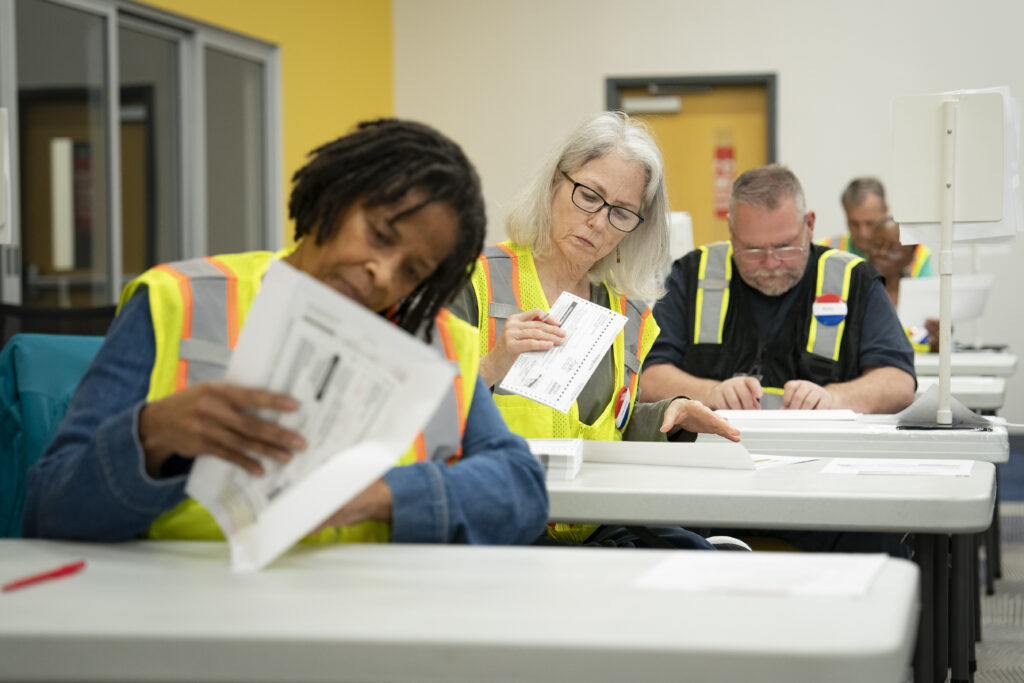
Mail voting in North Carolina is well underway, but voting rights groups warn some votes may not be counted if two restrictive rules remain in effect.
Plaintiffs* fighting North Carolina’s newly passed absentee ballot rules filed Monday for a preliminary injunction (PI) that would block the rules they called “disenfranchising” for the midterms.
The rules, passed along party lines on the day absentee ballots were sent out, make it easier to throw out ballots for envelope sealing errors and impose a previously barred signature verification requirement.
Get updates straight to your inbox — for free
Join 350,000 readers who rely on our daily and weekly newsletters for the latest in voting, elections and democracy.
Notably, North Carolina already has strict voter identification laws. State law requires both photo identification and witness verification for absentee voting, making the signature verification an additional hurdle with “no legitimate purpose,” plaintiffs argued in their complaint.
“Voters who are elderly, disabled, suffer from poor health, are young, or are non-Native English speakers are particularly likely to have greater signature variability,” plaintiffs added. “These groups are thus disproportionately likely to have their ballots invalidated under the State Board’s standardless Signature Verification Requirement.”
Plaintiffs concluded that even if some county boards alert their respective voters about ballots with deficiencies in time for them to vote in person, this is no guarantee. This could, in turn, disenfranchise voters through no fault of their own.
“This possibility is burdensome at best and illusory at worst,” the complaint reads. “A voter whose ballot is invalidated on or after Election Day has no opportunity at all to cast an effective vote, either in person or via a replacement absentee ballot.”
The PI request comes as the county boards of elections across the state are set to start weekly meetings to process absentee ballots, according to state law. There have been 93,402 mail ballots requested and 13,495 counted in North Carolina, as of today’s data from the state.
With 35 days until Election Day, plaintiffs urged the court to set an expedited briefing schedule, hold a hearing and issue a prompt decision.
*The Elias Law Group (ELG) represents plaintiffs North Carolina Alliance for Retired Americans, North Carolina Asian Americans Together, Down Home North Carolina, Vaeme Afokpa and Raquel Nelson in this case. ELG Firm Chair Marc Elias is the founder of Democracy Docket.