Supreme Court to decide on Trump mail voting order after parties make their case
 Prefer us on Google
to see more of our voting rights news coverage when you search.
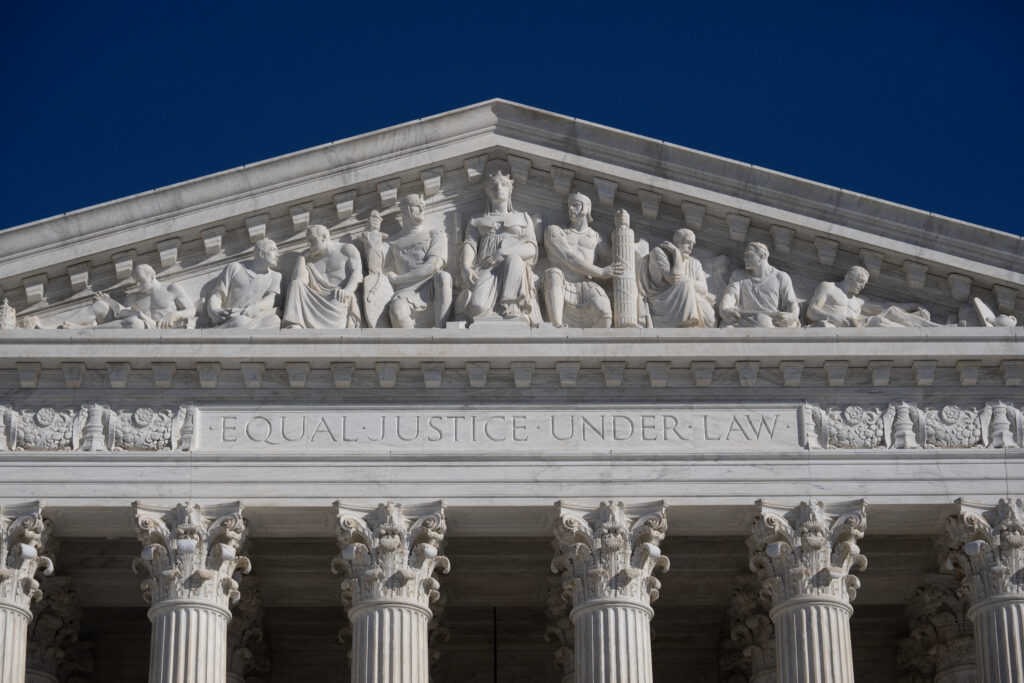
Whether President Donald Trump’s attempt to restrict mail voting will be allowed to move forward despite ongoing legal challenges now rests with the U.S. Supreme Court after the parties involved submitted their briefs.
The consequences of the court’s ruling are enormous: At stake is a voting method relied on by millions of Americans, including the nation’s most vulnerable voters.
This is the third time the Justice Department has asked the Supreme Court to allow the U.S. Postal Service to implement a new rule that would impose significant requirements on mail ballots just two months before this year’s midterm elections.
U.S. District Judge Indira Talwani issued a preliminary injunction blocking the rule last week, stating the Postal Service measure is likely unlawful and unconstitutional.
The Trump administration, in its appeal to the Supreme Court, said the justices should intervene now because the mail agency needs time to implement the rule to prevent potential fraud in mail voting, despite providing no evidence of widespread fraud. The Justice Department also called the “purported difficulties” states and officials say the rule would impose “overblown.”
The 24 Democratic state attorneys general and pro-voter groups challenging the restrictions warned the Supreme Court in their replies on Wednesday that the rule would sow “chaos” and “havoc” if allowed to go into effect at this late stage. In some states, like North Carolina and Wisconsin, absentee ballots are already being sent to voters.
Get updates straight to your inbox — for free
Join 350,000 readers who rely on our daily and weekly newsletters for the latest in voting, elections and democracy.
They also argued that the Postal Service does not have the authority to issue such a rule in the first place.
“The Constitution entrusts states with the responsibility to regulate federal elections, while empowering Congress to alter those state rules,” pro-voter groups said in their brief. “Congress gives states years—not weeks—to comply with major federal election mandates. It did not silently confer authority on USPS to impose sweeping election mandates on merely a few weeks’ notice.”
“Because no law authorizes USPS’s Rule, no stay should issue,” the groups added. “But even were the merits debatable, it is far too late for this Court to intervene now.”
Friend-of-the-court briefs were filed from numerous parties ahead of the court’s decision, including the American Postal Workers Union and a legal aid group representing an anonymous Postal Service whistleblower – both of which opposed the administration’s attempt to lift Talwani’s injunction.
Prominent Democratic Party organizations* separately challenging President Donald Trump’s attack on mail voting in Washington, D.C., also urged the court to reject the administration’s appeal.
“Here, the scales are one-sided. Tens of millions of voters across the country are preparing to vote by mail – and political parties and candidates have prepared all cycle to encourage that voting method – but a hurricane of chaos will ensue if Ballot Mail Rule goes into effect. Applicants, meanwhile, will suffer no comparable injury if the stay remains in place,” the Democratic Senatorial Campaign Committee (DSCC), Democratic Congressional Campaign Committee (DCCC), Democratic National Committee and Democratic Governors Association wrote in a brief.
Whether the Supreme Court lifts the stay and lets the mail voting restrictions take effect or not, legal challenges to the requirements will continue in a federal district court in Boston.
*The Elias Law Group (ELG) represents the plaintiffs in this case. ELG Firm Chair Marc Elias is the founder of Democracy Docket.