‘Catastrophic’: Postal workers slam Trump’s mail voting restrictions, urge Supreme Court to uphold block
 Prefer us on Google
to see more of our voting rights news coverage when you search.
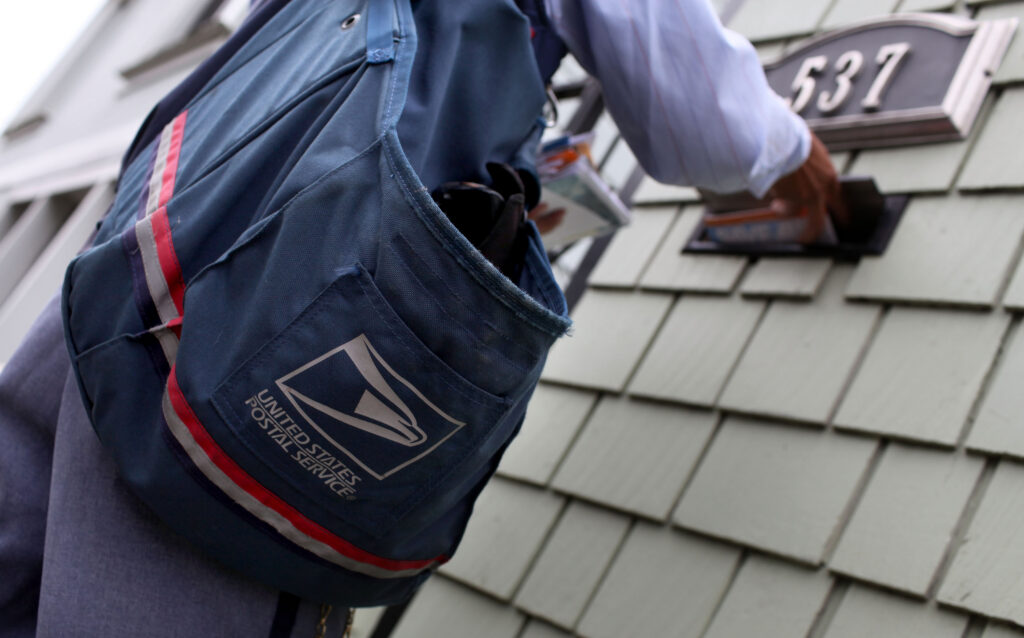
A union representing more than 200,000 postal workers alleged Tuesday that a “catastrophic wholesale non-delivery” of hundreds of thousands of mail ballots will likely occur if states are forced to comply with the U.S. Postal Service’s (USPS) new mail voting rule this November.
The American Postal Workers Union, AFL-CIO (APWU) issued the warning while urging the U.S. Supreme Court to reject the Department of Justice’s (DOJ) bid to lift a lower court order currently barring USPS from mandating that states comply with its sudden election mail restrictions.
Beyond the harms the final rule poses to voters and election administrators, APWU cautioned that USPS lacks the capacity to implement its new rule, noting that postal carriers and clerks still have yet to receive training on critical parts of the “unprecedented system” the agency is creating to enforce its restrictions with less than two months before the election.
Get updates straight to your inbox — for free
Join 350,000 readers who rely on our daily and weekly newsletters for the latest in voting, elections and democracy.
The rushed launch of the system, the union noted, is “at odds with the normal workflow of the Postal Service” and “will inevitably grind the operation of the postal system to a halt, delaying or preventing timely delivery of mail ballots.”
“The Final Rule therefore threatens the Postal Service’s basic function – to deliver mail to addressees without censorship of its contents,” it added.
Emphasizing the gravity of USPS’s new rule, APWU said the effort marks the first time in the Postal Service’s 250-year history that it “has created a rule to reject mail—ballots at that—because the mail does not meet mail design requirements.”
District court Judge Indira Talwani blocked the USPS rule from taking effect but allowed states to voluntarily comply with the agency’s new election mail regulations, which include altering the design of the envelopes in which they send voters ballots. USPS, however, can’t reject or refuse to deliver envelopes that do not comply with its rule.
In addition to the design changes, the rule also requires states to give USPS a list of all people — including their names and addresses — eligible to vote by mail in the upcoming election. That requirement, the union noted, marked another first for the agency.
“It also is the first time in the Postal Service’s history that the Postal Service has created a rule to reject mail unless the mailer registers the recipients of the mail pieces with the Postal Service,” the union said.
States would have to submit their lists and envelope designs through an online portal that, APWU said, was yet another unprecedented undertaking for USPS.
Under the rule, if states fail to verify their ballot design with USPS or if voter data in a state’s list doesn’t match information on a ballot, clerks are required to reject those ballots and send them back to state or local election officials.
However, APWU emphasized that an “enormous” number of clerks would be needed to verify ballots, and USPS has yet to train the clerks currently on staff on how to use the portal to verify ballots.
In filing its brief, APWU joined the chorus of organizations asking the Court to uphold Talwani’s recent injunction against the rule.
Over 20 former governors, an organization representing military and overseas voters and current and former members of Congress made similar appeals to the Court this week.