Georgia court rejects RNC bid to restrict mail ballot return access in state’s second-largest county
 Prefer us on Google
to see more of our voting rights news coverage when you search.
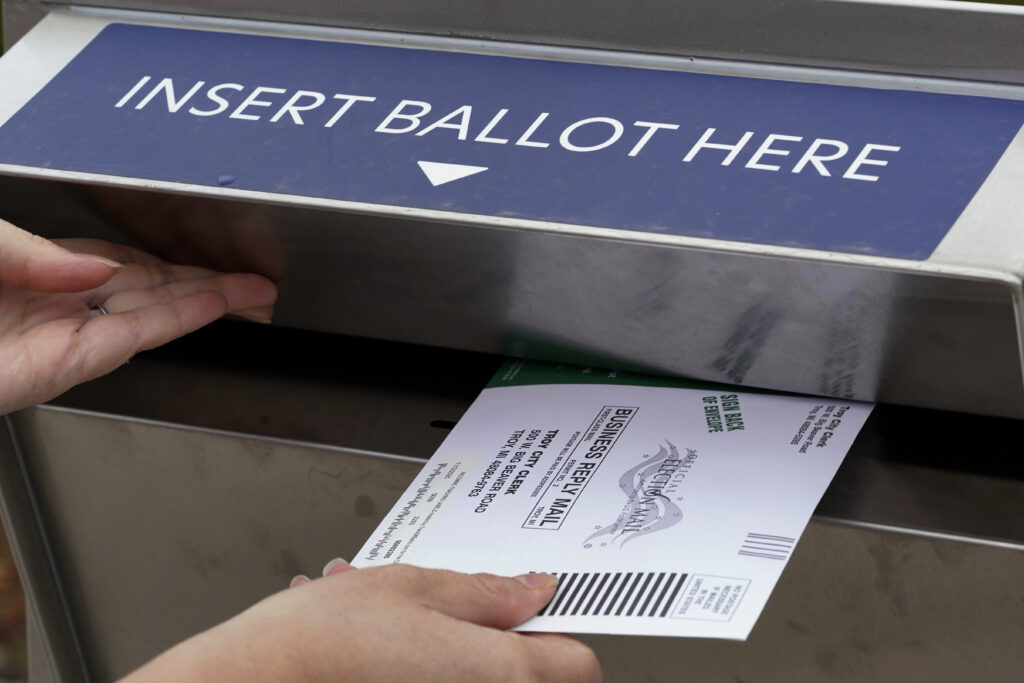
A Georgia judge Wednesday dismissed a Republican lawsuit seeking to restrict where Gwinnett County voters can return mail ballots, ruling that state law allows the county to accept ballots at designated early voting sites even when those locations don’t have drop boxes.
Gwinnett County Superior Court Judge Warren Davis rejected the Republican National Committee’s (RNC) challenge to a county policy that lets voters return completed absentee ballots to trained election officials at certain early voting locations. The ruling preserves an additional way for voters in Georgia’s second-most populous county to cast their ballots ahead of the November election.
Get updates straight to your inbox — for free
Join 350,000 readers who rely on our daily and weekly newsletters for the latest in voting, elections and democracy.
The RNC, the Gwinnett County Republican Party and Georgia secretary of state candidate Tim Fleming sued members of the Gwinnett County Board of Registrations and Elections (BRE) in June, claiming the policy created additional drop boxes beyond limits imposed under Georgia law.
The Democratic Senatorial Campaign Committee (DSCC) and Jon Ossoff for Senate* later intervened to defend the policy.
Davis ruled that the Republican plaintiffs’ reading of Georgia’s election code was wrong.
“The Court concludes that the Georgia Election Code expressly authorizes the Gwinnett BRE, its members, and their agents to receive ABM ballots in the manner described in the Policy,” Davis wrote. “Plaintiffs’ claims fail as a matter of law.”
Under Gwinnett’s policy, the county can designate eligible buildings as additional registrar’s offices for receiving mail ballots. At sites without a drop box, a voter hands the ballot directly to a poll manager or assistant manager who has been trained and sworn in as a deputy registrar. The official records when the ballot was received before securing it for transport to the county elections office.
For the Nov. 3 election, Gwinnett designated 13 early voting locations. Seven will have drop boxes while the other six were designated as additional registrar’s offices where voters can hand-deliver ballots.
Republicans argued that the secured containers used to hold those ballots effectively amounted to unauthorized drop boxes. Davis rejected that argument, drawing a clear distinction between an unattended receptacle and a ballot personally delivered to an election official.
“A drop box and an additional registrar’s office are distinct statutory mechanisms,” Davis wrote. “Under the Policy, by contrast, the voter hands the ballot to the Board’s personnel at a registrar’s office the Board has established, and that person takes delivery and records the time and date of receipt.”
The judge also rejected claims that Gwinnett’s system violated rules governing ballot verification, poll watcher access or the types of buildings counties may use. He found that Georgia law expressly permits county boards to establish additional registrar’s offices to receive absentee ballots and allows those boards to appoint deputy registrars to carry out their duties.
Davis denied the RNC’s request for an emergency injunction and dismissed the lawsuit for failure to state a valid legal claim. He noted that Gwinnett has used locations without drop boxes to receive absentee ballots since the 2022 general election and has used the challenged policy in every election since formally adopting it in 2024.
The decision comes less than a week after another judge dismissed a similar Republican challenge in Fulton County, albeit for a different reason.
In that lawsuit, Fulton County Superior Court Judge Scott McAfee ruled that the case was moot because Fulton’s elections board had discontinued the challenged policy months before Republicans sued.
The challenges are part of a broader Republican push to limit where Georgia voters may return mail ballots.
In 2024, the RNC and Georgia Republican Party sued Cobb, Fulton and five other counties over policies allowing voters to hand-deliver absentee ballots to county election offices during the weekend before Election Day. A federal judge denied Republicans’ request to block the practice and the RNC voluntarily dismissed the case two days later.
Wednesday’s Gwinnett ruling goes further than those procedural defeats. Rather than dismissing the challenge because of timing or mootness, Davis squarely held that the expanded ballot-return system Republicans sought to block is permitted under Georgia law.
*The DSCC and Jon Ossoff for Senate parties are represented by the Elias Law Group (ELG). ELG firm chair Marc Elias is the founder of Democracy Docket.