Voter intimidation ban doesn’t apply to federal government, DOJ claims in shocking new argument
 Prefer us on Google
to see more of our voting rights news coverage when you search.
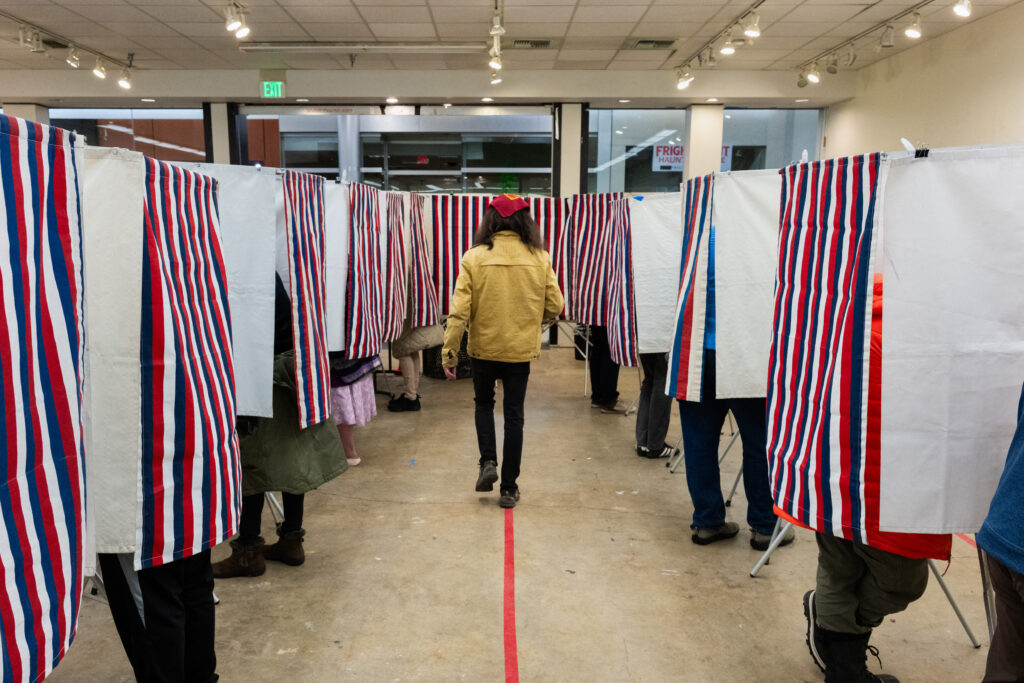
A landmark voting rights protection that ensures the right of every American to cast their vote without fear of intimidation does not apply to federal law enforcement, the Department of Justice (DOJ) said in a dangerous new argument.
If accepted by a court, DOJ’s dangerous interpretation could give the administration — or a future one — free rein to harass and intimidate voters it wants to keep from the polls.
The Trump administration has pledged to send 1,000 poll monitors to voting locations across the country on Tuesday. The NAACP is asking a federal court to prevent DOJ from sending federal law enforcement officers to polling places, calling it a form of voter intimidation.
Get updates straight to your inbox — for free
Join 350,000 readers who rely on our daily and weekly newsletters for the latest in voting, elections and democracy.
In its lawsuit, the NAACP argues that the presence of federal law enforcement near voting locations would violate Section 11(b) of the Civil Rights Act of 1960, which bars any “person, whether acting under color of law or otherwise” from intimidating or coercing voters. The provision was intended to protect minority voters from racial violence or intimidation at the ballot box.
In response, the DOJ now argues that the provision does not apply to the federal government’s own conduct because the only way to enforce it is for the attorney general to seek court injunctions.
“The conclusion that Section 11(b) does not apply to the federal government is confirmed by the statute’s express enforcement mechanism, which is a civil action brought by the Attorney General ‘for the United States, or in the name of the United States,’” DOJ argued.
DOJ recently made a similar argument in a lawsuit brought by union members who argue that the administration’s threats to prosecute election workers are an attempt to interfere with the midterms.
“While Section 11(b) bars a ‘person, whether acting under color of law or otherwise’ from engaging in voter intimidation… it does not apply to the federal government,” DOJ said in that case.
In support, the DOJ cited one Ninth Circuit Court of Appeals judge’s recent dissent in a denial of a full court rehearing in a lawsuit brought by nursing groups challenging a Department of Homeland Security initiative to root out alleged nonctizens registered to vote by knocking on suspects’ doors. In that case, the nursing groups had argued the investigation violated Section 11(b) of the Civil Rights Act.
Judge Eric Tung, who was appointed by President Donald Trump, disagreed, arguing in his dissent that Section 11(b) “does not apply to the United States.” Citing a 2000 U.S. Supreme Court decision, Tung wrote that when the Civil Rights Act refers to a “person, whether acting under color of law or otherwise,” the word person does not include the federal government.
Responding to the NAACP’s lawsuit, DOJ said its Civil Rights Division “is taking appropriate steps to ensure that the volunteers it engages from the Department’s law enforcement components are not law enforcement officers.”