In voting rights win, judge blocks Trump administration from disenfranchising California voters
 Prefer us on Google
to see more of our voting rights news coverage when you search.
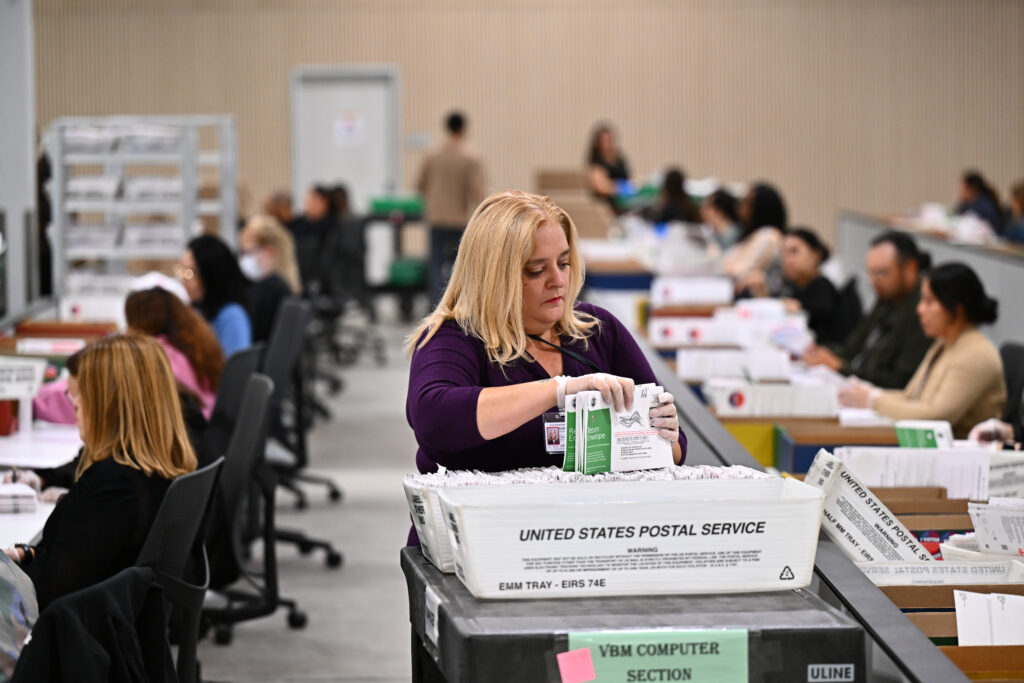
In a major victory for voters, a federal judge has blocked the Trump administration from disenfranchising nearly 21,000 voters in California who it alleges are noncitizens.
The temporary restraining order delivers the latest blow to the administration’s attempts to interfere with voting during the midterm elections in the Golden State.
In an order Monday, U.S. District Judge James Boasberg enjoined the U.S. Department of Homeland Security (DHS) from “issuing demands to California elections officials to compel the segregation of ballots, or other deviations from existing state elections procedures, based on voters’ inclusion on the lists of suspected non-citizens.”
The lawsuit, filed in September by the Coalition for Humane Immigrant Rights and a naturalized U.S. citizen, challenged the Trump administration’s efforts to pressure California and other states to compare voter rolls against federal databases in search of alleged noncitizen voters.
Get updates straight to your inbox — for free
Join 350,000 readers who rely on our daily and weekly newsletters for the latest in voting, elections and democracy.
The pro-voting plaintiffs argued that the campaign was based on unsupported claims, risked wrongly targeting naturalized citizens and unlawfully interfered with states’ authority to administer elections.
Boasberg, an appointee of President Barack Obama, is the second judge to tell the Trump administration that it can’t threaten election officials or pressure states to set aside ballots cast by suspected noncitizens.
Previously, U.S. District Judge David Carter told the U.S. Department of Justice (DOJ) to stop threatening election workers in a lawsuit the department filed against California.
“This court believes that it would be wise that any threats to state and county election employees cease immediately,” he said in a hearing last week.
Carter has yet to issue a ruling, but the DOJ took the unusual step of appealing the case to the 9th U.S. Circuit Court of Appeals before he could. The 9th Circuit twice rejected the DOJ’s appeal, which led to the department to make a last-ditch request to the U.S. Supreme Court to weigh in.
Boasberg’s Monday order points out a crucial flaw in the Trump administration’s case: Data scientists working with the Coalition for Humane Immigrant Rights (CHIRLA) have found that the DOJ’s noncitizen list contains naturalized citizens and people who are no longer registered to vote in California.
“CHIRLA has identified multiple members who are citizens but are wrongly included on DOJ’s lists,” Boasberg noted in his order. “And it has introduced evidence that election officials in some California counties are reviewing the lists. Given that fact, CHIRLA’s members’ erroneous inclusion on the lists threatens their ability to vote and requires them to take ‘measures to minimize the likelihood’ of having their ballots segregated or rejected.”
Because of the flaws in the DOJ’s data, Boasberg wrote that there’s “reasonable probability” that some California election officials might cave to the DOJ’s legal threats and “require additional citizenship verification from individuals on the lists before their ballots are counted.”