GOP argues New Hampshire citizenship law’s benefits are greater than burden on women, young voters
 Prefer us on Google
to see more of our voting rights news coverage when you search.
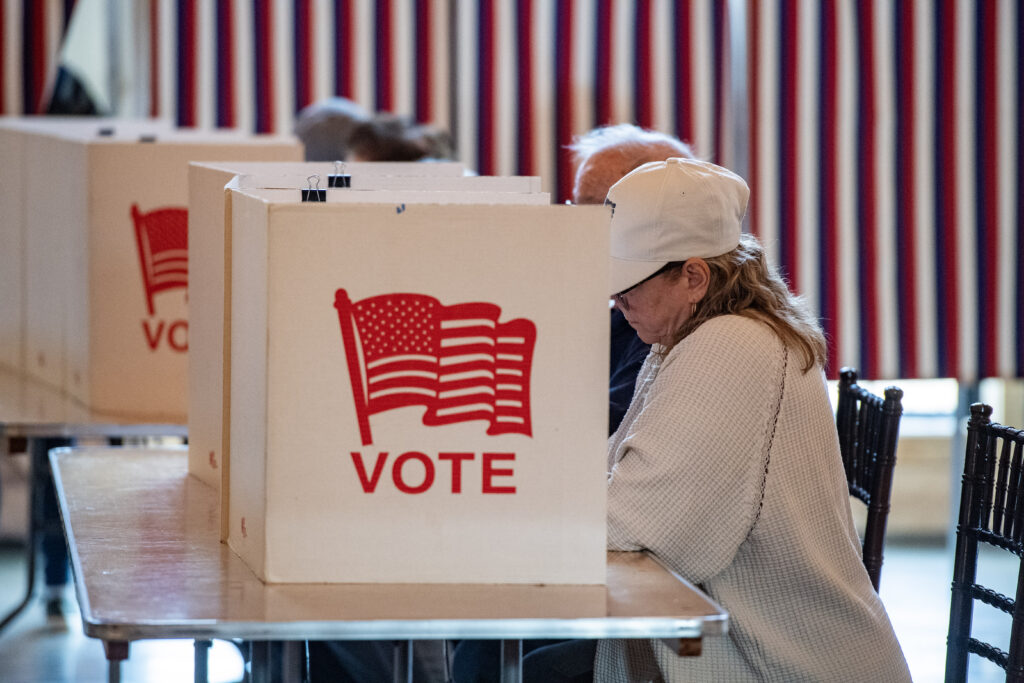
The risk of disenfranchising young voters and married women does not outweigh the benefits of a New Hampshire law requiring that voters prove their citizenship before casting ballots, Republican-led states and the Department of Justice (DOJ) argued to a federal appeals court.
For that reason, a district court erred when it struck down New Hampshire’s citizenship law by evaluating its burdens on specific subgroups rather than the population as a whole, the 23 red states told the 1st Circuit Court of Appeals in a Friday amicus brief.
The Trump administration has broadly backed state and federal efforts to require proof of citizenship to vote after repeatedly claiming without evidence that noncitizens voting in federal elections is a widespread problem.
Get updates straight to your inbox — for free
Join 350,000 readers who rely on our daily and weekly newsletters for the latest in voting, elections and democracy.
The DOJ and Republican-led states’ filings represent the GOP’s latest defense of the Granite State law that overwhelmingly harms younger or lower-income voters, who may not have access to acceptable identification documents, and women, who may have changed their names as a result of marriage or divorce.
The lower court in its ruling “did not ask whether New Hampshire’s proof-of-citizenship requirement or HB 1569 substantially burdens most voters to whom it applies,” the states argued. “Instead, the court examined the experiences of particular subgroups, including young voters and married women whose documents reflect a former name, and from accounts of individual voters turned away in low-turnout local elections.”
Obtaining those documents also represents “only ordinary inconvenience” and should not be sufficient to overturn New Hampshire’s citizenship law, the states said. They argued the district court’s decision will impede their ability to enforce similar laws.
The DOJ also argued that New Hampshire’s law is reasonable, and that most voters should have little difficulty obtaining the documents necessary to prove their citizenship.
“Although the district court found that some voters do not regularly possess or carry citizenship documents, it never held that a reasonably diligent prospective voter could not, with reasonable planning, obtain one of the many citizenship documents that New Hampshire accepts,” the DOJ stated.
The district court’s decision to strike the citizenship law based on its burdens on a handful of people creates “a one-way ratchet” that prevents states from adjusting their voting laws later, the department argued.
“States have the authority to impose new election-integrity measures or repeal earlier measures that weakened election integrity,” it said. “The Fourteenth Amendment does not permanently freeze state law at its most lenient point, nor does it confer upon voters a constitutional right to the most relaxed regulations that once existed.”