Judge won’t bar DOJ from deploying law enforcement to voting sites
 Prefer us on Google
to see more of our voting rights news coverage when you search.
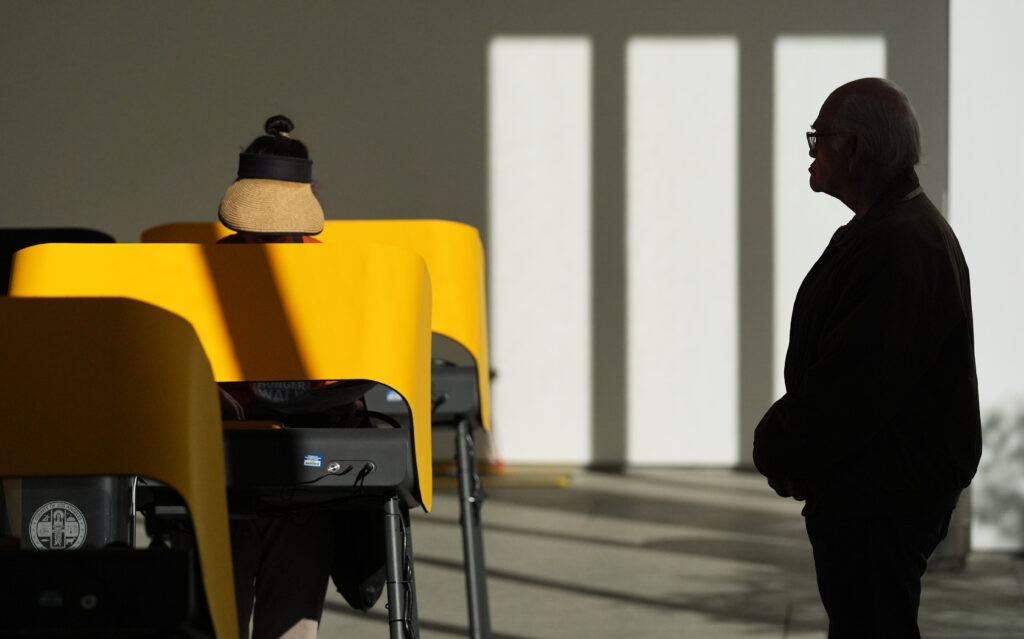
A federal judge rejected an emergency request from the NAACP to prohibit the Department of Justice (DOJ) from deploying federal law enforcement to serve as poll monitors on Election Day.
But U.S. District Judge Reggie Walton, an appointee of President George W. Bush, ordered the Trump administration to provide more information on the monitoring program, including how it confirmed that none of the monitors will be sworn officers with arrest powers.
The Trump administration will send a record-breaking 1,000 election monitors to observe voting across the country Tuesday. The DOJ released a list of locations where monitors will be deployed in all 50 states. Many areas are major cities that lean Democratic.
In his order late Monday, Walton wrote that he found the NAACP’s allegations of intimidation “concerning” at the outset but was “assuaged” by the federal government’s representations in court, including its about-face saying it would not oppose a temporary restraining order blocking law enforcement agents at voting sites.
“While the Court does not think that such an injunction based on the defendants’ representations is necessary, the Court will order that the defendants comply with their counsel’s concession that they will take action to ensure that the monitors participating in the DOJ’s Poll Monitoring Program are indeed administrative or clerical personnel and not law enforcement officials, will not be in uniform or display any other insignia indicating their affiliation with a federal agency, will not be armed with a firearm, and will not have the power to effectuate arrests,” Walton wrote.
Get updates straight to your inbox — for free
Join 350,000 readers who rely on our daily and weekly newsletters for the latest in voting, elections and democracy.
During Monday’s hearing, the DOJ abruptly said it would have “no problem” with such a restriction, despite past declarations that “employees” of the Bureau of Prisons , Drug Enforcement Administration and Bureau of Alcohol, Tobacco, Firearms and Explosives would be present at polling locations across the country.
Walton warned the DOJ not to make false representations to the court or “obviously there’d be hell to pay.”
After the hearing, the DOJ submitted sworn declarations to the court on the role election monitors will play.
“Though there is no prohibition on using law enforcement for the monitoring program, [the DOJ Civil Rights Division], in exercising its discretion, took reasonable steps to exclude certain sworn law enforcement officers from within DOJ from monitoring,” wrote Eric Neff, who leads the division’s Voting Section.
“They have not been told of any situation that would be appropriate for them to effectuate an arrest,” Neff added.
The NAACP sued the administration last month over the DOJ’s poll monitoring plan, arguing it violates Section 11(b) of the Voting Rights Act, which bans any “person, whether acting under color of law or otherwise” from intimidating or coercing voters — a provision intended to protect minority voters.
In a filing earlier Monday, the DOJ made the shocking argument that the ban doesn’t apply to them.