Trump DOJ loses again, now 0 for 5 on voter roll cases, as court rejects Rhode Island lawsuit
 Prefer us on Google
to see more of our voting rights news coverage when you search.
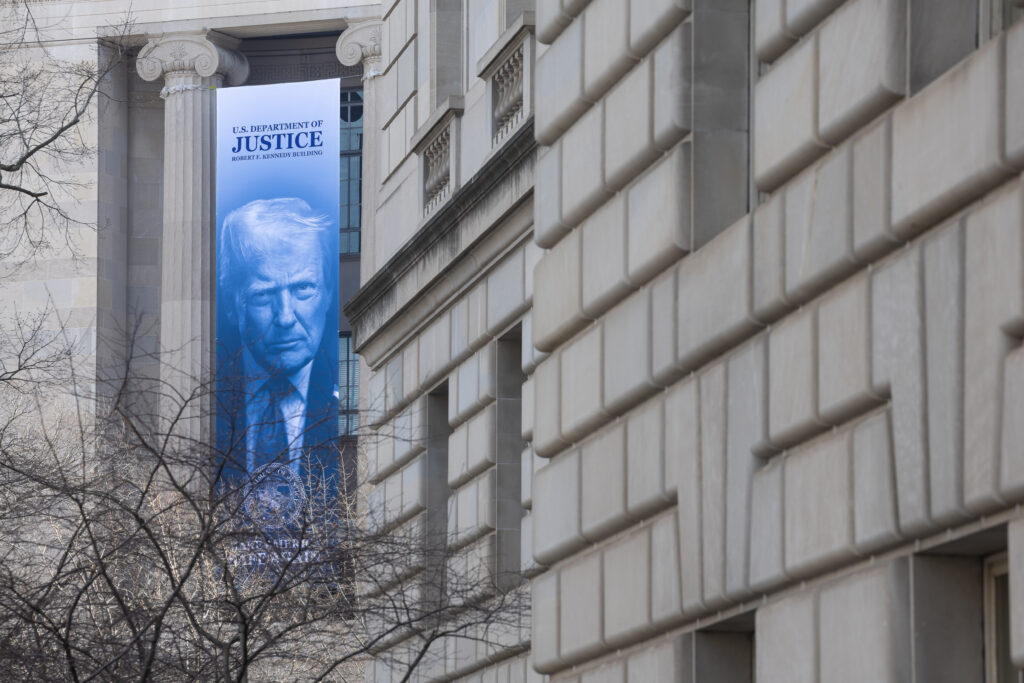
The Department of Justice (DOJ) lost again Friday, as a federal judge dismissed its lawsuit to force Rhode Island to provide unfettered access to its voter registration rolls, bringing the agency’s record among active cases to five defeats, zero wins and 25 cases still pending.
In President Donald Trump’s second term, the DOJ has demanded every state’s unredacted voter registration records — including sensitive private data like social security numbers and dates of birth — as part of the administration’s obsessive focus on immigration enforcement. While 17 Republican-led states have complied, the rest have refused, leading the DOJ to sue 29 states and Washington, D.C. for their voter rolls.
Rhode Island is now the fifth state to secure a district court victory, joining California, Oregon, Michigan and Massachusetts.*
U.S. District Judge Mary S. McElroy, a Trump appointee, called the DOJ’s widespread voter roll demands a “fishing expedition.” The DOJ sought to use the 1960 Civil Rights Act (CRA) to order Rhode Island to turn over unredacted versions of its registration records, saying they were needed to ensure compliance with the National Voter Registration Act (NVRA) and Help America Vote Act (HAVA).
Get updates straight to your inbox — for free
Join 350,000 readers who rely on our daily and weekly newsletters for the latest in voting, elections and democracy.
The CRA empowers the DOJ to demand copies of registration records, provided that the agency also provides a “basis” and “purpose” when they do so. In state after state, the DOJ failed to explicitly do that, leading to their losses in California, Oregon, Massachusetts, and now Rhode Island.
“With that understanding, the Court finds that the Attorney General’s demand lacks a legally sufficient basis to satisfy [the CRA’s] requirements,” McElroy wrote. “Absent from the demand are any factual allegations suggesting that Rhode Island may be violating the list maintenance requirements of the NVRA and HAVA, let alone the CRA. This alone would be enough to foreclose judicial enforcement of the demand.”
In the wake of these repetitive defeats, the DOJ has asked the federal court’s permission in 13 states to file new demand letters with a more explicit basis laid out in the hopes of fixing the issue.
McElroy seemed to preempt such a request on appeal here, though.
“Following [U.S. v.] Galvin’s dismissal of the United States’ suit in Massachusetts, the United States requested that, should the Court follow Galvin, DOJ be permitted leave to send [Rhode Island] Secretary [of State Gregg] Amore a ‘curing elaboration letter’ presumably containing some factual basis for its [CRA] demand,” McElroy wrote. “But even were the Demand Letter to contain a factual basis, it would still fail to state a claim under [the CRA] because it lacks a legally sufficient purpose.”
“As such, even were the Court to grant DOJ leave to send its requested “curing elaboration letter” containing a factual basis for its allegation that Rhode Island might be falling short of its obligations under the NVRA or HAVA,” McElroy added, “that letter would remain legally insufficient to support a [CRA] records demand because its purpose would fall outside [the CRA’s] intended scope.”
McElroy is the second Trump appointee to rule against the DOJ in these cases, joining U.S. District Judge Hala Jarbou, who sided with Michigan. Unlike that narrow opinion, however, McElroy’s justification for dismissal echoed the rulings in California, Oregon and Massachusetts. The DOJ has filed appeals in all those states.
McElroy’s opinion repeatedly cited the DOJ’s earlier losses, particularly California’s win in United States v. Weber, which was the first published opinion in these cases. Legal experts had questioned the wisdom of Assistant Attorney General for Civil Rights Harmeet Dhillon’s sue-every-state strategy, predicting the losses would snowball against the agency. The White House is now reportedly considering a promotion for Dhillon to either the DOJ’s third top ranking position or Attorney General.
*Intervenor defendants in this lawsuit are represented by the Elias Law Group (ELG). Democracy Docket founder Marc Elias is ELG chairman.
*Ashley Cleaves contributed to this report.