Federal judge rules DOJ can ‘no longer’ be trusted in voter roll crusade
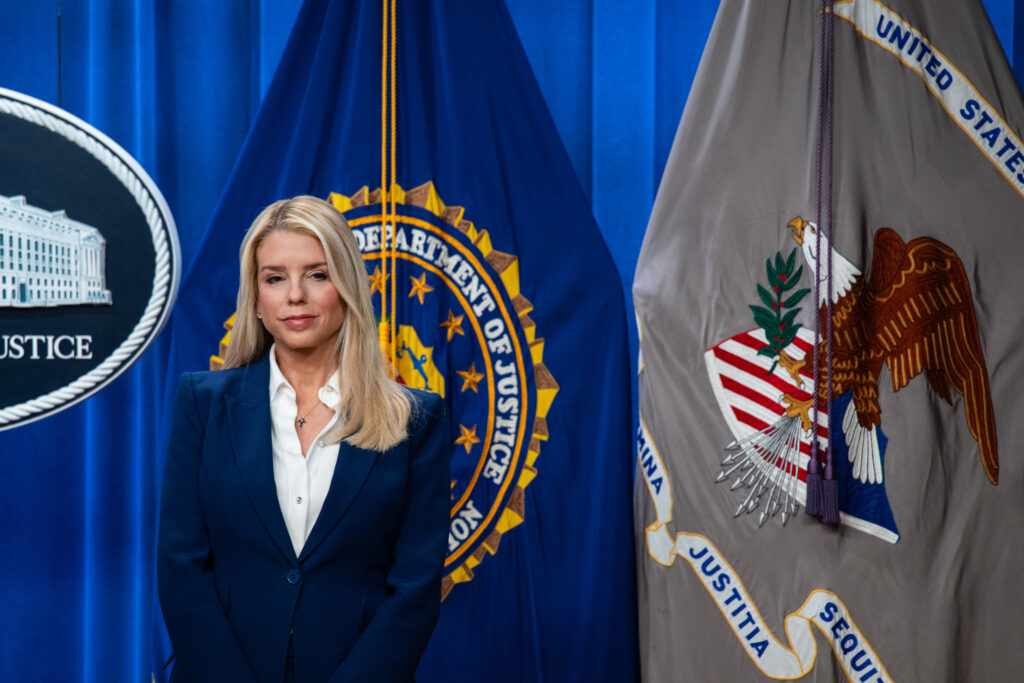
A federal judge in Oregon issued a sweeping rebuke of the Justice Department’s nationwide push to seize state voter rolls, ruling that the department can no longer be presumed to be acting in good faith and warning that its conduct threatens voters and states’ rights.
And the judge cited a recent letter sent by Attorney General Pam Bondi linking the voter roll crusade to the deployment of Immigration and Customs Enforcement agents in Minnesota as one reason to doubt the department’s truthfulness.
Get updates straight to your inbox — for free
Join 350,000 readers who rely on our daily and weekly newsletters for the latest in voting, elections and democracy.
In a sharply worded opinion released Thursday, U.S. District Judge Mustafa T. Kasubhai concluded that the department’s public statements and actions stripped it of the trust courts typically afford federal law enforcement agencies.
Kasubhai had already announced from the bench — on two separate occasions — that the DOJ’s lawsuit seeking Oregon’s unredacted voter registration data would be dismissed.
“The presumption of regularity that has been previously extended to Plaintiff that it could be taken at its word — with little doubt about its intentions and stated purposes — no longer holds,” Kasubhai wrote. “When Plaintiff, in this case, conveys assurances that any private and sensitive data will remain private and used only for a declared and limited purpose, it must be thoroughly scrutinized and squared with its open and public statements to the contrary.”
The ruling marks another forceful judicial rejection of the Trump administration’s effort to compel states to turn over sensitive voter information. While other courts have dismissed the DOJ’s cases on procedural or legal grounds, Kasubhai made clear that the broader context surrounding the DOJ’s campaign played a critical role in assessing its credibility.
Kasubhai pointed specifically to the letter to Minnesota from Bondi that tied federal immigration enforcement to demands for voter data as the smoking gun, saying it cast doubt on the DOJ’s stated motives.
“The context of this demand within a letter about immigration enforcement casts serious doubt as to the true purposes for which Plaintiff is seeking voter registration lists in this and other cases, and what it intends to do with that data,” he wrote.
While the judge was explicit that the case could be dismissed on the law alone and had already planned to dismiss the case before the Minnesota letter was drafted, he went out of his way to say DOJ’s public conduct now undermines the “presumption of regularity” it has long enjoyed.
Kasubhai’s most prominent concern was the DOJ’s use of voting rights laws as a vehicle to gather data for purposes far beyond election administration — including immigration enforcement.
“Plaintiff’s words and actions outside of the four corners of its Complaint in this case, including statements that it intends to create a nationwide database of confidential voter information and use it in unprecedented ways, including immigration enforcement efforts, is chilling,” Kasubhai added. “The possibility that Oregon’s voter registration list could be used to further these efforts in the absence of congressional action, may very well lead to an erosion of voting rights and voter participation.”
The opinion also dismantled the DOJ’s legal theory from the ground up, rejecting its claims under the National Voter Registration Act, the Help America Vote Act and the Civil Rights Act of 1960.
Kasubhai emphasized that Congress never granted the federal government the power it now claims.
“Congress knows how to include disclosure provisions, as it did so in both the NVRA and Title III. It did not do so here, and the Court will not play the role of Congress by adding one where it does not exist,” Kasubhai wrote. “There is no separate disclosure provision applicable to the federal government, and the federal government does not enjoy any intrinsic authority to compel disclosure of these records.”
Beyond the motive and legal analysis, the court framed the DOJ’s campaign as a direct threat to the constitutional balance between the states and the federal government.
“Plaintiff’s claims disturb the framework of federalism envisioned and enshrined in our Constitution,” Kasubhai wrote. “Plaintiff’s claims here represent an overreach and misuse of those limited constitutional exceptions designed to ensure decentralized election regulation.”
The Oregon decision builds on a growing line of judicial skepticism toward the DOJ’s voter roll lawsuits.
A federal court in California dismissed a similar case focusing heavily on the potential impact on voter participation, though Kasubhai’s opinion stands out for its explicit rejection of the DOJ’s credibility and its warning that courts must no longer take the department at its word.
By denying the DOJ leave to amend its complaint, the court closed the door on the case entirely.
But the implications extend beyond Oregon and the opinion’s influence was almost immediate.
A day after Kasubhai’s ruling was published, New Mexico Secretary of State Maggie Toulouse Oliver formally notified the federal court overseeing the DOJ’s lawsuit against her office of the decision, submitting the Oregon opinion as supplemental authority and arguing that the DOJ’s claims there are based on “the same arguments and nearly identical facts” now before the New Mexico court.
Meanwhile, Minnesota election officials filed a new brief urging their own federal court to follow Oregon’s lead, arguing that the DOJ’s voter roll demands there suffer from the same fatal defects. Minnesota pointed to Kasubhai’s conclusion that the DOJ’s public statements — including Bondi’s letter — stripped the department of any presumption of good faith and revealed an improper purpose for seeking sensitive voter information.
With dozens of similar lawsuits pending across the country, Kasubhai’s ruling could provide a roadmap for other courts to scrutinize not just the legality of the DOJ’s demands, but the motives behind them.