Exclusive: Trump DOJ appears to have hired lawyer convicted of hacking election sites to check ‘integrity’
 Prefer us on Google
to see more of our voting rights news coverage when you search.
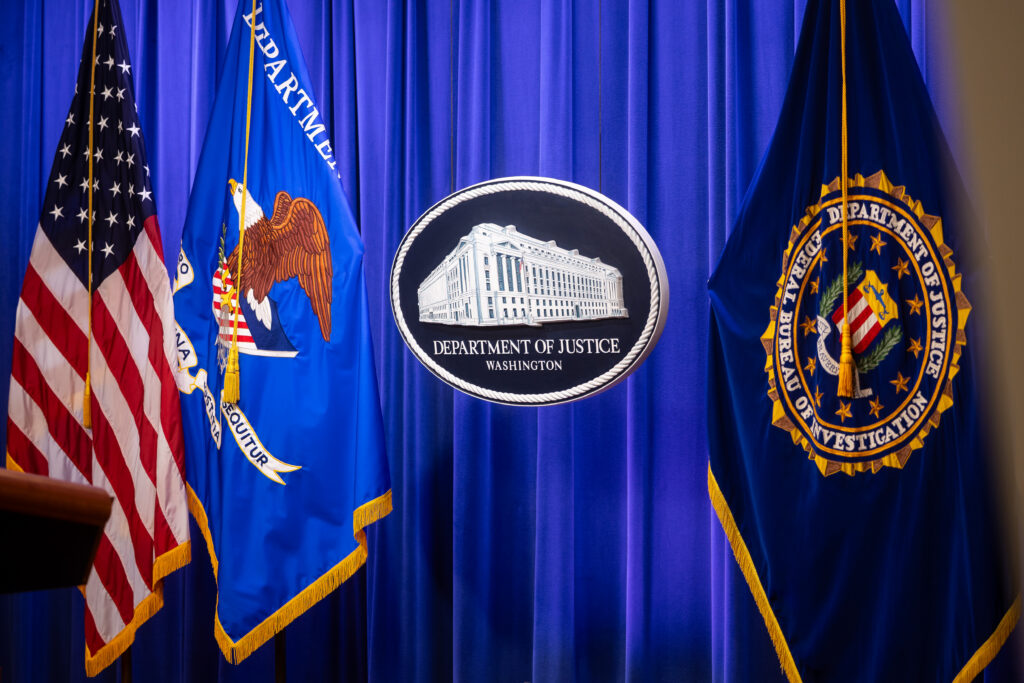
A Florida lawyer who pleaded guilty after illegally accessing government election websites appears to have joined President Donald Trump’s Department of Justice (DOJ) — and taken part in a recent DOJ election monitoring operation in Minnesota.
The apparent hiring of David Michael Levin would be among the most troubling example yet of the department’s Civil Rights Division bringing on lawyers — including the acting chief of the voting section — who have taken extreme steps to undermine fair elections, as it rushes to put together a team to carry out Trump’s anti-voting agenda.
And Levin’s involvement in election monitoring could offer a hint of the kind of personnel who will staff the operation this fall, when the DOJ has said it will send 1,000 monitors to the polls.
Get updates straight to your inbox — for free
Join 350,000 readers who rely on our daily and weekly newsletters for the latest in voting, elections and democracy.
Levin was charged with three felonies in 2016 after Florida investigators said he used a cyberattack to obtain credentials, then entered restricted portions of a county elections website, and separately accessed the state Division of Elections website.
Levin later said he had wanted to look into “the integrity of elections.”
The charges were later reduced to two misdemeanors. Levin pleaded guilty, served 20 days in jail and received two years of probation.
Now, images and video posted online suggest Levin has joined the DOJ’s Civil Rights Division — the federal office charged with enforcing many of the nation’s voting rights laws and that is now leading the Trump administration’s nationwide grab for sensitive voter data.
Democracy Docket initially identified Levin using publicly available facial-recognition reverse image search tools.
The DOJ did not respond to Democracy Docket’s request to confirm Levin’s employment and title. And Levin’s name has not appeared in court filings made by the department.
The DOJ also did not respond to questions about whether officials were aware of Levin’s conviction for hacking election websites before he apparently joined the department.
Levin did not respond to a separate request for comment sent via social media.
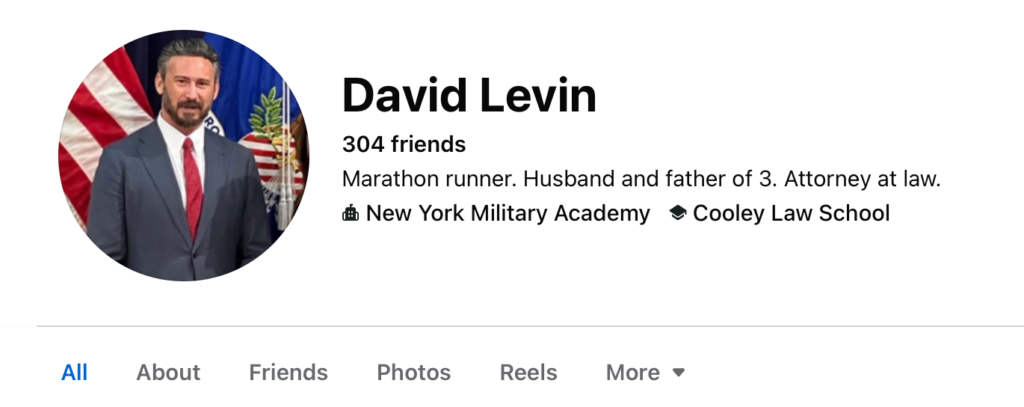
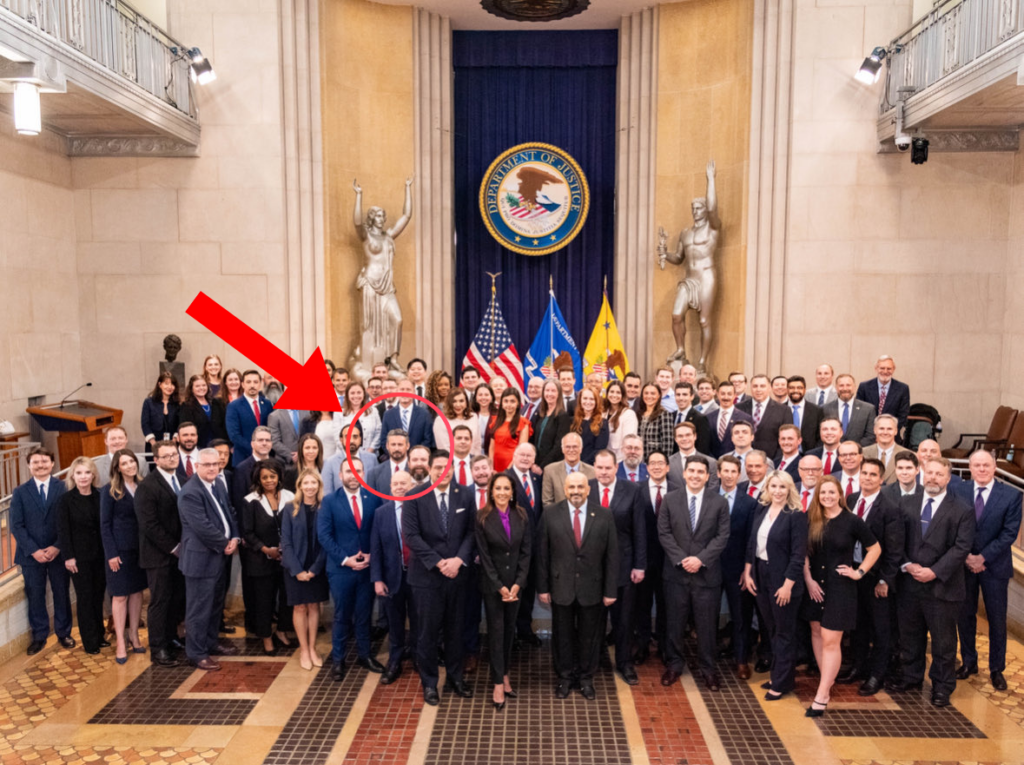
Levin’s Facebook profile provides another indication of his DOJ ties. His profile photo shows him standing in front of a flag bearing the DOJ insignia, with part of a woman wearing purple visible beside him. That attire appears to match an outfit worn by Assistant Attorney General Harmeet Dhillon at a July 8 Civil Rights Division swearing-in ceremony.
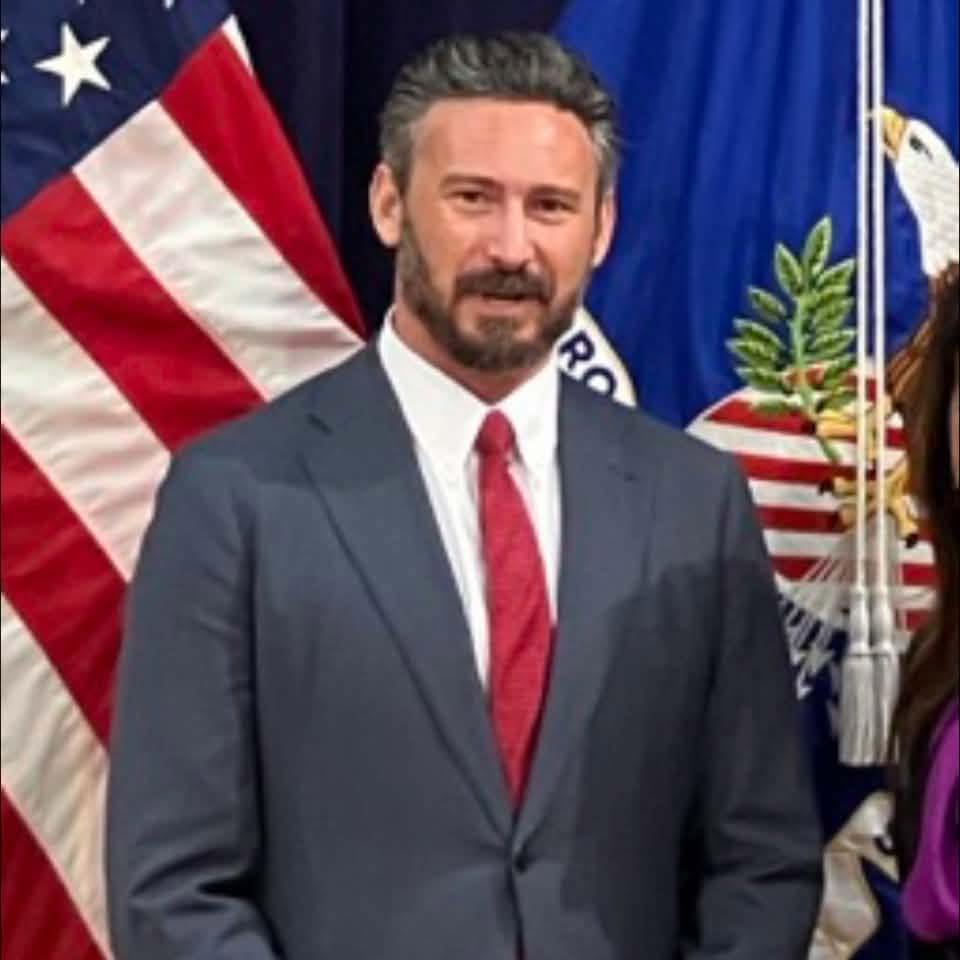
Dhillon posted photos of that ceremony, where she said she swore in more than 100 new Civil Rights Division attorneys and staff. Levin appears near the center-left of the group.
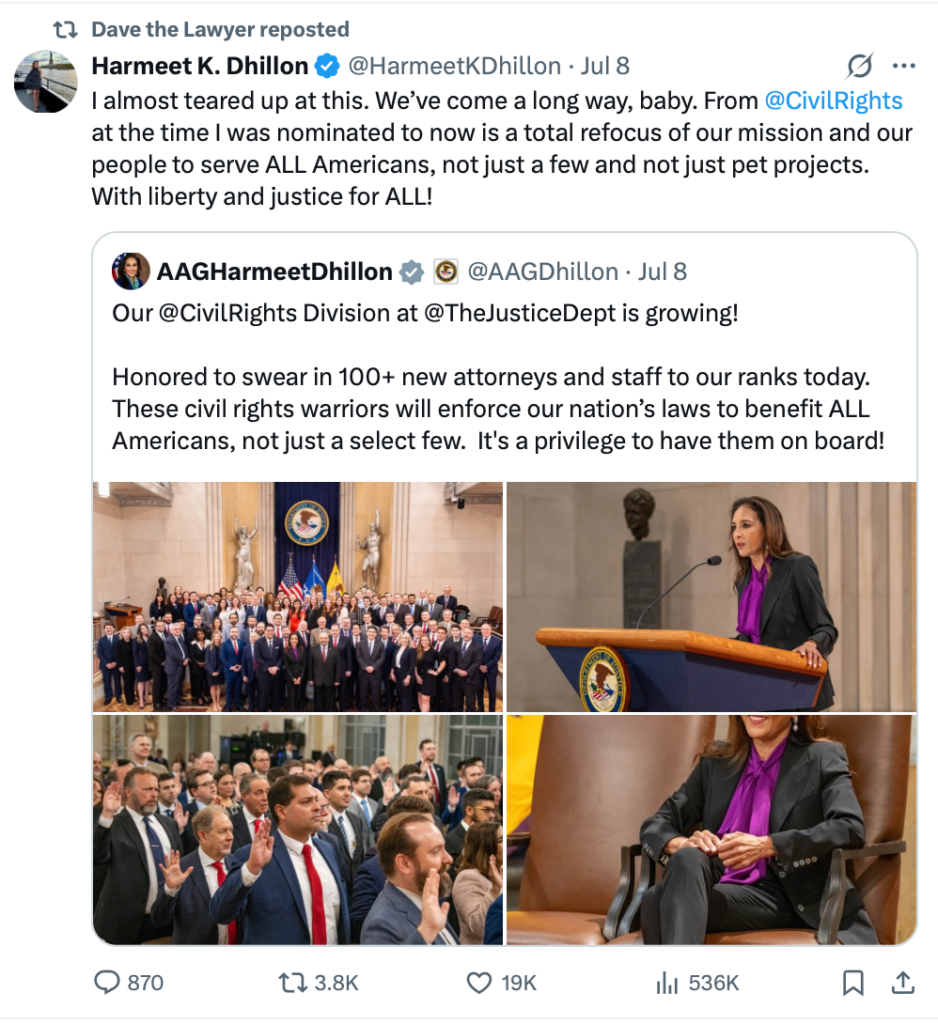
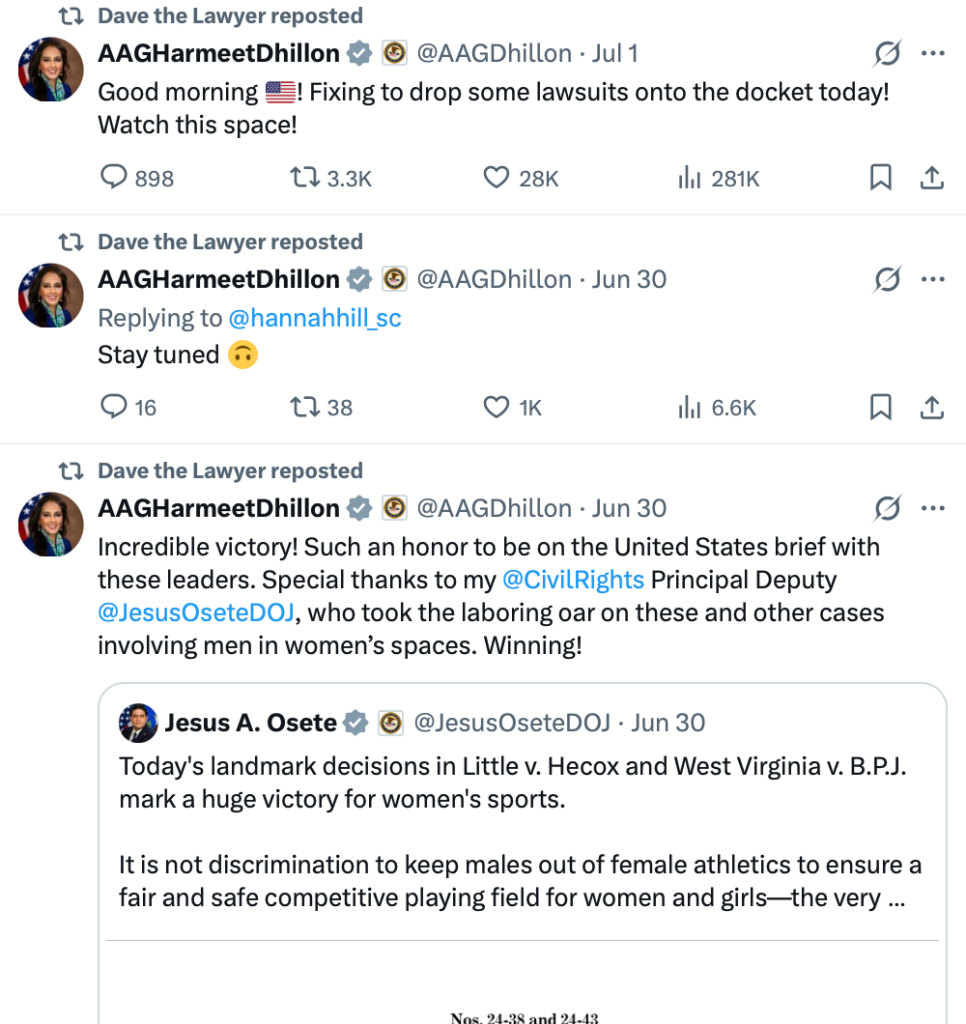
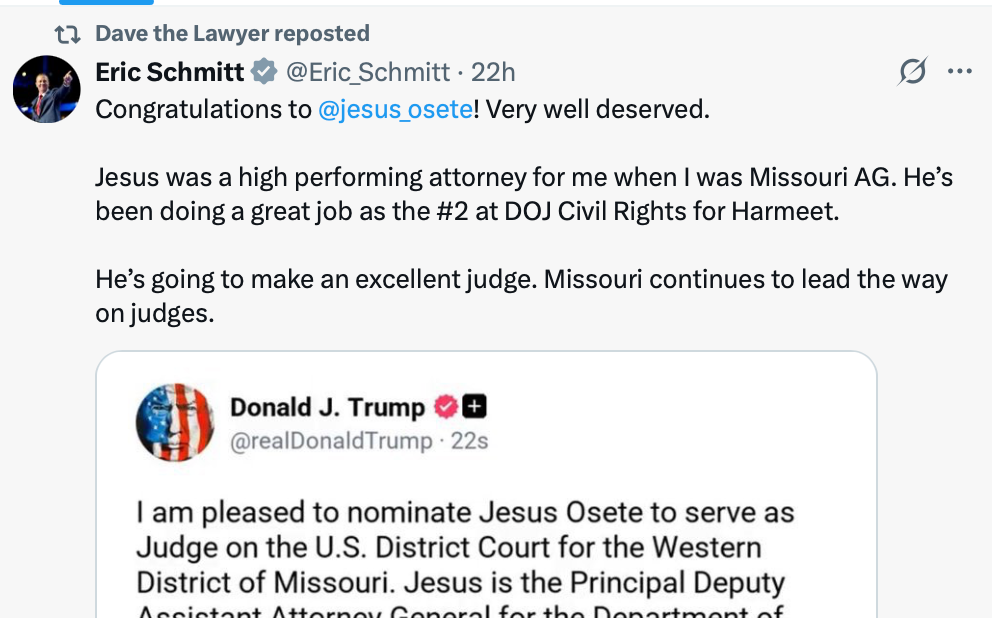
Levin’s “Dave the Lawyer” X account has also repeatedly reposted Dhillon and other senior Civil Rights Division officials, including posts promoting the division’s work and Dhillon’s July 8 announcement about its influx of new attorneys and staff.
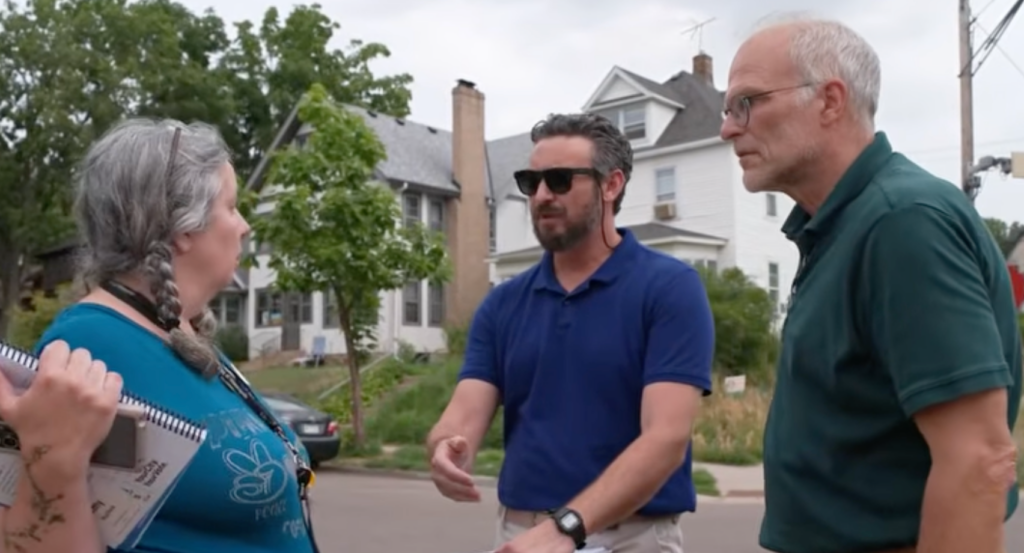
Levin also appeared earlier this month in a video posted by a Minnesota news outlet. He stood alongside William F. Mohrman, a senior counsel in the Civil Rights Division’s Voting Section, at a Minneapolis polling site during the DOJ’s monitoring of the state’s August primary.
In the video, a Minnesota election judge approached Levin and Mohrman outside Powderhorn Park Recreation Center and checked their credentials after a disagreement over where the federal observers could stand. The judge reminded them that they were required to remain at least 100 feet from the polling place, and the two men ultimately moved back.
Democracy Docket has not independently established whether Levin was formally designated as an election monitor.
Mohrman himself has a noteworthy background. As Democracy Docket has reported, he represented Derek Chauvin, the former Minneapolis police officer convicted of killing George Floyd, and worked to subvert the results of Wisconsin’s 2020 presidential election, on behalf of the Trump campaign.
The presence of Levin and Mohrman at the polls in Minnesota could offer a glimpse into what voters in some areas can expect this fall.
Dhillon said this week that the DOJ plans to deploy approximately 1,000 election monitors around the country during the November midterms, a dramatic expansion of the department’s on-the-ground election presence.
The DOJ has not publicly explained who will make up that force. The entire Civil Rights Division is far smaller than the 1,000-person figure.
Federal election monitoring is not new. The Civil Rights Division has historically sent attorneys and other DOJ personnel to polling places to assess compliance with laws protecting voting access, including the Voting Rights Act and the Help America Vote Act.
The DOJ’s monitoring of primaries in several states in recent months appears to have gone smoothly. Still, the plan for a massive increase in the number of monitors this fall has stoked concern from some voting advocates.
Levin’s record could add to those concerns.
According to the Florida Department of Law Enforcement, he was arrested in May 2016 on three felony counts of unauthorized computer access stemming from incidents at the Lee County Supervisor of Elections and Florida Division of Elections.
At a plea hearing in the case, Levin described the hacking as political.
He apologized to the judge, calling it a “silly political stunt” and saying he had worked with Lee County Supervisor of Elections candidate Dan Sinclair to expose weaknesses in the office’s website. In a letter to then-Supervisor of Elections Sharon Harrington, Sinclair’s opponent, Levin said he had found information that could damage her office and “took part in a publicity stunt to advance Mr. Sinclair’s campaign.”
An arrest warrant obtained by Democracy Docket describes a more extensive intrusion than simply discovering a vulnerable website.
Investigators said Levin used a technique known as SQL injection to extract information from the Lee County elections website, including usernames and passwords. He then used Harrington’s credentials to log into the website and navigate it as an administrator.
The warrant says Levin later demonstrated the intrusion in YouTube videos and during a local television interview. Referring to what he had done, investigators quoted Levin as saying: “I hacked it.”
Harrington told investigators she had never given Levin permission to conduct the hack or use her credentials.
Investigators also found evidence that Levin had carried out separate SQL injection attacks against the Florida Division of Elections website in January 2016.
Florida authorities initially sought three third-degree felony charges. The case was later resolved through a plea agreement that reduced the charges to two misdemeanors.
Levin pleaded guilty and served 20 days in jail followed by two years of probation.
Levin said in 2021 that he had been “curious about the integrity of elections” and had recently taken an ethical hacking course when he accessed the systems.
“That was probably one of the bigger mistakes I’ve made in my life, the way I went about the whole thing,” Levin said. “I made it very political and it affected my life for a few years.”
The hacking did not involve voting machines or vote tabulation systems. Officials said at the time that voter registration and tabulation systems remained secure.
Levin later became an attorney and maintained a substantial social media presence under the name “Dave the Lawyer,” where he provided right-wing political commentary. He also ran unsuccessfully for local office in Florida and campaigned on conservative issues including opposition to mask mandates and critical race theory.
His former YouTube channel, which at one point advertised hundreds of thousands of subscribers, is no longer publicly available. Other “Dave the Lawyer” social media accounts remain online.
Levin’s apparent arrival at the DOJ comes as Dhillon rapidly reshapes the Civil Rights Division and its Voting Section.
The department has sued states across the country seeking unredacted voter files but federal courts have repeatedly rejected the DOJ’s legal theory for obtaining those records.
At the same time, the department is expanding its presence at polling places.
The DOJ sent approximately 20 personnel from the Civil Rights Division and U.S. Attorney’s Office to monitor Minnesota’s primary this month. Officials in Hennepin and Ramsey counties declined to allow the federal personnel inside polling places, forcing them to observe from outside restricted areas.
Jacob Knutson contributed reporting.