As DOJ interferes in elections, official swears 1,000-monitor plan is standard
 Prefer us on Google
to see more of our voting rights news coverage when you search.
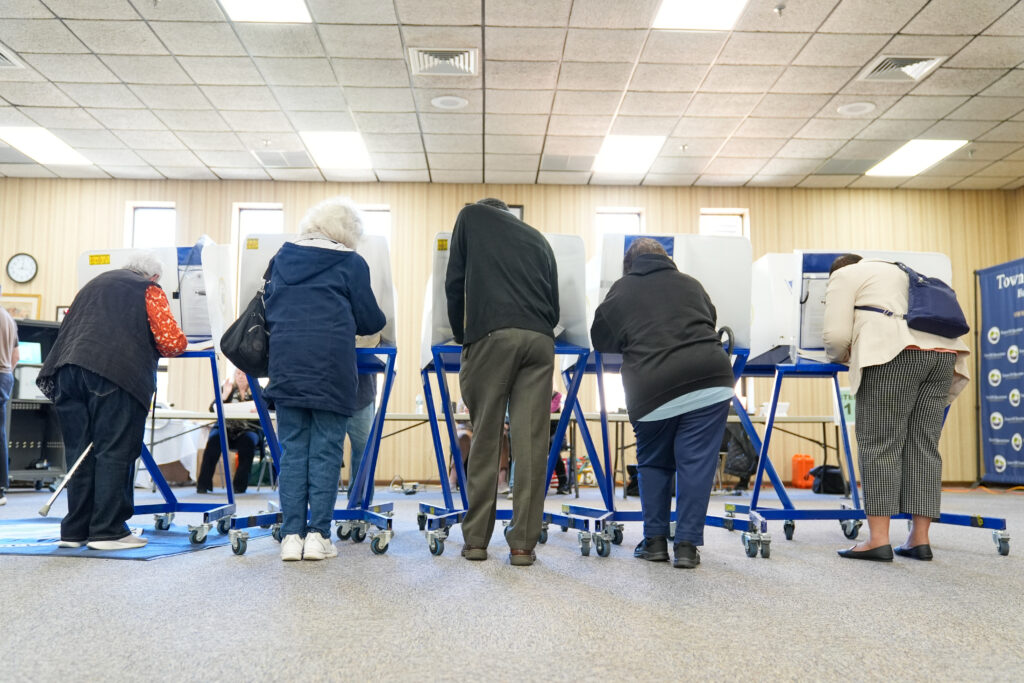
A top official has denied that the Department of Justice (DOJ)’s plan to deploy 1,000 election monitors across the country during the midterm elections is any different from its practices during past races — despite the Trump administration currently bringing unprecedented and baseless lawsuits to intimidate election officials.
Eric Neff, who leads the Voting Section of the Department of Justice’s (DOJ) Civil Rights Division, made the declaration in an ongoing Freedom of Information Act (FOIA) lawsuit. The NAACP is suing for information about the DOJ’s monitoring plans for the midterm elections after the agency effectively ignored its FOIA request.
“The Voting Section is conducting its election monitoring efforts in a similar manner and for similar purposes as in past election cycles going back decades,” Neff stated.
The DOJ’s plans to send a record number of monitors in this year’s general election have worried election officials and civil rights groups, especially after some monitors displayed aggressive behavior during the primaries. In August, Wyoming Gov. Mark Gordon (R) called for a state investigation into the “irregular” conduct of two Civil Rights Division attorneys monitoring the primary in Laramie County.
In addition to the size of the DOJ’s monitoring plans, observers fear the scope has changed. In the past, monitors sought to ensure that election officials did not improperly prevent voters from casting their ballots. This year, officials worry the focus will be the exact opposite.
Get updates straight to your inbox — for free
Join 350,000 readers who rely on our daily and weekly newsletters for the latest in voting, elections and democracy.
In his declaration, Neff said the monitors would look for compliance with the standard suite of election laws and that the monitors would be trained to follow state and federal laws.
He also claimed that no FBI or U.S. Immigration and Customs Enforcement employees would be deployed. There will be one U.S. Customs and Border Protection employee, but that person is currently detailed to the DOJ and would be acting in that capacity, Neff said.
The declaration repeatedly stated that monitors would be prohibited from carrying firearms and from wearing any clothing identifying themselves as federal agents.
Instead, he said that they would dress in business casual attire, not interfere with election officials, not speak with any voter before they cast their ballot, and only interview “willing voters outside the polling places about their voting experience,” in accordance with past practice.
Election monitors will introduce themselves to local election officials when they arrive at a location and then stand aside, Neff wrote.
Neff’s declaration also stated that the DOJ has refused NAACP’s FOIA request to say where monitors would be deployed because it “would undermine [the Civil Rights Division’s] monitoring effort and potentially put our monitors at risk.”
In the past, the DOJ has stated publicly where it was deploying its monitors. And this year, it has notified state election officials where it plans to go. In Pennsylvania, for example, the DOJ plans to send monitors to Philadelphia, Allegheny, Luzerne and Lehigh counties.
Whereas in previous administrations the DOJ has taken steps to conspicuously avoid influencing elections, this DOJ has done the opposite. Attorney General Todd Blanche appeared on Fox News Wednesday to say the DOJ was now investigating allegations in Alaska that Democratic candidate Mary Peltola’s campaign recruited Daniel J. Sullivan to run against Sen. Dan Sullivan (R) as a spoiler, even though there’s no law against such electoral trickery.
There are also indications the DOJ has already sent law enforcement officials to work as election monitors. According to government records received by pro-voting organization Democracy Forward, the DOJ dispatched an FBI agent — as well as several criminal prosecutors — to monitor the July primary in Arizona’s two most populous counties.
Should any of Neff’s statements prove to be untrue, it could expose him to perjury charges.