Trump DOJ suing California marks major ‘escalation’ in election interference attempts, experts warn
 Prefer us on Google
to see more of our voting rights news coverage when you search.
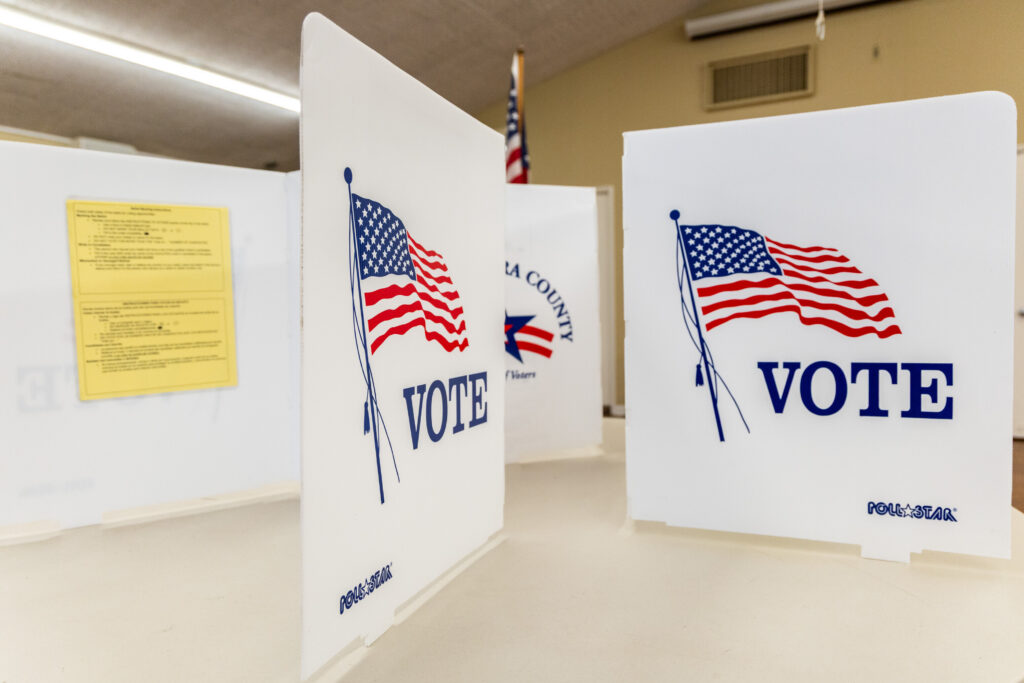
The Department of Justice’s alarming lawsuit to stop California from counting roughly 20,000 ballots from people suspected of being noncitizens could lay the groundwork for challenges to Election Day results, experts warned.
The concern extended beyond Democratic officials.
Stephen Richer, the Republican former Maricopa County recorder who has generally urged restraint over fears of federal interference in elections, called the lawsuit “a real escalation.”
“This lawsuit — in October, in the middle of early voting — that asks election officials to disqualify certain voters based on suspect databases, not conclusive evidence, which definitely could have been alleged BEFORE early voting began,” Richer wrote. “This does represent an escalation.”
Get updates straight to your inbox — for free
Join 350,000 readers who rely on our daily and weekly newsletters for the latest in voting, elections and democracy.
California Gov. Gavin Newsom (D) was more blunt, accusing the administration of trying to suppress voters just weeks before Election Day and calling DOJ’s request “totally unprecedented.”
“The courts have made clear that the federal government has no role in how a state carries out its election process, and now, in the middle of Californians voting, they have asked local officials — who do a damn good job defending democracy — to violate federal law,” Newsom said. “A totally unprecedented request that should scare the hell out of every American.”
Senator Alex Padilla (D), meanwhile, blasted the DOJ’s move as a power grab and noted its lack of clear authority for its demands.
“We’ve seen this coming: Donald Trump’s Department of Justice with no authority is now actively trying to interfere in the 2026 elections and strong-arm California into purging names from our voter rolls and blocking mail ballots based purely on vague allegations less than three weeks before Election Day,” Padilla said in a statement. “This lawsuit has no legal basis or evidence behind it and is nothing more than a blatant abuse of power designed to sow distrust in our elections and threaten Americans’ right to vote.”
The DOJ sued California, Secretary of State Shirley Weber and Los Angeles County Registrar Dean Logan Thursday, asking a federal judge to prohibit the state from tabulating mail ballots from people on a federally generated list until their citizenship can be verified.
DOJ says the Department of Homeland Security identified more than 20,000 people it believes are likely noncitizens registered to vote in California. The government has not alleged that all of those people have been conclusively determined to be noncitizens.
David Becker, executive director of the Center for Election Innovation & Research and a former DOJ voting rights attorney, questioned why federal officials waited until ballots were already being cast to provide California with the names.
Becker noted that DHS publicly claimed in July that more than 190,000 noncitizens were registered in California. State officials responded by requesting the underlying names and methodology, he said, but did not receive the information before ballots began going out.
“They could have done that three months ago, and didn’t,” Becker said. “Instead, waiting until eight days after ballots had gone out.”
Becker said that timing made it appear DOJ was “almost seeming to try to set California up,” particularly because federal law restricts systematic voter-list maintenance during the 90 days immediately preceding a federal election.
He also pointed to previous instances in which federal claims about possible noncitizens on state voter rolls collapsed under scrutiny. In Nevada, DHS initially raised concerns about thousands of voters before eventually providing the state with 185 names for review; Nevada officials said all 185 were citizens.
Election law professor Rick Hasen similarly questioned the DOJ’s authority to demand the ballots be set aside.
Hasen argued that the federal prohibition on noncitizen voting does not itself empower the DOJ to dictate how states determine voter eligibility or administer elections. He also pointed to the National Voter Registration Act’s restrictions on systematic removals close to an election and warned that inaccurate federal data could result in eligible citizens being disenfranchised.
Hasen highlighted one paragraph in DOJ’s own complaint in which the government acknowledges that it is not “practicable or feasible” for federal investigators to investigate thousands — much less tens of thousands — of flagged voters before the election concludes.
Instead, the government argues that California’s continued processing of those voters’ ballots interferes with its ability to enforce the federal ban on noncitizen voting.
Hasen called that admission the “weakest part of the case” and said he expects the lawsuit to fail.
But he also raised a concern extending beyond the immediate litigation.
“I think this is a political document, potentially laying the groundwork for Trump to claim that the election results are illegitimate because California has not done enough to deal with noncitizen voting,” Hasen wrote.
Becker raised a similar possibility, while emphasizing that he could not know the administration’s motive. He said DOJ’s decision to wait until voting was underway raised questions about whether the litigation could be used later to bolster false claims that an election was stolen.
“If they were seeking to work in good faith to clean up the voter list that they believed had issues, they would have done this months ago in a much different fashion,” Becker said.
Justin Levitt, a former deputy assistant attorney general in DOJ’s Civil Rights Division, was even more dismissive of the government’s legal case.
“This is a press release masquerading as a lawsuit. It’s comically atrocious.” Levitt said. “In order to win this case, DOJ has to persuade an actual federal judge. And it’s going to be difficult for a judge to get through this document without laughing.”