Trump DOJ to deploy election monitors in 6 states amid intense pressure campaign
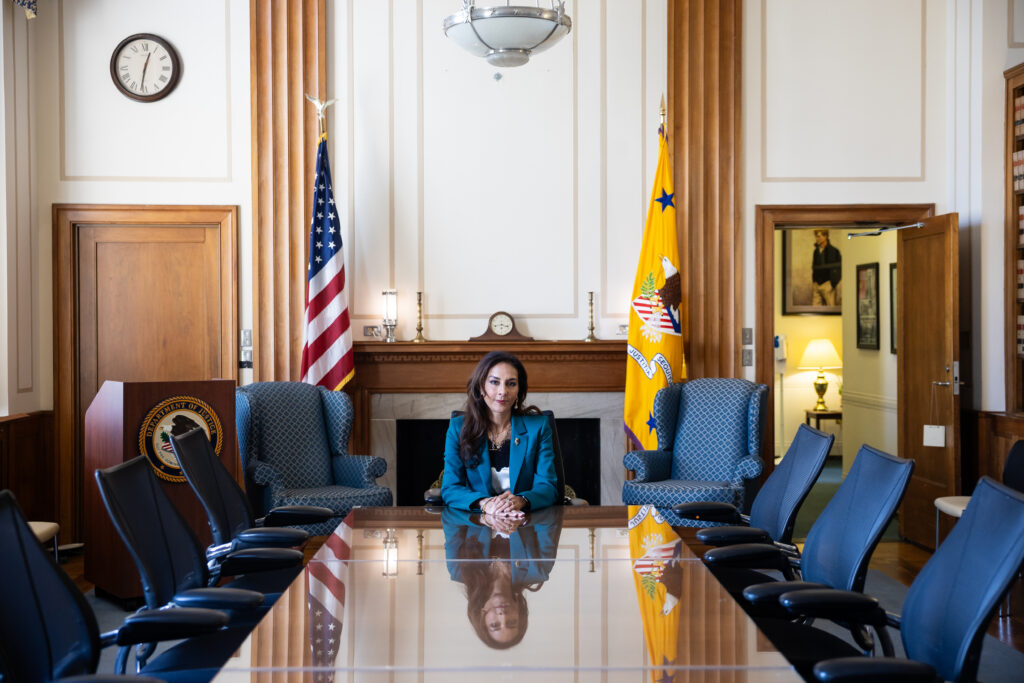
President Donald Trump’s Department of Justice announced Tuesday that it will send federal election monitors to 15 jurisdictions in six states during the 2026 primary season, the same day the department sent letters to election officials nationwide threatening potential criminal prosecution over noncitizen voting.
In a video posted to social media, DOJ’s Civil Rights Division chief Harmeet Dhillon said monitors will be sent to jurisdictions in Arizona, Michigan, Massachusetts, Minnesota, New Hampshire and Virginia.
Get updates straight to your inbox — for free
Join 350,000 readers who rely on our daily and weekly newsletters for the latest in voting, elections and democracy.
“In 2026, in this upcoming primary season, the United States Department of Justice Civil Rights Division, as it has done for decades, is this year sending election monitors into 15 different jurisdictions in six states,” Dhillon said.
Dhillon framed the effort as routine election monitoring, saying DOJ sent monitors to nine jurisdictions during the 2022 primaries and 27 jurisdictions during the 2024 election.
“And so this is something that DOJ does routinely,” Dhillon said. “So this year, we’re kind of in the middle of that with our 15.”
But the announcement lands in the middle of an aggressive Trump DOJ campaign targeting state election officials.
Earlier Tuesday, DOJ sent letters to all 50 states and D.C. warning that election officials could face criminal liability if they knowingly retain noncitizens on voter rolls or allow them to receive and cast ballots.
The department has also lost 11 district court cases and its first appeal in its effort to force states to hand over unredacted statewide voter rolls. No court has ordered a state to provide that sensitive data.
Dhillon said DOJ’s monitors will look at issues including language access, disability access and whether polling places are open for the required amount of time. She also tied the monitoring program to the administration’s broader focus on alleged “illegal” voting.
“It’s also important to make sure that our voting is accurate so that every citizen who votes has their vote counted equally without being canceled out by somebody who shouldn’t be voting,” Dhillon said.
Dhillon specifically criticized leaders in Michigan, saying the state’s attorney general and governor “don’t like the fact that we’re doing this.”
She also suggested the program will grow before the general election.
“Stay tuned as we get towards the general election where there’ll be an even more expanded program for vote monitors,” Dhillon said.