Loss: Supreme Court denies request to delay Callais order
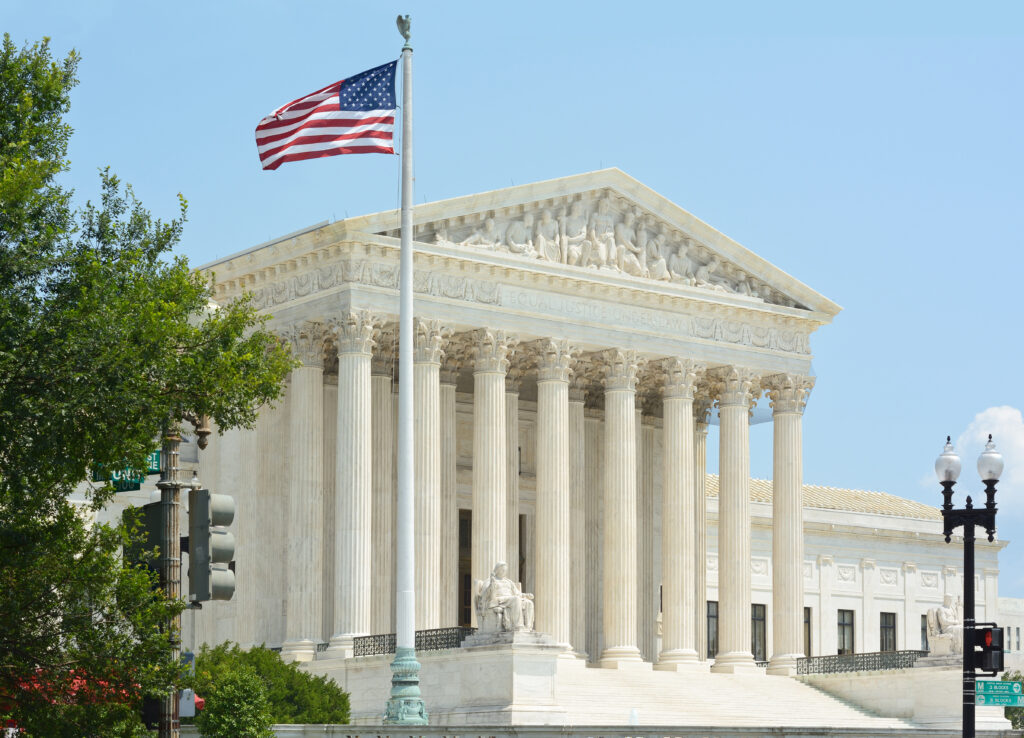
The U.S. Supreme Court shot down a request Wednesday to reconsider fast-tracking the order implementing its decision in Louisiana v. Callais, the case that gutted the Voting Rights Act.
The Black voters who successfully sued Louisiana to redraw its congressional map to add another majority-minority district in 2023 — only to have that redraw struck down by the U.S. Supreme Court in last week’s Lousiana v. Callais decision — asked the Court Tuesday to recall its expedited order that cleared the way for a rushed redistricting during a paused primary election.
A day later, in an unsigned summary order, the Court rejected that motion to recall the judgment from the plaintiffs in Ardoin v. Robinson, who had intervened in Callais to defend the maps for which they had fought.
After the Court published its opinion in Callais last week, the “non-African American voter” plaintiffs immediately asked for an expedited judgment in the case, which is usually issued 32 days after an opinion to allow for rehearing requests.
Justice Samuel Alito granted the Callais plaintiffs’ expedited judgment request Monday, writing that “while the Robinson appellants oppose it, they have not expressed any intent to ask this Court to reconsider its judgment.”
Get updates straight to your inbox — for free
Join 350,000 readers who rely on our daily and weekly newsletters for the latest in voting, elections and democracy.
But the Robinson intervenors argued in a filing the next day that the court had ignored their opposition in granting the expedition.
“The sole basis cited in the Order for granting Appellees’ Application and issuing the judgment forthwith was that ‘[Robinson Appellants] have not expressed any intent to ask this Court to reconsider its judgment,’” the motion contends. “However, in the second sentence of Appellants’ opposition to the Application, Appellants requested ‘the opportunity to consider seeking rehearing.’”
That contention fell on deaf ears, as did the Robinson appellants’ invocation of the Purcell v. Gonzalez, arguing that the 2006 ruling held that “federal courts may not disrupt a state’s voting rules, including electoral maps, close to an election, much less when voters are already voting.”
Voting in Louisiana’s primary had already begun when Gov. Jeff Landry (R) suspended the ongoing congressional election — but not the other races — after the Court released its opinion in Callais.