Exclusive: Bert Callais, lead plaintiff in case that gutted Voting Rights Act, is an election conspiracist who was at Jan. 6 protest
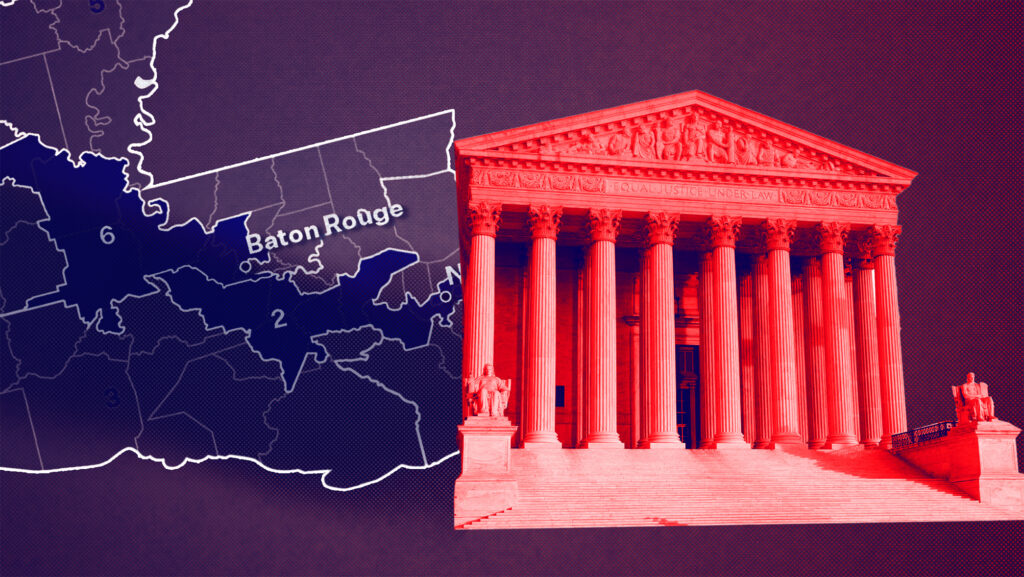
The lead plaintiff in the case that destroyed the Voting Rights Act (VRA) has a history of promoting false election conspiracies and anti-voting policies, and was at the Stop the Steal protest at the U.S. Capitol on Jan. 6, 2021, before a deadly riot by pro-Trump insurrectionists.
In the original complaint in the case that became Louisiana v. Callais, Phillip “Bert” Callais was described simply as a “non-African American voter” from Brusly, Louisiana, whose congressional district changed after the state redrew its map. Callais, a veteran who lives near Baton Rouge, said in 2024 he was a member of his local board of supervisors.
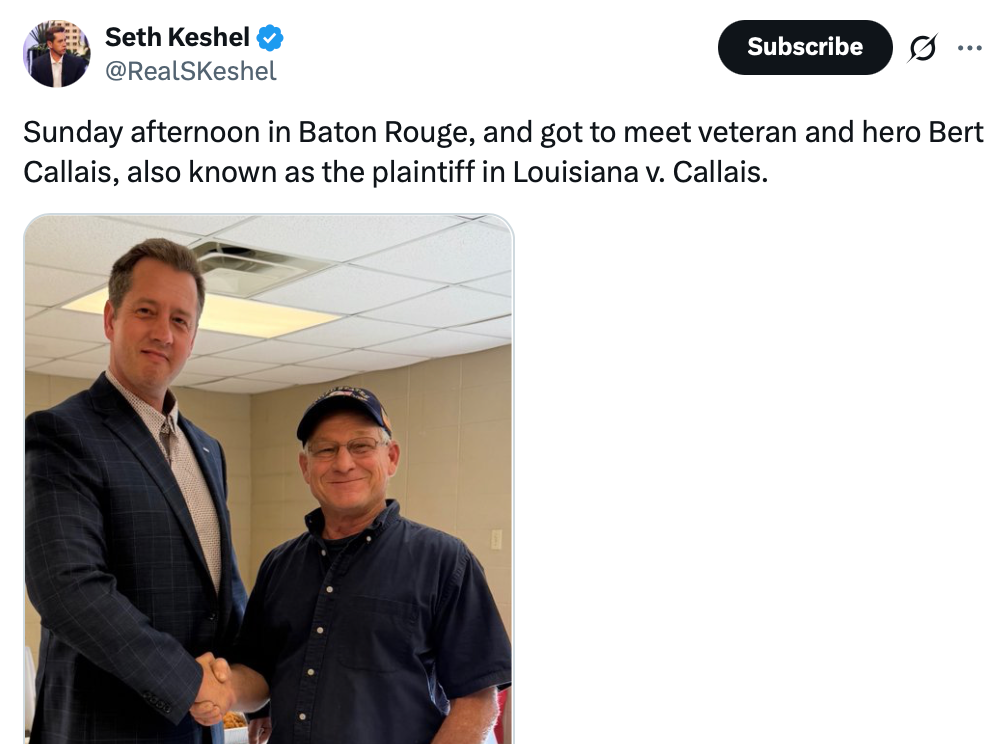
But social media posts exclusively reviewed by Democracy Docket paint a far more troubling picture of Callais — suggesting a man who harbors a deep distrust of the election system, which he has called “rigged,” and who is steeped in false conspiracy theories about voting. In the days after the Supreme Court’s ruling, a nationally prominent election denier posted a photo of himself shaking hands with Callais, calling him a “hero.”
Get updates straight to your inbox — for free
Join 350,000 readers who rely on our daily and weekly newsletters for the latest in voting, elections and democracy.
There is no indication that Callais’ personal views played a role in the Supreme Court’s legal reasoning, which focused on how race can be considered in drawing congressional districts, and which has already had sweeping consequences in decimating Black political power.
But his conspiracy-driven beliefs and association with extremists offer a window into the broader right-wing political ecosystem surrounding the case. And they underscore how battles over redistricting and voting rights are increasingly intertwined with a wider movement that has gained traction in Republican politics in the years since 2020, questioning the legitimacy of U.S. elections.
Callais did not immediately respond to direct messages on social media. And a lawyer for Callais and the other plaintiffs in the case declined to comment.
“Thank you for contacting the Callais Plaintiffs,” wrote the lawyer, Paul Loy Hurd. “We are in the middle of responding to our local federal court, and are not available at this time. Good luck with your project.”
On January 6, 2021, and the following day, Callais posted multiple photos and a video from Washington, D.C. showing himself on the Capitol grounds amid the crowds gathered for the January 6 Stop the Steal protest aimed at blocking certification of the 2020 election, won by Joe Biden.
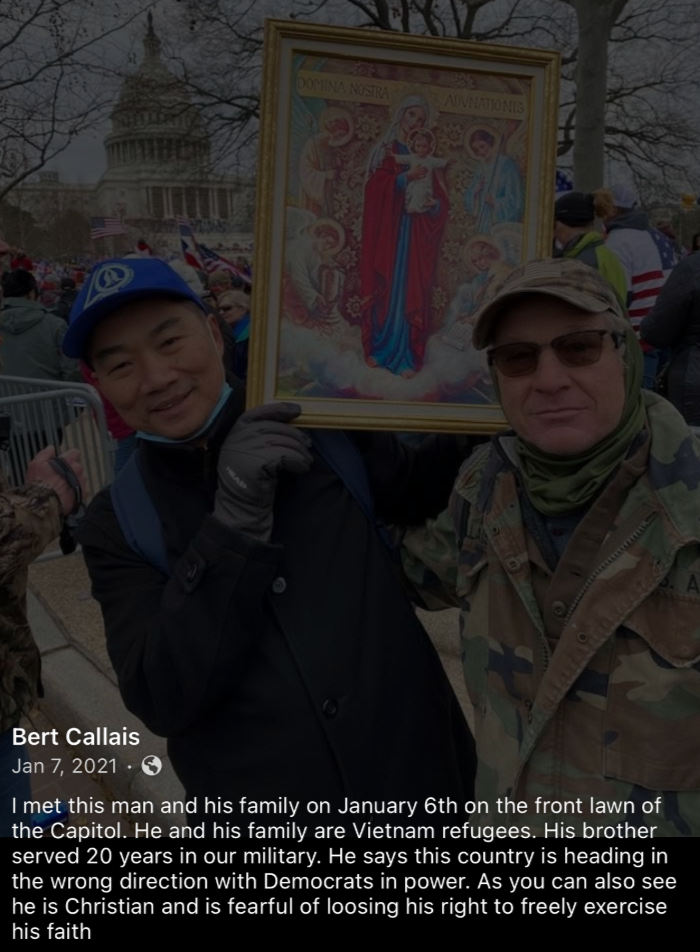
“It wasn’t total chaos as the news will lead you to believe,” Callais posted on a video he shared of protesters standing outside the Capitol building.
In later posts and in the years since, Callais has repeatedly amplified claims that U.S. elections are rigged, questioned the legitimacy of voting systems, and promoted efforts to replace electronic voting with dubious hand-counted paper ballots.
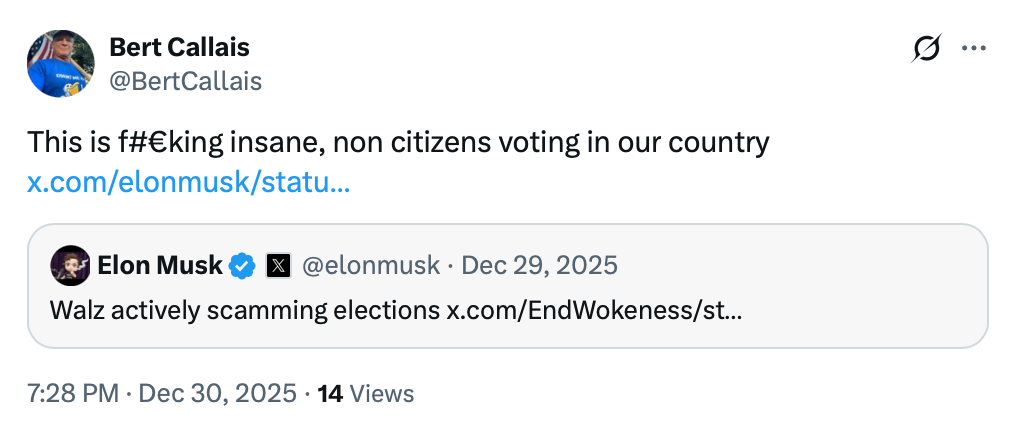
“This is f#€king insane, non citizens voting in our country,” Callais wrote in one re-post of an Elon Musk post that promoted a widely debunked conspiracy theory about noncitizen voting.
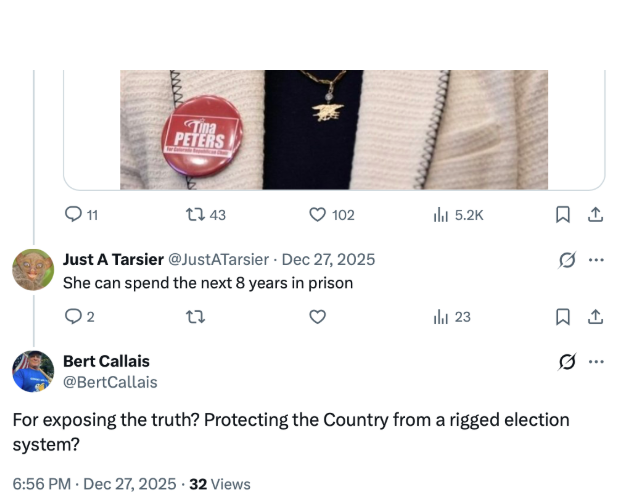
In another post from December, Callais wrote that Tina Peters — the Colorado GOP county clerk who was convicted for her role in a 2021 voting systems data breach — was wrongly persecuted “for exposing the truth” and “protecting the Country from a rigged election system.”
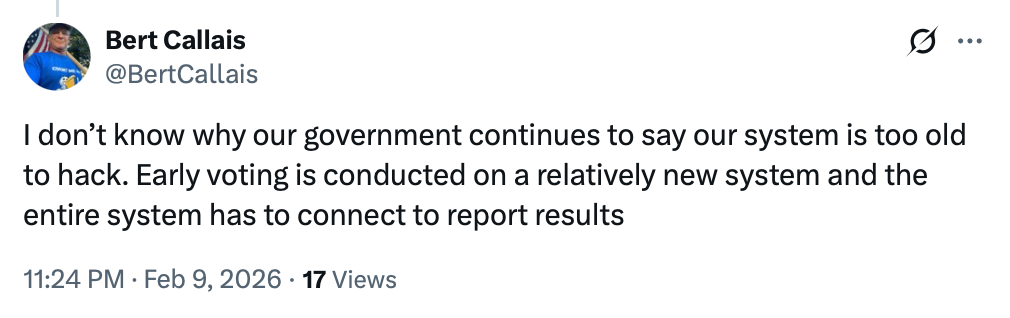
Callais has repeatedly claimed U.S. elections are vulnerable to manipulation, writing that “our system is too old to hack” is a myth and suggesting the system is “manipulated.”
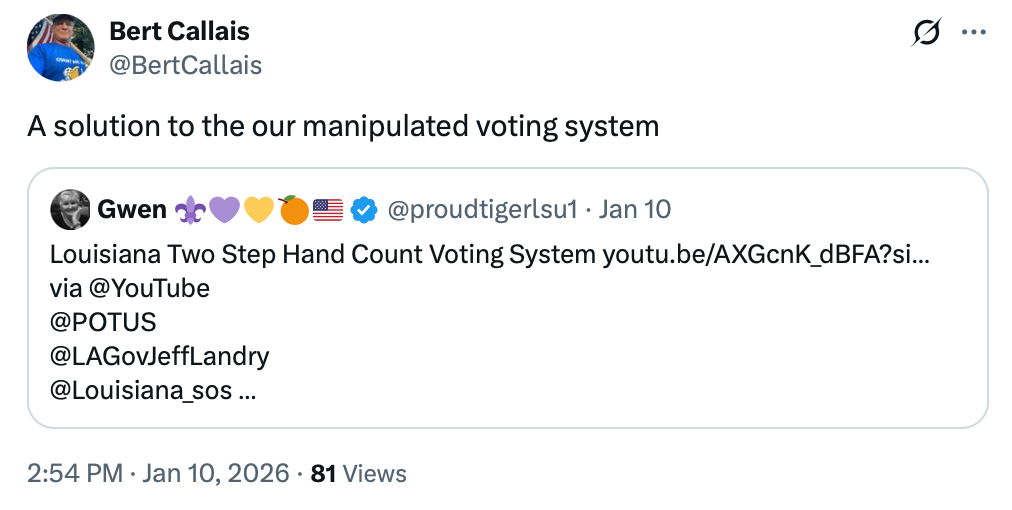
He has promoted replacing electronic voting systems with hand-counted paper ballots, calling it a necessary “solution to our manipulated voting system.”
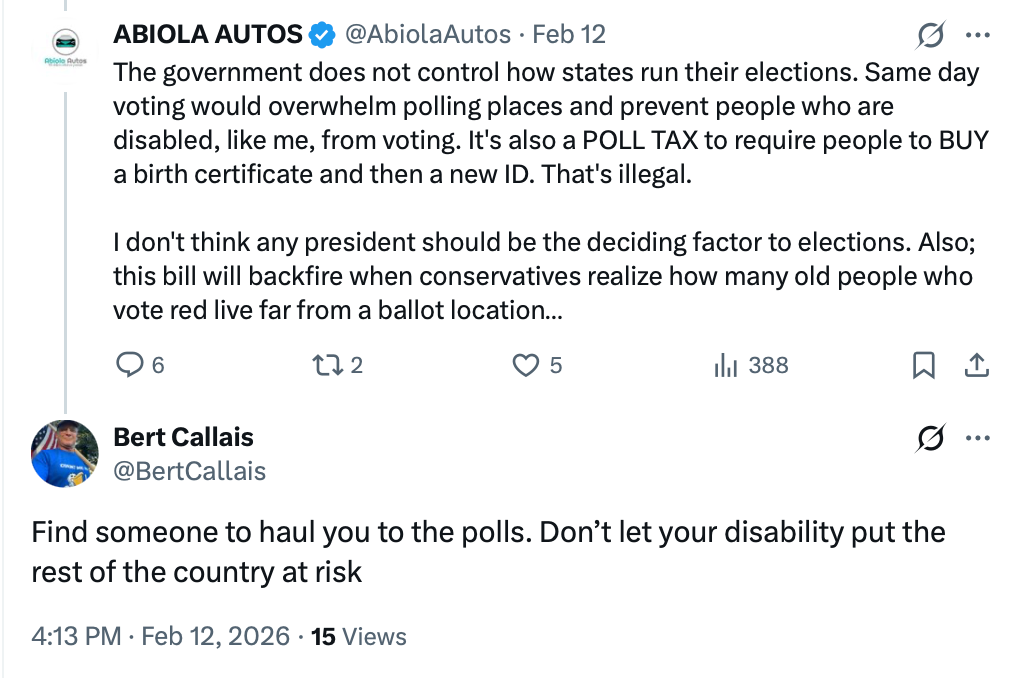
In a post from February, Callais dismissed concerns about access to voting, telling one user with a disability who pushed back on President Donald Trump’s call to get rid of mail-in ballots to “find someone to haul you to the polls.”
He added: “Don’t let your disability put the rest of the country at risk,” suggesting that voters who rely on mail-in ballots — like the elderly and voters with disabilities — should still vote in person.
Callais’ social media activity also shows engagement with prominent election denial figures, including conservative influencer Scott Presler and activist Seth Keshel, amplifying claims about “rigged” elections and reposting calls to overhaul voting systems.
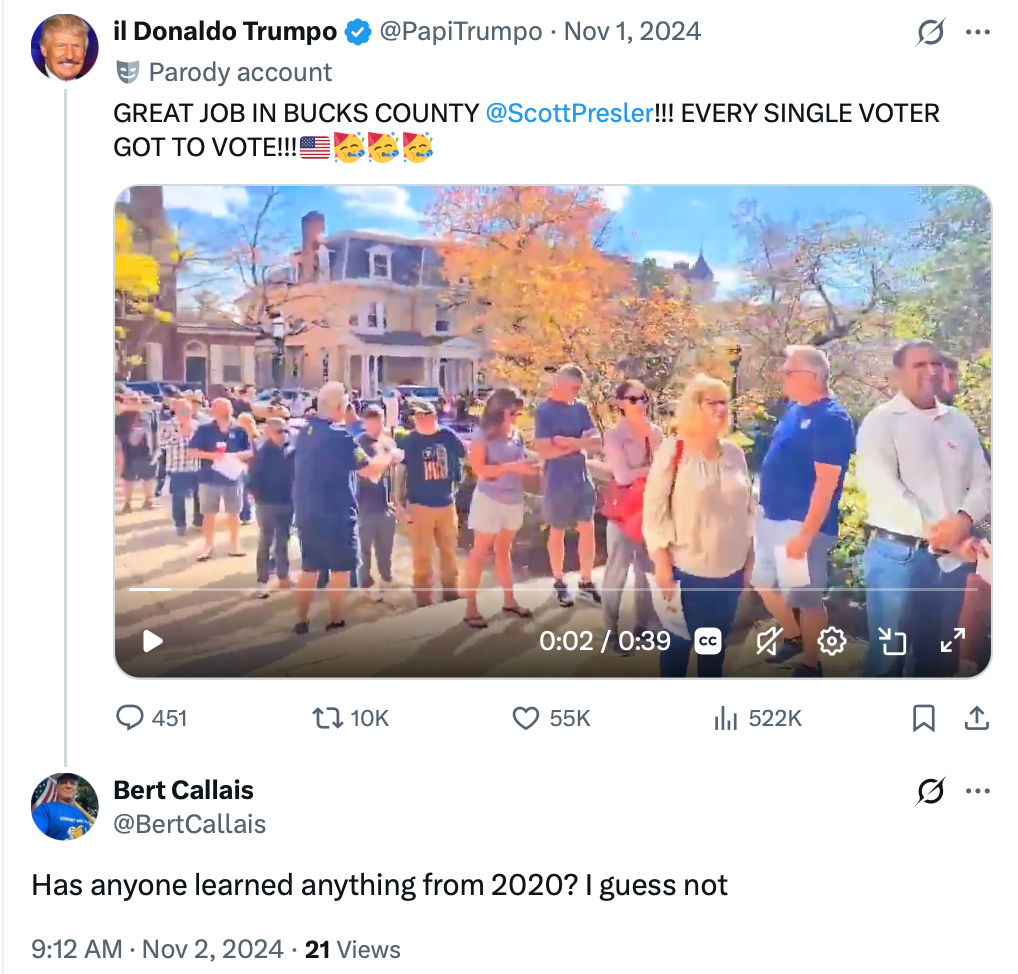
In response to a social media post praising Presler’s voter outreach efforts in Bucks County, Pennsylvania right before the 2024 election, Callais replied: “Has anyone learned anything from 2020? I guess not.”
Days after the Supreme Court ruling came out, Keshel posted a photo shaking hands with Callais.
“Sunday afternoon in Baton Rouge, and got to meet veteran and hero Bert Callais, also known as the plaintiff in Louisiana v. Callais,” wrote Keshel, who the New York Times has called “a celebrity among election deniers.”