Appeals court again rejects DOJ’s bid to block some California ballots, setting up Supreme Court showdown
 Prefer us on Google
to see more of our voting rights news coverage when you search.
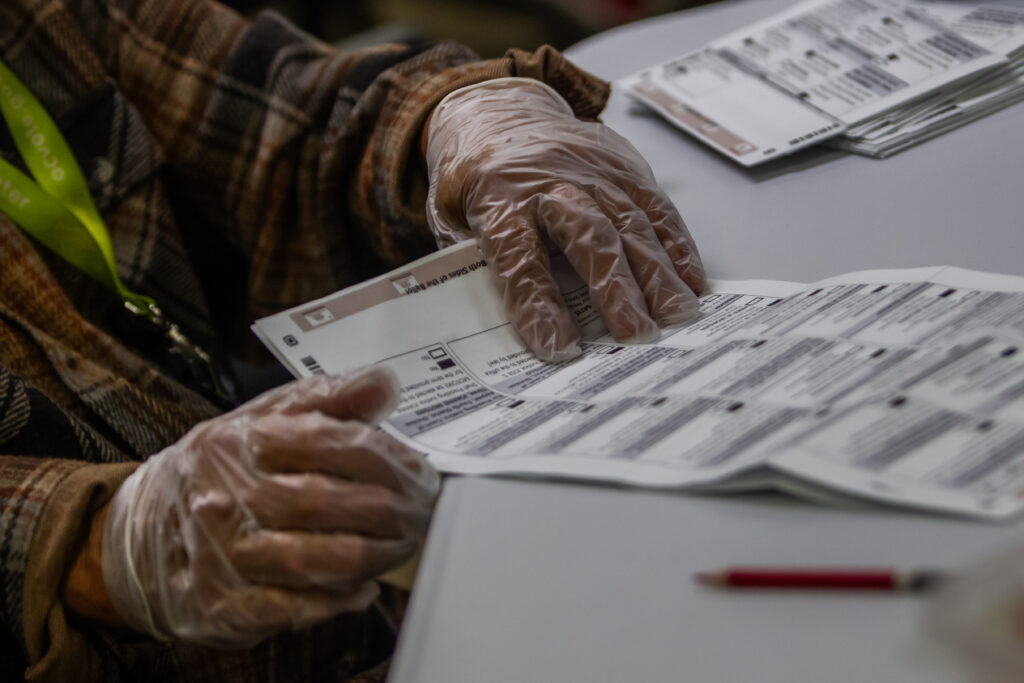
In a major win for voters, a federal appeals court on Friday rejected for a second time the Trump administration’s request to immediately stop California from counting ballots from 20,000 potential voters the Department of Justice alleges are “likely noncitizens.”
The 2-1 decision from the Ninth Circuit marks the third straight court loss for the Trump team in its unprecedented attempt to intervene in California’s elections with voting and ballot processing already well underway.
Despite the legal losses piling up, the DOJ is expected to immediately appeal to the U.S. Supreme Court.
“We decline the United States’s invitation to contravene the Elections Clause by undermining the Constitution’s plain text,” the majority wrote in its decision.
The ruling is a significant blow for the Trump administration’s escalating efforts to subvert the midterms.
Get updates straight to your inbox — for free
Join 350,000 readers who rely on our daily and weekly newsletters for the latest in voting, elections and democracy.
The DOJ is similarly trying to force Washington state to segregate ballots from hundreds of people it alleges are noncitizens. Trump officials are also suing Alaska in an attempt to block the certification of the state’s marquee U.S. Senate race if the Democratic candidate wins.
The Trump administration started its threats in California, suing the state on Oct. 15 after it set a slim 48-hour deadline for state officials to review and set aside ballots from a list of 20,000 people the administration suspects are noncitizens illegally registered to vote until their citizenship status is confirmed.
The request likely violates the National Voter Registration Act, which prohibits systemic voter purges less than 90 days from election day, Judges Mark J. Bennett and Gabriel P. Sanchez wrote in the majority opinion.
“As the district court found—and we discern no clear error—there is no feasible way to identify and segregate the ballots of specific individuals without potentially catastrophic effects on the entire system,” they said.
California officials rebuffed the DOJ’s demand as illegal and questioned the reliability of the federal government’s data given its poor track record for proving its sweeping allegations of noncitizen voter fraud.
In a dissent, Judge Patrick J. Bumatay said DOJ had proposed “a modest remedy” to the prospect that noncitizens might vote illegally.
“If California receives these suspect ballots, mixes them with legitimate ballots, and then processes them, the potentially illegal votes will be counted toward the election of our representatives — threatening to dilute the vote of eligible citizens,” he wrote.
California law requires voters to attest to their citizenship under penalty of perjury when registering to vote, which is all that is required under federal election law. The state also provides a process to challenge a voter’s registration. California has more than 23 million registered voters, and the list of alleged noncitizen voters the federal government flagged represents an infinitesimal percentage.
Nonetheless, the DOJ accused California officials of knowingly facilitating noncitizen voting and has repeatedly threatened prosecutions if local election officials don’t comply with its requests.
A federal judge earlier this week, in a scathing rebuke rejecting the DOJ’s bid to immediately block the state from counting the batch of ballots, warned the Trump administration that threats against election workers must “cease immediately.”