DOJ presses on with California ballot challenge despite the legal losses piling up
 Prefer us on Google
to see more of our voting rights news coverage when you search.
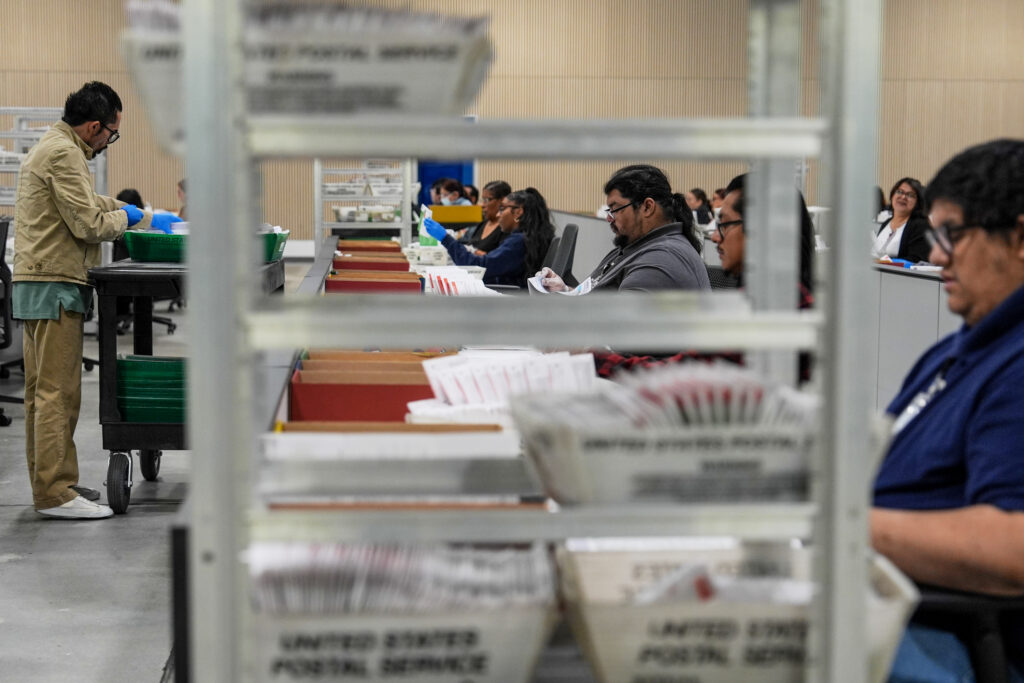
The Trump administration’s losing streak in its bid to block California from counting 20,000 votes from people the Department of Justice (DOJ) alleges may be noncitizens is likely to continue as the case returns to the same appeals court that already cast doubt on the lawsuit.
U.S. District Judge David Carter didn’t mince words in his 26-page order late Wednesday rebuking the DOJ’s unprecedented demand, writing it “violates longstanding constitutional principles” and would “wreak havoc” on democracy.
It’s just the latest legal reproach to the Trump administration’s repeated attempts to subvert the midterm elections. The DOJ sued California to set aside ballots from 20,000 people it claims are noncitizens registered to vote until their citizenship status is confirmed. The request came after voting already began in California.
“The DOJ’s actions are indicative of a broad, ongoing pattern of attempted election interference by federal officials,” Carter wrote.
The DOJ immediately appealed Carter’s decision, sending it right back to the Ninth Circuit Court of Appeals, where one judge has already raised “serious doubts” about the Trump administration’s arguments and a second expressed misgivings about its timing this close to an election.
First Assistant U.S. Attorney Bill Essayli said the DOJ is moving “at a lightning pace” to litigate the issue, and that could include going all the way to the Supreme Court. However, the justice have so far been reluctant to wade into 11th-hour election issues. They rebuffed a Republican effort to enforce a gerrymandered map in Missouri and President Donald Trump’s push to restrict mail voting.
Get updates straight to your inbox — for free
Join 350,000 readers who rely on our daily and weekly newsletters for the latest in voting, elections and democracy.
The Ninth Circuit has not yet assigned judges to the DOJ’s appeal. There’s no guarantee that the same three judges who rejected DOJ’s previous appeal as premature will also sit on the new panel. However, two of the circuit’s judges laid out a roadmap to kill the DOJ’s lawsuit despite ruling against it on procedural grounds.
Judge Mark Bennett, who was appointed by President Trump in 2019, suggested the administration’s attempt to compel California to set aside ballots conflicted with the U.S. Constitution and its Elections Clause.
He also questioned the DOJ’s assertion that a federal criminal statute that makes noncitizen voting a misdemeanor – 18 U.S.C. § 611 – means the federal government can supersede states’ constitutional power to administer elections.
Judge Gabriel Sanchez, an appointee of former President Joe Biden, said the attempt by the DOJ to intervene with voting and ballot processing well underway violated the Supreme Court’s Purcell principle – which cautions courts against changing voting or election rules too close to an election.
Carter, in his Wednesday decision, agreed as he addressed the merits of the DOJ’s assertions directly.
“The United States does not explain why [California] continuing to count ballots impairs any present or future Section 611 prosecution,” Carter wrote. Further, Carter said the federal government’s claim that it can preempt state authority “requires a genuine conflict between state and federal law” that is simply not present here.
“California enforces its constitutional mandate that only citizens may vote through a series of elections laws,” Carter wrote, including attestation to citizenship under penalty of perjury when registering to vote and a process by which to challenge a voter’s registration.
“It cannot reasonably be concluded that Congress, through a federal misdemeanor provision, intended to strip California of its Constitutionally-vested responsibility for election administration and implicitly granted that power to Executive Branch’s Department of Justice,” Carter said.
Carter also said the Trump administration’s process for flagging alleged noncitizen voters “raises significant concern,” something Bennett had highlighted as key for determining whether the court should bar California from counting the disputed ballots as the DOJ demands.
“Given the vagueness of Plaintiff’s descriptions of its procedures and the unreliability of its similar claims in other states, the Court cannot conclude that Plaintiff’s process is credible,” Carter wrote. “This calls into question its allegation that the individuals on the October List are ‘highly likely to be noncitizen[s].’”
To grant the DOJ’s request to set aside California’s ballots, Carter concluded, would likely violate several voting and civil rights laws and lead to disenfranchisement.
“Eroded trust in our democracy is irreparable. Once a vote is segregated, lasting harm has occurred,” Carter wrote. “If the Executive can discount votes and threaten an ongoing election due to unproven allegations, then our democracy is in danger.”