DOJ warns election officials in all 50 states of criminal penalties days before midterms
 Prefer us on Google
to see more of our voting rights news coverage when you search.
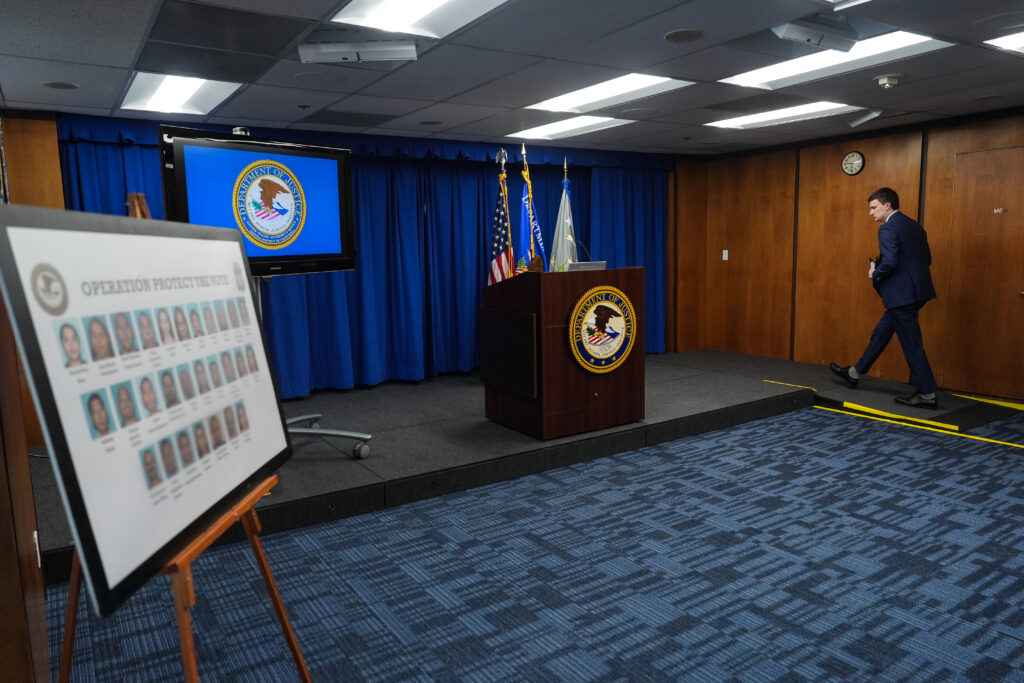
The Department of Justice (DOJ) sent letters Thursday to election officials in all 50 states telling them to preserve ballots and other election records — and warning that willful violations of federal record-keeping law can carry criminal penalties.
DOJ confirmed the scope of the new letters in a court filing Friday obtained by Democracy Docket.
The letters, sent by the Office of the Deputy Attorney General just days before Election Day, tell officials they must preserve federal election records for 22 months under a decades-old federal law.
The letters specifically point to penalties of up to one year in prison and a $1,000 fine for willfully failing to comply.
Get updates straight to your inbox — for free
Join 350,000 readers who rely on our daily and weekly newsletters for the latest in voting, elections and democracy.
The nationwide warning came the same day a federal judge ordered the Trump administration to disclose where DOJ and the Department of Homeland Security (DHS) had sent separate demands asking election officials to take action against specific voters or ballots.
In its filing Friday, DOJ said it sent the notices “to all states” on Oct. 29. The department maintains that those letters are separate from the voter-specific demands at issue in the lawsuit.
Copies obtained by Democracy Docket from Colorado, Michigan, Minnesota and Wisconsin are virtually identical and signed by Acting Deputy Attorney General R. Trent McCotter.
“Election Day is fast approaching, and I write to ensure that your office is protecting the integrity of your state’s elections and following federal recordkeeping requirements,” McCotter wrote.
The letters cite 52 U.S.C. § 20701, which requires election officials to preserve for 22 months records that are required for voting in a federal election and come into their possession. DOJ says that includes completed voter registration forms, pollbooks, precinct sign-in sheets, copies of identification documents, mail-ballot requests and envelopes and “the ballot itself,” whether cast by mail, drop box or in person.
The letter then emphasizes that failure to follow those requirements can be criminal.
“It is a crime to willfully fail to comply with Section 20701,” McCotter wrote, adding that federal law also prohibits the willful theft, destruction, concealment, mutilation or alteration of election records.
DOJ’s preservation warning may also have implications beyond routine recordkeeping.
Under Section 303 of the Civil Rights Act of 1960, the attorney general can later demand access to records that election officials were required to preserve for inspection, copying and reproduction. Any such demand must be made in writing and state its basis and purpose.
The administration has already used that authority in its broader push for election records. DOJ invoked Section 303 in litigation seeking access to Fulton County, Georgia’s 2020 election materials after demanding records the county had been required to preserve — an effort that later became intertwined with the federal investigation and seizure of those records.
The letters arrive amid mounting scrutiny of the Trump administration’s communications with state and local election officials ahead of the midterms.
Democratic groups sued President Donald Trump, DOJ and DHS on Oct. 20, accusing the administration of unlawfully pressuring election officials to remove voters, withhold ballots and change election procedures while threatening officials with potential criminal prosecution. The plaintiffs are asking U.S. District Judge James Boasberg to block those practices nationwide.
At a Thursday hearing in that case, Boasberg ordered DOJ and DHS to identify every state where, since July 1, federal officials had sent formal communications asking election officials to remove specific registered voters, refuse to issue them ballots or segregate or refuse to count ballots they returned. The administration was ordered to provide that information by noon Friday.
In its response Friday, DOJ identified California and Washington as the states where the department had sent communications falling within its interpretation of Boasberg’s order.
DHS separately identified California, Nevada, Pennsylvania and New Jersey as states where it had sent letters raising concerns about potential noncitizens on voter rolls. The administration argued those DHS letters did not technically fall within Boasberg’s order because they asked states to verify voters’ citizenship rather than explicitly directing officials to remove voters or withhold their ballots.
DOJ also objected to broader definitions that could sweep in informal communications or warnings of potential civil or criminal penalties, saying it understood the court’s order to cover formal written communications similar to its Oct. 13 demands to California.
In a footnote to that same filing, DOJ disclosed the separate Oct. 29 preservation letters sent to every state but asserted that they were not responsive to Boasberg’s order because they do not ask officials to remove particular voters or withhold particular ballots.
The preservation notices nevertheless add another nationwide communication from the Trump administration to election officials as voting is already underway across the country.
They also come after the administration has repeatedly raised the possibility of criminal consequences for election officials who do not comply with federal demands.
In California, DOJ recently warned county election officials of potential federal scrutiny if they refused to set aside ballots belonging to people the administration alleged could be noncitizens. A federal judge rejected DOJ’s request to force the state to segregate those ballots Wednesday and admonished federal officials over threats of potential criminal charges against election workers.
In Washington, DOJ separately threatened emergency court action unless state officials withheld ballots from more than 400 people federal officials alleged were noncitizens. Washington officials later said their preliminary review found that the federal list included U.S. citizens and was unreliable.
Natalie Hausmann contributed to this reporting.