Georgia early voting begins under intense scrutiny from White House, GOP
 Prefer us on Google
to see more of our voting rights news coverage when you search.
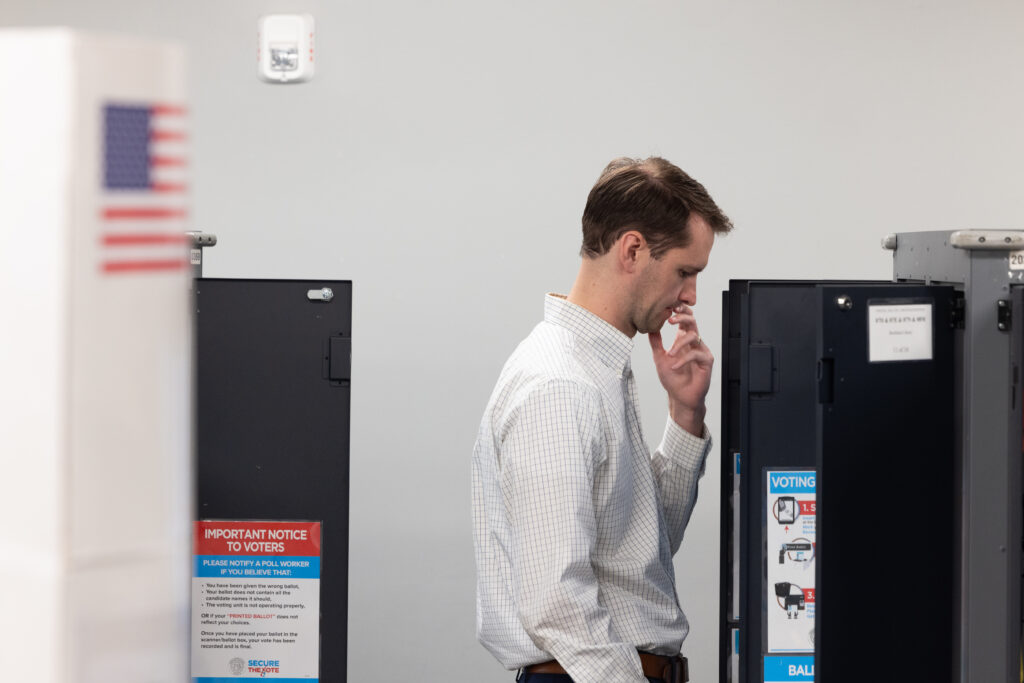
Early voting begins Tuesday in Georgia, and voters can now cast their ballots in several races that will shape future elections in the state.
But whether they vote in person or by mail, they will be doing so under intense scrutiny from the White House, the Republican Party and unelected state officials.
Since President Donald Trump’s loss in the 2020 presidential election, he and his allies have relentlessly assaulted Georgia’s voting procedures and election administration. In the nearly two years since he returned to office, the president and election deniers in the state have attempted to harness the full weight of the federal government against the Peach State.
This year, the stakes could not feel higher: One of Georgia’s two U.S. Senate seats and all statewide offices are up for grabs. The winners will gain influence over voting rights and access both in the state and nationally.
Get updates straight to your inbox — for free
Join 350,000 readers who rely on our daily and weekly newsletters for the latest in voting, elections and democracy.
Beyond that, looming over this year’s vote is the FBI’s January raid on an elections facility in Fulton County, the state’s most populous county, which has been at the center of election conspiracies about Trump’s loss. Through the search, which was based on debunked election claims, the bureau obtained large amounts of election materials from 2020, including original ballots.
So far, the Department of Justice (DOJ) has not filed charges or made arrests stemming from the FBI’s investigation into Fulton County. But the raid demonstrated the Trump administration’s willingness to use extraordinary means to pursue dubious election claims. It also raised the specter of further election interference from the White House.
In addition to the raid, the Department of Justice has sought the state’s unredacted voter registration records — which include people’s voting history, driver’s license and Social Security numbers, and full dates of birth — and the names and personal information of all people who helped run the 2020 election in Fulton County.
Meanwhile, the Republican National Committee (RNC) has attempted to restrict mail voting in the state.
The committee challenged a policy expanding voters’ ability to drop off absentee ballots in Gwinnett County, Georgia’s second-largest county and a major Democratic stronghold. A state appeals court Friday upheld an order dismissing the committee’s suit, though it could be appealed to the Georgia Supreme Court.
At the same time, the committee successfully pressured Fulton and Cobb counties to scrap similar absentee ballot policies. Tim Fleming, the GOP’s nominee to succeed Brad Raffensperger as secretary of state, joined the RNC in suing Gwinnett and Fulton counties over the absentee policy. Fleming has campaigned on stricter voting laws and baseless election conspiracies.
Beyond the DOJ and RNC, unelected state officials appointed to make and enforce the state’s election rules are attacking Georgia’s voting system as well.
Just 34 days before Election Day, the Georgia State Election Board (SEB) took the extraordinary action of requesting that the Trump administration step in to regulate the state’s voting machines — an authority the executive branch does not have.
At the direction of a majority of SEB members appointed by Republicans, James Mills, the board’s executive director, asked the DOJ and Department of Homeland Security in letters to “prohibit” the use of Georgia’s ballot-marking devices and force the state to phase them out.
Voting experts and government watchdogs, including those highly critical of Georgia’s voting machines, have warned that Mills’ request invites an unprecedented federal intervention in state control over voting.
“The Board has handed the Trump administration a blank check for involvement in Georgia’s elections. Trump’s DOJ will most assuredly cash those checks,” the Coalition for Good Governance, which is challenging some of the state’s voting systems in a lawsuit, said in a statement.
Over the past year, SEB members also sought unheard-of access to a secretary of state facility where unofficial election results are aggregated, verified, recorded and eventually reported.
The SEB was joined in its access push by multiple Republican candidates for office, including Greg Dolezal, the GOP nominee for lieutenant governor. Dolezal has built his campaign around distrust of the state’s elections and demands for stricter voting rules.
Early voting in Georgia runs through Friday, Oct. 30. Voters can find more information on registering to vote, polling locations, ID requirements and casting their ballot here.