For Missouri’s older voters, these special ballots are a lifeline — and they’re at risk
When Jo Chase saw her neighbors struggling to walk out the door, she wondered how they would make it to the polls. She imagined them slipping on ice, unable to stand in a poll line or simply not showing up at all.
Missouri summer temperatures can reach the triple digits, and with the potential for snow flurries and ice come November, Chase said her neighbors likely would not chance a bad fall to vote in person.
Chase, 83, lives in a continuing care facility in a small suburb of Kansas City. Many of the about 1,000 residents have mobility restraints. Chase said most folks in John Knox Village still want to vote, but as in deep red states across the nation, that right has become increasingly more difficult to access.
In fact, Missouri spearheaded an effort by a dozen Republican-led states to ask the U.S. Supreme Court in July to greenlight President Donald Trump’s most recent mail voting executive order, which is currently facing an onslaught of litigation to ram parts of it into enforcement in time for the midterms.
While eight states require a witness signature for mail ballots, Missouri is one of three that take it a step further by requiring an official notary to sign every voter’s absentee ballot envelope. It’s an extra restriction that can make voting significantly harder.
Get updates straight to your inbox — for free
Join 350,000 readers who rely on our daily and weekly newsletters for the latest in voting, elections and democracy.
But Chase learned there’s a lesser-known option for those with disabilities to bypass the restrictive measure. It’s called a “permanently disabled” or “permanent absentee” ballot, and Missouri is one of six states with the option. But this too has faced GOP-led attacks as the RNC seeks to limit voting access through ballot signature matching and witness signature requirements.
And to further alarm, the Department of Health and Human Services this month released a memo that Democratic senators said threatened nursing home workers against helping residents vote.
Chase said while she’s long been politically engaged, it was Trump’s re-election and what’s transpired in the two years since that pushed her from awareness to action. With in-person voting out of the picture for many and mail voting options more uncertain by the day, Chase said she channeled her anger to make a plan.
“I just got really into this, and it just really pissed me off that they’re making it so hard for my neighbors to vote,” Chase said.
Mobilizing for ‘permanently disabled’ mail ballots
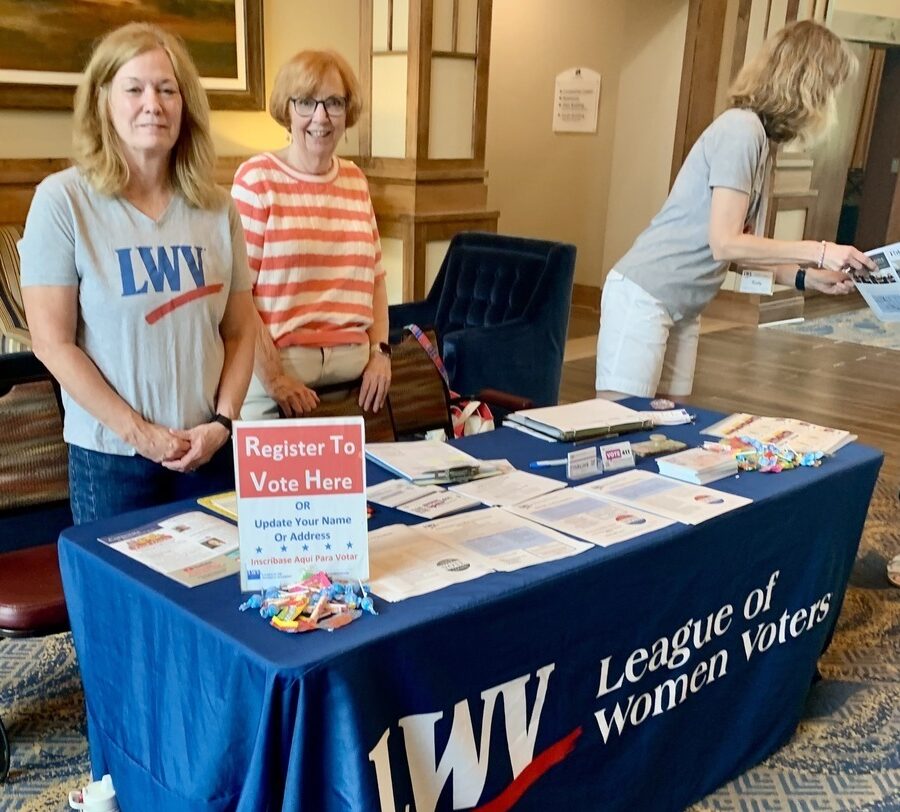
Over just a few days this summer, Chase helped dozens of her neighbors get a special type of ballot designed for those with disabilities. With the help of the League of Women Voters Kansas City and recruited volunteers, Chase mobilized a grassroots campaign to get her neighbors with disabilities on Missouri’s permanently disabled absentee list.
Kelly Edmonson and Elizabeth Frank spent two days tabling with Chase at three high-traffic spots across the village.
The two told Democracy Docket they spoke to dozens of people and helped at least seven update their addresses. Edmonson said she saw an older man with significant difficulty walking, who she described as “heaving” with his oxygen tank. He was one of the over 50 the crew talked to who likely would not have been able to vote in person.
More difficult was the push to help people get on the permanently disabled absentee list. That’s because even states with the option don’t make it easy.
To request a permanently disabled absentee ballot in Missouri, a voter must request it through their county elections board. But Jackson County, where the continuing care community is located, does not provide information on the ballots on its website.
Chase, along with the LWV volunteers, spent hours playing telephone with Jackson County election officials before they got their answer. They would have to request a typical absentee ballot, manually modify it to specify it as a “permanently disabled absentee ballot” by self-attesting as a voter with “disability or incapacity,” and send it back to the county for review.
When voters are approved to be on the list, they automatically receive a mail ballot application each election cycle, without having to request one each time. These ballots are also unique because they don’t require the extra step of a notary signature.
GOP voter fraud claims meet reality
Chase said it never crossed her mind to try and coerce or even assist her neighbors who don’t have the mental wherewithal to make a voting decision. That’s a stark contrast from the picture painted by the Trump administration: one of rampant and encouraged malfeasance by workers taking advantage of their residents.
In its memo released earlier this month, the Centers for Medicare and Medicaid Services (CMS) played into this picture when it called out cases of voting fraud that never resulted in illegal votes. CMS, headed by doctor-turned-television host Mehmet Oz, warned against “coercion” and “undue influence” in nursing home voting.
“CMS is reminding facilities and their staff that they cannot engage in inappropriate coercion or other violations of residents’ rights,” the memo reads.
Most people in assisted living facilities are over the age of 65, which remains a large active voting bloc and is one of the most likely to vote by mail.
The memo also said nursing homes should encourage the use of bipartisan election workers, an ongoing GOP talking point used to tip the scales for more Republican poll workers (state and local election officials have said they typically have more Democrats sign up for voting roles than Republicans).
The memo bases its fraud claims on an improper voter registration instance in Texas and voter fraud charges dropped in Wisconsin. As Democratic senators pointed out in their response letter, neither has been shown to result in faulty ballots cast in any election.
While the memo does not change any requirements from prior CMS standards, 13 lawmakers promptly sounded alarm bells over language they called threatening and potentially disenfranchising.
The memo “appears to be an attempt to intimidate nursing home staff from assisting residents in the voting process,” according to the letter led by Elizabeth Warren (D-Mass.) and Alex Padilla (D-Calif.).
The senators also called out the memo for removing language that provided specific guidance on helping nursing home residents vote.
Meanwhile, rhetoric purporting mass voter fraud in nursing homes is coming from outside the White House too. Far-right personality Benny Johnson posted in June that California’s mail voting system is rigged to benefit Democrats.
“California Has Manufactured a System to Pressure the HOMELESS and People in Nursing Homes to Vote DEMOCRAT…” Johnson wrote in a summary of his interview with fellow conservative commentator Joel Pollack.
Chase of John Knox Village said she intentionally does not ask her neighbors with any mental decline about voting, and the same could be said for workers at the care facility.
“I will not touch memory care,” Chase said. “There was an above and beyond effort to not influence where memory care is concerned.”
Edmonson said she barely remembered the names of staffers at the facility, much less rely on them to help with voter education, registration or actual voting. She said staff occasionally provided them with extra supplies and paper copies when needed.
“I don’t think we interacted with any staff,” Edmonson said. “One time we had to ask for some scissors, so they gave us some scissors.”
After what the crew considered a successful get-out-the-vote push for a small community, Chase is gearing up again for November. Armed with her mailing list, breakfast announcements and active discussion group, Chase said she is hesitantly hopeful.
I’m not going to give up on this,” Chase said. “Just because you’re 80 doesn’t mean there’s not something you can do.”
John Evans contributed to this reporting.
[9:53 AM] Correction: A previous version of this story stated that Missouri voters approved to be on the permanently disabled absentee ballot list automatically receive an absentee ballot each election cycle, without having to request one. It has been corrected to reflect that these voters automatically receive an absentee ballot application, not an absentee ballot.