GOP suppression law targeting mail ballot signatures goes before Kansas judge
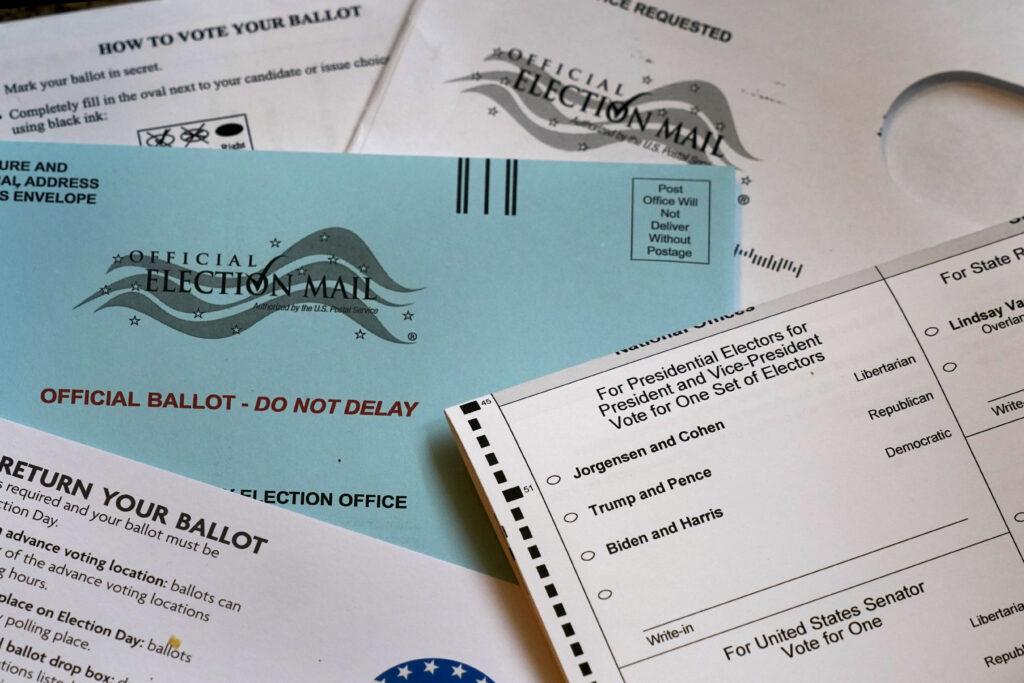
A Kansas court began hearing a challenge to a GOP-backed law that could make it more difficult for voters to cast a mail ballot in the state if it goes into effect.
In the lawsuit, pro-voting organizations* are taking aim at a provision requiring local election officials to reject mail-in ballots for perceived mismatches between the signatures on the ballots and those in voters’ registration records.
The court trial, which began Monday in Topeka and is expected to run until July 28, marks the latest development in a protracted legal battle against a slew of voter suppression policies that Kansas Republicans adopted in two laws after President Donald Trump’s loss in 2020.
Get updates straight to your inbox — for free
Join 350,000 readers who rely on our daily and weekly newsletters for the latest in voting, elections and democracy.
So far, state courts, including the Kansas Supreme Court, have largely sided with the pro-voting and civil rights organizations that brought the suit and have blocked some of the policies in the laws — including a vague provision that would make it a felony for an individual to knowingly “[r]epresent oneself as an election official.” But courts have also upheld some of the other policies.
The League of Women Voters of Kansas, Loud Light, Kansas Appleseed Center for Law and Justice, and the Topeka Independent Resource Center have argued that the signature matching procedure as designed by the provision is “standardless,” likely “error-prone” and could “erroneously disenfranchise eligible voters.”
Beyond Kansas, civil rights organizations, including the ACLU, have warned that signature matching requirements, if implemented incorrectly, can erroneously or deliberately disenfranchise voters, particularly voters with disabilities.
Signature matching requirements can be especially restrictive if voters are not given proper notice or opportunity to cure discrepancies.
Notably, Kansas’ signature requirement does establish a curing process, though plaintiffs have said it’s vague and is largely left to the discretion of county election officials. The lack of uniformity in the cure process will mean that some voters will be granted more or less time to correct based only on where they live, they also argued.
Kansas Secretary of State Scott Schwab (R) and the other defendants in the case have argued that the challenged policies, including the signature verification requirement, were “designed to safeguard the security of the ballot, deter fraud, facilitate efficient election administration, and enhance the public’s confidence in elections.”
In 2024, the Kansas Supreme Court determined that signature matching requirements for mail-in ballots are permissible under the court’s precedent, though it asked a state district court to consider whether Republicans’ specific provision and its implementation comport with the Kansas Constitution’s guarantees of equal protection and due process.
The trial comes days after a Douglas County judge temporarily blocked a 2025 GOP-backed law eliminating the state’s three-day grace period for ballots that arrive after Election Day. The judge determined that the law likely violates the state constitution’s voting rights protections.
*Plaintiffs Loud Light and Kansas Appleseed Center for Law and Justice in this case are represented by Elias Law Group (ELG). ELG firm chair Marc Elias is the founder of Democracy Docket.