Florida early voting begins under aggressive GOP gerrymander in last election before more voting restrictions kick in
 Prefer us on Google
to see more of our voting rights news coverage when you search.
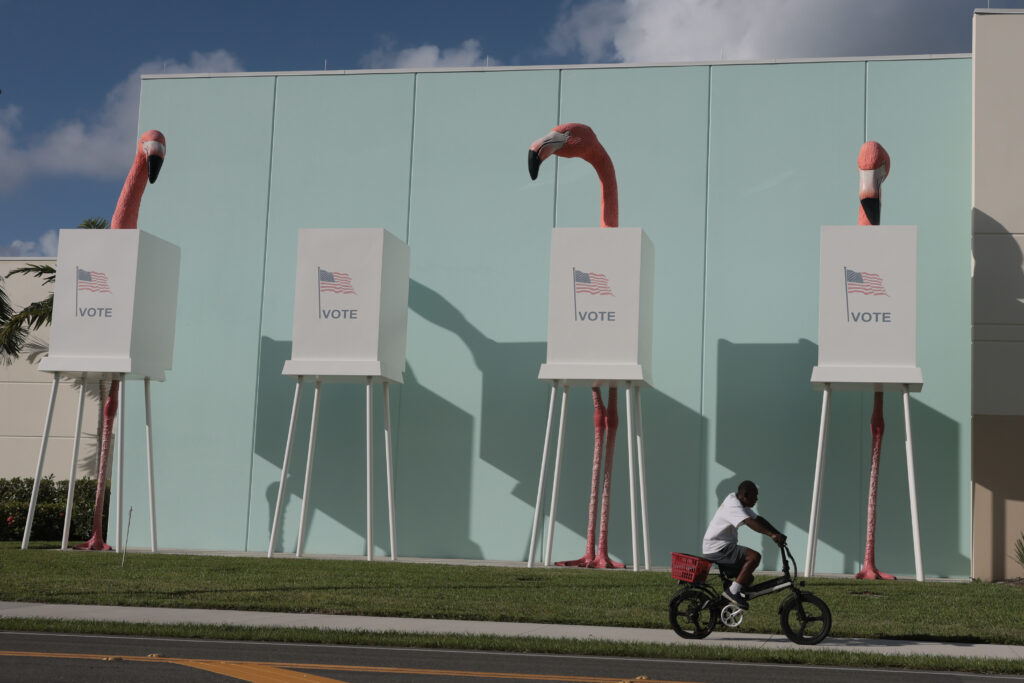
Voting in the 2026 general election is well underway across Florida. According to the latest data from the Florida Department of State, more than 1.6 million Floridians have already returned mail ballots or voted early in person.
And they are casting ballots at a worrying moment for elections in the Sunshine State.
In April, Florida Republicans passed an aggressive gerrymander of the state’s congressional map, part of a wave of partisan redraws implemented at President Donald Trump’s behest. The Florida redraw came just an hour after the U.S. Supreme Court issued a ruling gutting the Voting Rights Act and making it easier for states to gerrymander.
Now, Floridians are voting under that new map.
Get updates straight to your inbox — for free
Join 350,000 readers who rely on our daily and weekly newsletters for the latest in voting, elections and democracy.
Republicans hoped their mid-decade shakeup would give them an advantage in the 2026 midterm elections. But polling and registration figures suggest the gerrymander could flop. Still, as a result of the map change, hundreds of thousands of voters found themselves in new districts just months before the vote.
There are also other worrying signs in Florida: County election officials around the state have warned that federal agents have appeared outside early voting sites.
In Leon County, Supervisor of Elections Mark Earley said he filed a complaint with the FBI after two U.S. Customs and Border Protection vehicles parked outside one of the county’s busiest early voting locations.
Similarly, Monroe County Supervisor of Elections Sherri Hodies said federal agents carried out an arrest near a voting site.
“I’m not happy about it,” she told Local 10 News. “Frankly, I was stunned about it. It’s hard to take these phone calls from voters who are frightened. Their voices are shaking. What is going on?”
The midterms will also be the last major election in Florida before sweeping new Republican voting restrictions take effect.
Starting in January, voters in Florida will be required to prove their citizenship status or else lose their right to register to vote and cast a ballot under a law known as the Florida SAVE Act. Those new restrictions will also heavily limit the forms of identification people can present to comply with the state’s voter ID rule.
The law was inspired by and named after the SAVE America Act, an extremely anti-voting federal bill backed by Trump that has, so far, failed to pass the U.S. Senate.
Pro-voting groups challenging the Florida SAVE Act have argued that, if it goes into effect, thousands of voters without citizenship documents will be disenfranchised by the new requirements.
The law will also disproportionately affect young voters, because its provisions include removing student IDs as an acceptable form of voter identification.
While each Florida county sets its own first day of early voting, most have already started at this point. For more information on early voting in your county, see the Florida Division of Elections website.