Florida NAACP youth chapters sue state to stop student voter ID ban
 Prefer us on Google
to see more of our voting rights news coverage when you search.
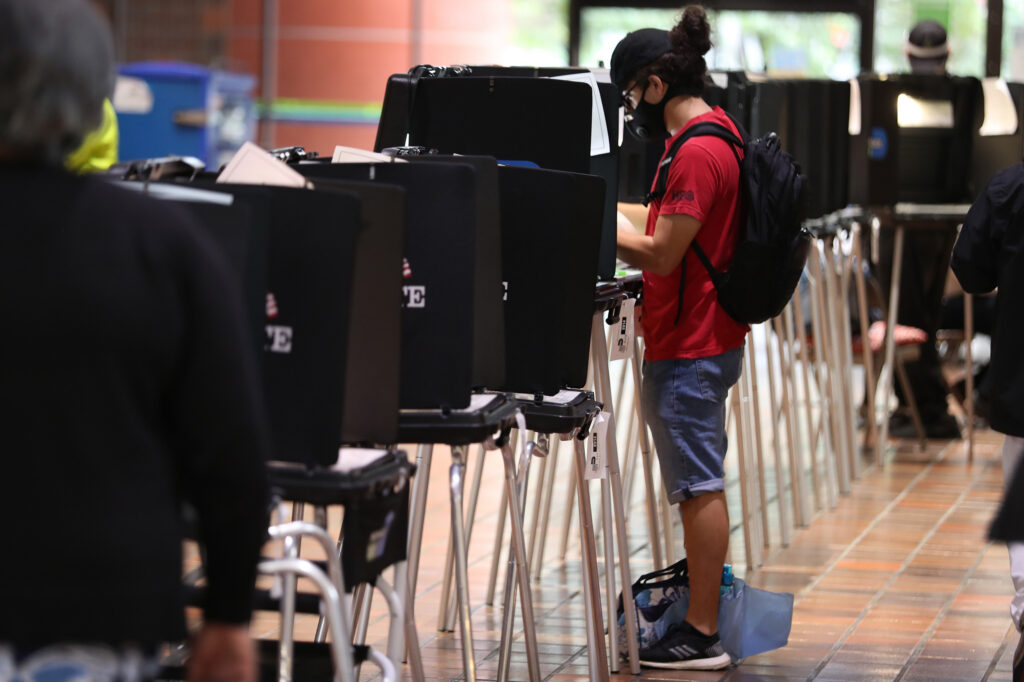
Thousands of Florida college students will be disenfranchised by a law passed earlier this year that bans voters from using university-issued photo ID cards to vote, a new lawsuit from the Florida State Conference of Branches and Youth Units of the NAACP argues.
Florida’s student ID ban is the latest in a string of Republican efforts to restrict voting access in the state. The ban would significantly burden student voters, particularly those who are low-income, lack transportation, or who can’t reasonably establish residency requirements.
Florida has one of the oldest voter ID laws, and up until this year college ID cards were one of the few acceptable forms of identification voters could use to comply. But in March, Florida Republican lawmakers passed HB 991, a package of new state voting restrictions that some have likened to the federal anti-voting SAVE America Act that Congress members have repeatedly failed to pass.
Get updates straight to your inbox — for free
Join 350,000 readers who rely on our daily and weekly newsletters for the latest in voting, elections and democracy.
Florida’s HB 991, like the SAVE America Act, requires proof of citizenship to register voters. Unlike the federal bill, Florida’s measure prohibits the use of college IDs to vote. The provision was added to purportedly stop voter fraud, but according to the lawsuit, the bill’s sponsors never cited any evidence that student IDs have been used to vote illegally.
Florida’s House Bill 991 “is the latest installment in an extended scaremongering campaign about imagined threats to Florida’s elections that will make it harder for lawful, eligible voters to successfully vote,” the lawsuit reads.
The Florida NAACP youth chapters say that the law targets students and young voters specifically, violating their constitutional right to vote.
Under Florida’s voter ID restrictions, voters who show up without one of the approved forms of ID – which includes driver’s licenses, military ID and concealed carry gun permits – would have to cast a provisional ballot. Canvassing board members would then inspect the provisional to make sure its signature matches the one on the voter’s registration file.
If determined that the signatures don’t match, then the voter has to produce another form of ID that has their address on it – but still not a university ID. According to the lawsuit, many college students don’t carry other forms of photo ID, such as passports and drivers licenses. Many Florida students don’t drive due to university restrictions, the lawsuit says.
According to data from the Federal Highway Administration and Census Bureau on Florida, more than 1.4 million people aged 18-24 – or roughly a quarter of Floridians in that age group – didn’t have a driver’s license in 2024.
The Student ID ban was adopted despite the fact that Florida’s HB 991 law actually expanded the group of acceptable forms of voter ID, allowing for any photo ID card issued by the state or any of its counties or cities.
“The bill carves out only one exception to the otherwise blanket rule that IDs issued by Florida governmental entities may be used for voter ID purposes, expressly prohibiting the use of any IDs issued by a public educational institution,” the lawsuit reads.
The Florida NAACP’s youth chapters filed the lawsuit against Florida’s Secretary of State Cord Byrd along with the election supervisors of all 67 of the state’s counties. They are asking the court to declare the student ID ban unconstitutional and to block state and county election officials from enforcing it. The law won’t be in effect for this year’s midterm elections, but will take effect beginning Jan. 1, 2027.