Exclusive: Another election denial leader, hired by DHS, drafted letter threatening states over voting audits
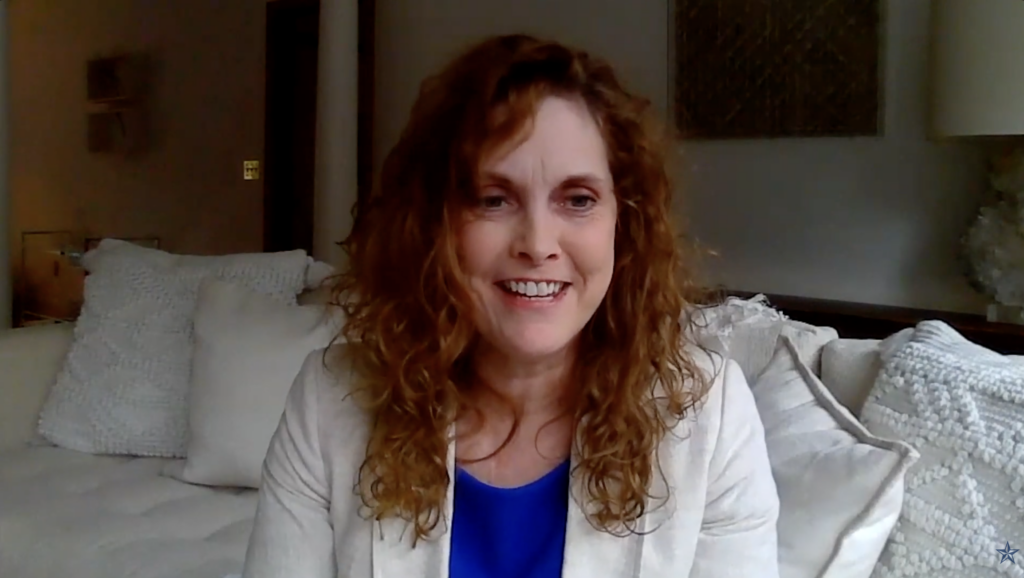
When Democracy Docket reported last year that the Department of Homeland Security (DHS) had hired Heather Honey, a prominent election denial activist, to a senior elections post, democracy advocates expressed alarm.
Now, online records show that a close Honey associate, who has pushed to ban voting machines and brought a slew of lawsuits that risked disenfranchising large numbers of voters, has quietly been brought into the same DHS office.
On Thursday, a right-wing news outlet published a letter sent Monday by DHS Secretary Markwayne Mullin, threatening to withhold security funding to states that don’t conduct post-election audits. Metadata from the letter, examined by Democracy Docket, identifies Karen DiSalvo, a Pennsylvania lawyer and leading election denial activist, as the creator of the document.
DiSalvo’s apparent role in the Mullin letter is the latest evidence that key figures from the election denial movement are helping drive, from the inside, the Trump administration’s efforts to assert control over voting as the midterms approach.
DiSalvo works as a senior adviser to DHS’s Office of Strategy, Policy, and Plans, records maintained by the U.S. Office of Personnel Management show. That’s the same DHS office where Honey serves in a senior role as DHS’s deputy assistant secretary for election integrity.
DiSalvo and Honey — whose false claims about the 2020 election were cited by President Donald Trump in his speech to rallygoers on Jan. 6, 2021 — previously worked together to create the Election Research Institute (ERI), a Pennsylvania-based anti-voting organization.
“Someone linked me up with Heather, and so we formed this nonprofit, the Election Research Institute, last year,” DiSalvo explained in a 2024 podcast appearance with Honey.
ERI’s 2024 federal tax filing, filed in November 2025 after Honey joined DHS, listed DiSalvo as the group’s president and director.
It is not clear when DiSalvo joined DHS. Archived versions of her profile with the Supreme Court of Pennsylvania’s Disciplinary Board suggest that, as late as September 2025, she did not list DHS as her employer.
Get updates straight to your inbox — for free
Join 350,000 readers who rely on our daily and weekly newsletters for the latest in voting, elections and democracy.
David Becker, the executive director of the Center for Election Innovation & Research and a leading election administration expert, expressed alarm at the hiring.
“The administration dismantled the election cybersecurity expertise built up during the past two administrations, including Trump’s first term, and has replaced that expertise and credibility with conspiracy theorists,” Becker told Democracy Docket. “Election officials of both parties tell me they can no longer trust the federal government as a partner in running secure elections.”
“DHS does not comment on existing personnel,” a DHS spokesperson told Democracy Docket.
“Election security is national security, and protecting our critical infrastructure remains a top priority for the Trump Administration,” the spokesperson added. “Concerns over voting processes, data security, and registration practices have made it clear that action is required. This year, states must take critical, common-sense steps to protect U.S. elections before receiving their full Homeland Security Grant Program awards. These new requirements will preserve election integrity.”
The letter from Mullin said DHS would withhold security grants to states if they did not agree to conduct post-election paper ballot audits. That’s something 36 states already do — but it tracks with DiSalvo’s history of “election integrity” activism.
In 2022, DiSalvo led an effort in Lycoming County, Pennsylvania, to audit the 2020 vote. She brought a list of demands to a county board of elections meeting that year, which included “no future use of voting machines” and “hand count of all the paper ballots from the 2020 election.”
The county ultimately agreed to hand-count more than 59,000 ballots and found no significant discrepancies from the machine-tabulated results. County election officials said the exercise demonstrated the accuracy of the voting machines.
Still, even before the recount results were released, DiSalvo questioned whether they could be trusted, arguing that the county elections director had a “vested interest” in the outcome.
DiSalvo also represented Honey in a 2024 lawsuit seeking to prevent future use of Pennsylvania’s voting machines after a human error caused two judicial-retention candidates’ names to be reversed on some printed ballot records in Northampton County’s 2023 election.
The Pennsylvania Commonwealth Court rejected the challenge and upheld dismissal of the case. State officials argued that the plaintiffs had presented no evidence that votes were improperly recorded.
Shortly before the 2024 election, DiSalvo filed a federal lawsuit on behalf of a group of GOP members of Congress from Pennsylvania, alleging that the state was refusing to verify the identities of overseas voters as required by law.
Pennsylvania officials said in court filings the lawsuit aimed to disenfranchise “tens of thousands” of overseas voters.
An amicus brief filed by the Brennan Center for Justice in support of the state called the lawsuit “the latest in a long line of frivolous election actions filed since the 2020 presidential election that aim, contrary to law, to disenfranchise legitimate American voters and undercut public confidence in the electoral system.”
A district court dismissed the lawsuit, allowing Pennsylvania to exempt overseas voters from certain voter eligibility requirements.
Honey reportedly attended a hearing in that case, and left the courtroom with DiSalvo.
Earlier that year, DiSalvo helped bring a lawsuit challenging President Joe Biden’s executive order aimed at expanding access to voter registration, as well as several pro-voting Pennsylvania policies. The lawsuit leaned heavily on the Independent State Legislature Theory, a fringe legal doctrine rejected by the Supreme Court, which asserts that only state lawmakers have ultimate authority to set election policies.
The lawsuit was rejected by federal district and appeals courts. The U.S. Supreme Court denied a petition for review from DiSalvo and her team.
In filings for that case, DiSalvo is listed as working for the Minnesota-based law firm Mohrman, Kaardal, and Erickson. In June, Democracy Docket reported that co-founder William Mohrman — who worked on a legal effort to overturn the 2020 election results in Wisconsin and represented George Floyd’s killer — was hired by the Department of Justice (DOJ) voting section. He was seen conducting election monitoring for the DOJ in Minnesota’s August primary.
On social media, DiSalvo has used the hashtag “TrumpWON,” and has expressed support for Jacob Chansley, known as the “QAnon Shaman,” who was sentenced to 41 months in prison after being among the first rioters to break into the U.S. Capitol on Jan. 6, 2021, while holding a spear.

The Mullin letter was sent to a White House task force charged with declassifying intelligence documents, explaining the alleged vulnerability of voting machines made with foreign components.
It says that, in order for states to receive a grant under the Homeland Security Grant Program, they “must demonstrate that they have conducted random post-election manual counts of paper ballots to ensure that any errors or manipulation is detected.”
Every state already has laws requiring post-election audits of some kind, though not all audit ballots. According to the National Conference of State Legislatures, 36 states have laws that require their post-election audit to include an inspection of paper ballots. The other 14 states conduct post-election audits that fall outside of the traditional process and include an audit of other elements of that state’s voting system, like signature verification.
The Mullin letter also outlines growing concerns about the vulnerability of Chinese-made parts used in voting machines.
“Voting machines with components manufactured by foreign adversaries introduce significant security risks,” Mullin wrote. “These vulnerabilities mean that malicious actors could potentially compromise election infrastructure at any stage of the supply chain, even before the machines are assembled or deployed.”
Becker said that information about Chinese components in voting machines was already well known and overblown.
“It’s shocking that we have a government that’s wasting its time digging up stuff that we’ve known about for years,” he told Democracy Docket.
Election officials and voting rights experts have, for years, touted the security and accuracy of voting machines.
While vulnerabilities in voting machine technology exist, election officials at the federal, state and local level have implemented best practices to ensure the machines are secure and accurate before every election. All machines are tested, and election officials are required to do logic and accuracy checks to ensure everything works as it should.
Last month, Mullin claimed that 250,000 noncitizens were illegally registered to vote across four states: Nevada, California, Pennsylvania and New Jersey. He then asserted that these findings should prompt election officials to comply with a slate of election demands from the Trump administration — and threatened those who don’t obey with criminal charges.
But DHS has since had to walk back that claim.
In a video call with Nevada election officials earlier this month, department officials disclosed that they had identified only 185 “potential” noncitizens in the state, according to recordings obtained by Democracy Docket. That’s far from the nearly 16,000 the department initially alleged to have found through an analysis of the Nevada’s public voter file earlier this year,
Leading the DHS officials delivering that news was Honey.