California early voting starts today. Here’s what you need to know
 Prefer us on Google
to see more of our voting rights news coverage when you search.
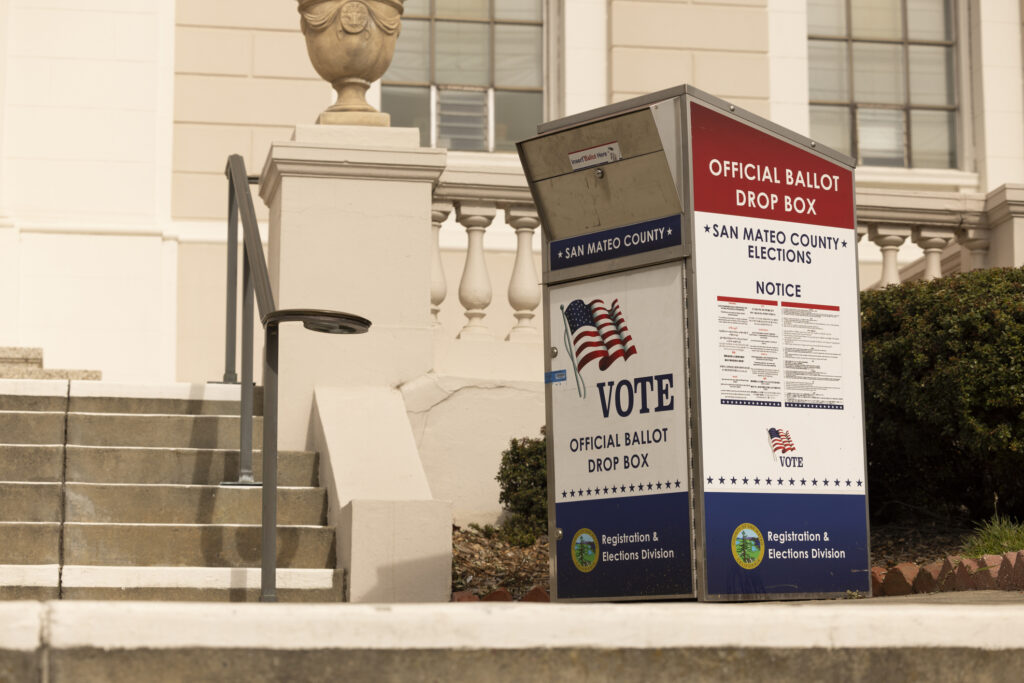
Voting in California’s consequential 2026 midterms began Monday, when election officials started sending ballots to more than 20 million voters across the Golden State and opened secure ballot drop-off locations.
Californians are voting amid an unusually turbulent fight over how ballots are cast, delivered, counted and protected.
President Donald Trump spent much of the year trying to restrict mail voting nationwide — a direct threat to California, where nearly 90% of voters cast their ballots by mail.
Get updates straight to your inbox — for free
Join 350,000 readers who rely on our daily and weekly newsletters for the latest in voting, elections and democracy.
California rejected nearly 150,000 mail-in ballots in its own June primary, overwhelmingly because of late or late-postmarked ballots. Voters will elect members of Congress for the first time under the new congressional map approved through Proposition 50. A sweeping GOP-backed anti-voting measure is on the November ballot but does not govern this election. And in Shasta County, the official responsible for overseeing the vote is once again clashing with state and county authorities over election procedures.
California has also had to prepare for something election officials rarely had to contemplate before: law enforcement attempting to seize control of ballots.
After Riverside County Sheriff Chad Bianco (R) seized roughly 650,000 ballots from the 2025 special election, the California Supreme Court unanimously ruled last month that ballots must remain in the custody of election officials and that the attorney general can direct county sheriffs when their investigations conflict with state law.
Beginning Oct. 5, every active registered California voter will be mailed a ballot and counties must make drop-off locations available. Here’s what Democracy Docket is watching as voting gets underway.
Californians are voting under a new congressional map
The congressional districts on Californians’ ballots will look different this year.
Voters overwhelmingly approved Proposition 50 in last year’s special election, temporarily replacing congressional maps drawn by California’s independent Citizens Redistricting Commission with maps drawn by the Legislature.
The measure was passed in response to Texas’ mid-decade GOP gerrymander, and requires California to use the new congressional lines beginning with the 2026 election and continuing through 2030, when the independent commission will draw new districts following the next census. California still has 52 congressional districts.
That means voters casting ballots beginning Monday will be choosing representatives for districts that technically do not take effect until the new Congress begins Jan. 3, 2027. Californians remain represented under the old boundaries until then, but their 2026 ballots – like the primary ballots – include candidates running in the Proposition 50 districts.
The map change carries particular significance this year because California sends the largest congressional delegation in the country to Congress, and multiple House races in the state could affect control of the chamber.
The map also sits at the center of one of California’s most extraordinary election disputes of the year.
California has new protections against another ballot seizure
After voters approved Proposition 50, Bianco obtained search warrants and illegally seized roughly 1,000 boxes containing about 650,000 ballots cast in Riverside County’s special election. His investigation was based on dubious claims by conservative activists that tens of thousands more ballots had been counted than received.
County election officials said those claims stemmed from a misunderstanding of unofficial intake records and that the discrepancy between the official ballot-tracking system and the final count was just 103 ballots.
The Bianco episode ultimately produced some of the clearest legal protections for ballots anywhere in the state.
In two unanimous rulings last month, the California Supreme Court held that Bianco violated state law when he removed ballots from the custody of Riverside County election officials.
The court said ballots must remain continuously under the control of election officials from the moment they are cast until they are eventually destroyed. The justices rejected Bianco’s argument that a criminal search warrant gave his deputies authority to remove and privately handle ballots outside California’s election procedures.
In a companion ruling, the court also held that California Attorney General Rob Bonta (D) has constitutional authority to issue binding directions to sheriffs when a local investigation conflicts with the uniform enforcement of state law.
Those decisions could matter well beyond Riverside County if another local law enforcement official attempts to seize election materials this fall.
And California lawmakers have added another layer of protection.
Gov. Gavin Newsom (D) signed a package of election laws last month that includes a measure making it a felony to unlawfully seize ballots, election records or certified voting equipment while election officials are still counting and certifying an election.
Another law requires local officials to notify the secretary of state and attorney general within one day if they learn of a warrant, subpoena or law enforcement investigation involving protected election records or voting technology.
The measures were explicitly written with the midterms in mind after Bianco’s seizure raised fears that local or federal law enforcement could interfere with an unfinished election.
Mail voting is still California’s biggest logistical challenge
For most Californians, however, the election will begin much more routinely: with a ballot arriving in the mail.
All active registered voters will receive one, and counties must begin mailing them no later than Monday. Voters can return them by mail, at a drop-off location or directly to a county election office.
But California’s June primary exposed a major vulnerability in that system.
Counties rejected nearly 150,000 mail-in ballots, the highest rejection rate in more than a decade. More than 93,000 were rejected as “too late.”
Many voting advocates blamed changes in U.S. Postal Service (USPS) processing that can create a delay between when a voter places a ballot in the mail and when the service applies the postmark used to determine whether it was sent on time.
That distinction matters because California accepts mail ballots that arrive up to seven days after Election Day, but they must be postmarked by Nov. 3 to qualify.
That means ballots arriving through Nov. 10 can be counted if they meet that deadline.
The secretary of state is now urging voters to mail ballots at least seven days before Election Day. Anyone waiting until Nov. 3 to mail a ballot is advised to take it inside a post office and ask a postal employee to apply a manual postmark.
Voters also have until Nov. 25 to correct signature problems on their ballot envelopes, another reason California’s vote count often continues well after Election Night.
Those lawful late-counted ballots have repeatedly become fodder for unsupported claims about fraud.
California officials will again be under pressure this November to explain why vote totals may continue changing for days or weeks after polls close — particularly if close congressional races remain unresolved.
Trump’s mail-voting overhaul is blocked — at least for this election
California also enters the election after fighting a federal attempt to change how mail ballots move through the Postal Service.
Trump directed USPS to impose new requirements on mail voting, including requirements that states provide lists of voters receiving mail ballots and use specially approved envelopes with unique barcodes.
Under the proposed system, USPS could have refused to transmit ballots that did not comply.
The administration said the rules were intended to prevent fraud. California and other challengers argued they would interfere with state election systems and prevent lawful ballots from reaching voters or election offices.
Federal courts blocked the changes, and in September the U.S. Supreme Court declined to allow them to take effect before the midterms.
For California voters, that means the rules governing this year’s mail ballots remain the state rules they are accustomed to using.
But the litigation underscored just how central mail voting has become to California elections — and how quickly federal policy changes can threaten a system used by millions of voters.
Proposition 39 is on the ballot — but its ID rules do not apply yet
Another potential source of confusion is the contentious Proposition 39.
The constitutional amendment appearing on this year’s ballot could fundamentally change how accessible voting in California remains.
It would require voters casting ballots in person to present government-issued ID if they want their vote to count. Mail voters would have to place the last four digits of a government-issued identification number on the ballot envelope, and that number would have to match the identification selected in the voter’s registration record.
The initiative would also mandate new statewide efforts to verify voter citizenship and annual reporting on how many registered voters’ citizenship has been confirmed.
Supporters say the measure would increase confidence in California elections. But voting rights advocates say it would impose unnecessary barriers and could cause ballots from eligible voters to be rejected.
The Legislative Analyst’s Office says implementing Proposition 39 would require additional decisions by lawmakers, state agencies and local governments if voters approve it.
For this election, California will continue verifying mail voters primarily through the signature on their ballot return envelope.
Shasta County remains one of California’s biggest wild cards
Then there is Shasta County.
The rural Northern California county has emerged as one of the state’s most persistent centers of conflict over election administration.
Earlier this year, the county approved Measure B, an initiative that sought to require strict photo ID, dramatically curtail mail and early voting, mandate hand counting and disconnect Shasta from California’s statewide voter registration system.
California sued, arguing that counties cannot create election rules that conflict with statewide law, and a judge blocked the measure from taking effect for the midterms.
Now the county’s own registrar of voters is again at odds with other officials.
Shasta County Clerk and Registrar of Voters Clint Curtis, who will oversee the November election, has spent months raising unsupported concerns about ballots from the June primary — an election that he administered and in which he lost his own bid to remain in office.
And this week Shasta County publicly accused Curtis of refusing to comply with state and federal law over the destruction of election materials from the 2024 general election.
According to the county, the materials reached the end of their required 22-month retention period in September, but Curtis prevented scheduled destruction attempts on Sept. 11 and Sept. 30 despite repeated instructions to comply. The county said no court order authorized their continued retention and stressed that Curtis’ refusal was “solely his decision.”
That dispute does not directly concern ballots being cast in November.
But coming just days before voting begins, it adds another layer of uncertainty around an election office that state and county officials are already watching closely.
What California voters need to know
Counties must begin mailing ballots by Oct. 5 and drop-off locations open the same day.
The regular voter registration deadline is Oct. 19. Californians who miss it can use same-day conditional registration beginning Oct. 20 through Election Day.
Vote centers in counties operating under the Voter’s Choice Act begin opening Oct. 24, and early in-person voting locations statewide will be available Saturday, Oct. 31.
Election Day is Nov. 3, when polls are open from 7 a.m. to 8 p.m. Mail ballots generally must be postmarked by that day and received by Nov. 10. Counties have until Dec. 3 to certify their results, and Secretary of State Shirley Weber (D) will certify the statewide results Dec. 11.
California therefore enters the midterms with a new congressional map, a mail-voting system under extraordinary scrutiny and significantly stronger legal protections against interference — while several local and federal pressure points remain unresolved.
And starting Monday, those protections will no longer be theoretical. Voters will begin putting them to the test.