California rejects nearly 150,000 mail ballots despite voter safeguards
 Prefer us on Google
to see more of our voting rights news coverage when you search.
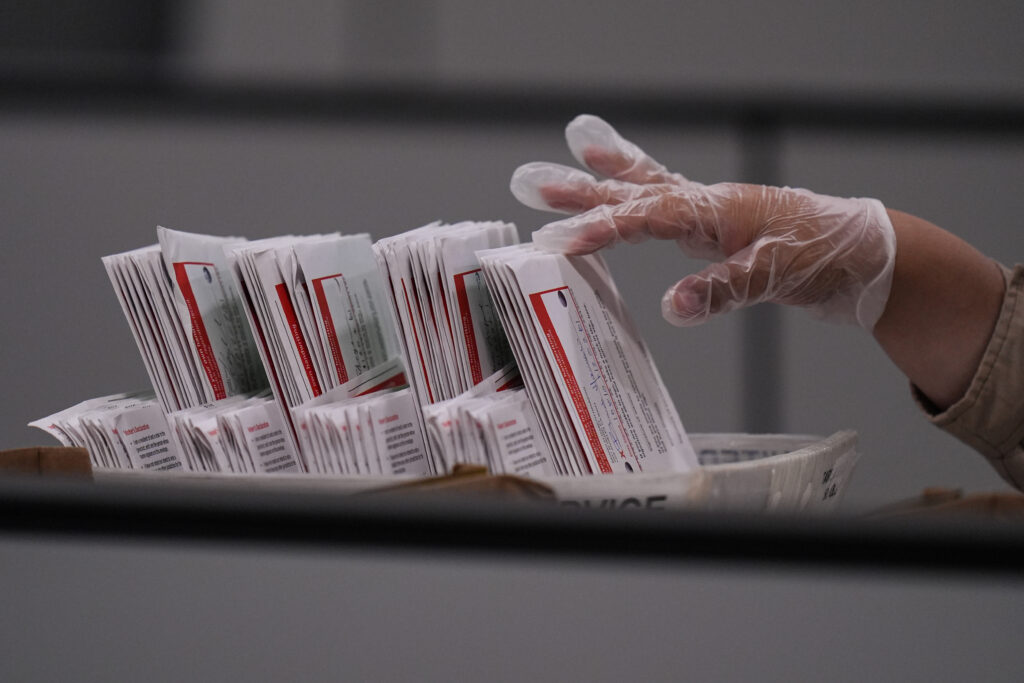
California rejected nearly 150,000 mail-in ballots in its June primary, exposing how votes can still go uncounted even in a state with some of the nation’s strongest voter protections.
According to recently released state data, county election officials rejected 148,241 mail-in ballots of the more than 8.5 million total returned last month.
The overwhelming driver were ballots that were deemed too late: 93,479 ballots were rejected because they were not postmarked or received within California’s legally permitted window, accounting for 63% of all rejected mail ballots.
That percentage is especially notable, according to Mindy Romero, founder and director of the Center for Inclusive Democracy.
“The increase in late ballots is helping to drive that increase in rejected ballots overall,” Romero told Democracy Docket. “And that’s concerning.”
Get updates straight to your inbox — for free
Join 350,000 readers who rely on our daily and weekly newsletters for the latest in voting, elections and democracy.
The vast majority of California voters — about 90% — cast their ballots by mail.
California mails a ballot to every active registered voter and counts mailed ballots that arrive up to seven days after Election Day, as long as they are postmarked by Election Day.
The U.S. Supreme Court recently upheld states’ authority to use similar receipt deadlines, rejecting a Republican National Committee challenge to a Mississippi law that counts ballots postmarked by Election Day and received within five business days.
The Court held that federal law does not require states to possess every ballot by Election Day.
The grace period is meant to protect voters from ordinary mail delays. But California’s experience shows that a grace period may only be as protective as the bureaucratic systems on which it depends.
The U.S. Postal Service acknowledged in a rule that took effect in December that most postmarks are applied when an envelope reaches an automated processing facility, not when a voter places it in a mailbox, hands it to a carrier or brings it to a local post office. The agency also admitted that its Regional Transportation Optimization program will make gaps between possession and postmarking more common.
“The date inscribed by a postmark applied at a processing facility may be later than the date that the mailpiece was first accepted by the Postal Service,” the agency wrote.
Under the new transportation system, post offices serving ZIP codes more than 50 miles from regional processing centers generally lost a second daily truck trip. Mail collected during the day can remain at a local post office until the next morning before being transported for processing and postmarking.
The Postal Regulatory Commission warned that pilot versions slowed mail and that the program would disproportionately burden rural communities.
A ballot placed in the mail on Election Day can therefore remain in postal custody overnight, receive a postmark the next day and become invalid under California law — even if it reaches an election office during the seven-day window.
California officials urged voters before the June 2 primary to mail ballots at least five days before Election Day. Anyone mailing a ballot on Election Day was advised to enter a post office and ask for a manual postmark — an extra step that shifts the burden for postal delays onto voters.
“We don’t know the extent that the USPS recent changes actually impacted or caused” the increase, Romero said. “I think it’s reasonable to suggest there’s a connection.”
The available numbers show an unusual rise in late-ballot rejections but the trend began before the June primary.
In California’s Proposition 50 special election last fall, approximately 45% of rejected mail ballots were deemed late, according to Romero. That made lateness the leading rejection reason after several elections in which signature problems had taken the top spot.
In the June primary, the late share climbed to 63%.
“What was striking was that the number one reason for rejection was lateness,” Romero said of the special election. “And actually, the percentage of ballots that were rejected because they were late actually increased in the primary.”
But late arrival was not the only reason ballots of California voters went uncounted.
Election officials rejected 43,977 ballots because a voter’s signature did not match the signature on file. Another 8,313 envelopes had no signature. Together, signature problems accounted for more than one-third of all rejected mail ballots.
Signature verification is intended to confirm that a ballot came from the registered voter. But voting rights advocates have long condemned signature matching as an unreliable security measure whose burdens are not evenly distributed.
Election workers judge whether two handwritten marks came from the same person even as signatures can change with age and disability, among other reasons. Reference signatures may be years old or captured poorly on a Department of Motor Vehicles electronic pad.
California does allow voters to “cure” a problem — meaning verify their identity or provide a corrected signature — after election officials notify them.
Romero described California’s verification system as robust and said rejected signatures often stem from honest mistakes or limited public understanding. Many voters may not realize that the signature on their ballot envelope will be compared with an older signature in their record.
“The majority of Californians don’t know that their signature is going to be verified,” Romero said. “Maybe they sign really quickly.”
Previous California research found that young and newly registered voters were more likely to have their mail ballots rejected. Romero said research has also identified differences by race, age and gender, with Latino and young voters facing higher rejection risks.
Young voters’ rejection rates were three times the overall rates in three counties studied. For younger voters, Romero said, lateness has consistently remained the leading concern.
“For young people, it’s always been late,” Romero said. “If you target young people, outreach to them, educate them around the process, you’re going to really drive home the requirements around the deadline.”