Judge blocks notorious ‘Measure B’ that would’ve eliminated mail and early voting in California county
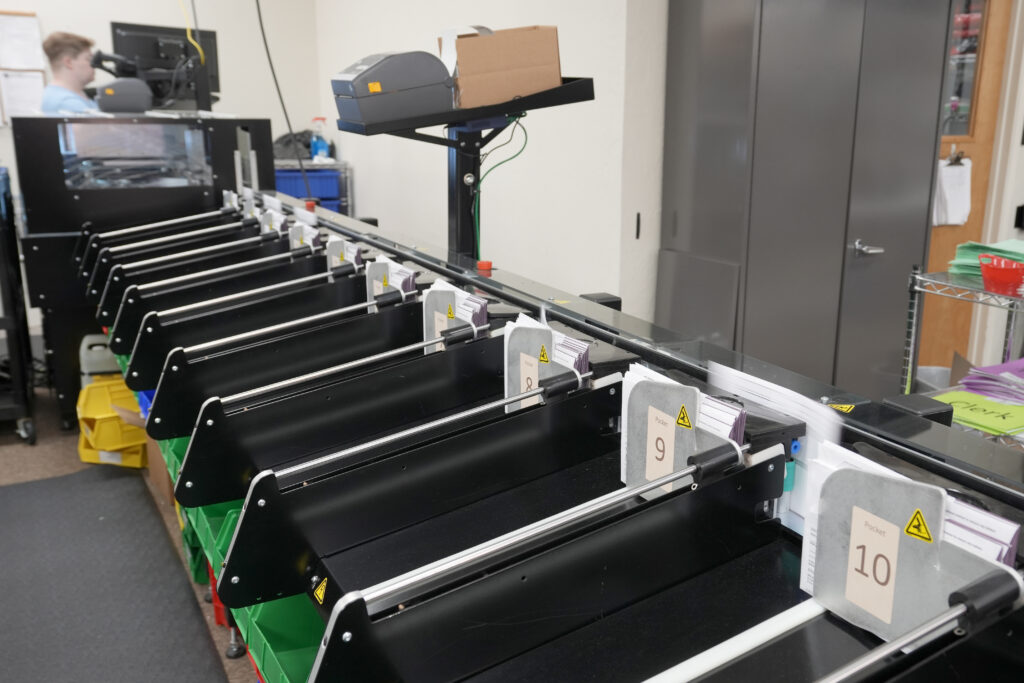
A court temporarily blocked an anti-voting measure from happening in a red-leaning California county where it would have imposed restrictive voter ID rules and stopped early voting.
The new election policies, called Measure B, were passed by Shasta County voters in June. The measure would have also eliminated mail voting, required hand-counting ballots and created a separate voter registration system disconnected from the state’s voter rolls.
In granting a preliminary injunction to halt the initiatives, Shasta County Superior Court Judge Benjamin Hanna said most of them violated state law.
“Measure B seeks to create a whole new electoral system that would require creation of new voter rolls and re-registration of existing voters,” wrote Hanna in his ruling. “Such a feat would be difficult under normal time frames, let alone three months before the November general election.”
Get updates straight to your inbox — for free
Join 350,000 readers who rely on our daily and weekly newsletters for the latest in voting, elections and democracy.
“Today’s ruling prevents Measure B from taking effect while our litigation proceeds, providing certainty that the November election will be conducted under California’s established election laws,” said California Attorney General Rob Bonta, who sued the county in June and filed for the injunction in early July.
While the order technically only pauses the measure, Shasta County election officials appear to be moving as if the ruling is final. Attorneys for both sides will meet later in August to plan a full hearing schedule.
“The election and voting policies described in Measure B will not be implemented for the Nov. 3, 2026, general election, unless further order of the court,” reads a statement from the county.
The county also announced it would begin mailing ballots despite a Measure B provision that would have required ballots to be cast in person on Election Day.
Proponents of the elections overhaul argued that Shasta County has home-rule authority as a “charter county” to set its own rules. The judge disagreed.
“The regulation and administration of the electoral process is a matter of statewide concern, and Shasta County’s status as a charter county does not entitle it to enact invalid legislation simply because some in this community do not agree with the existing law,” wrote Hanna.
Shasta County, an abnormally Republican jurisdiction for California, passed Measure B in June, with 55% of its voters voting in favor of it via ballot initiative. The county has a long history of attempting to pass voter suppression policies.
It first tried switching to hand-counted ballots in 2023, based on misinformation and lies circulating about electronic voting machines rigged to make Donald Trump lose the 2020 election.
California later passed a bill to stop all of its counties from hand counts, due to human-prone errors, inaccuracies and inefficiencies that would no doubt exacerbate the state’s election processes, which are already infamous for delays.
Meanwhile, California lawmakers are currently considering a bill that would prohibit local governments from making election changes that might suppress or dilute votes, and would give voters the right to sue if their government tried to implement such changes.
As for Measure B, the judge blocked it in part because it might suppress turnout in November from voters confused about the drastic changes, if put in place.
“While others attempt to close doors, California ensures that the portal of democracy remains wide open,” said California Secretary of State Shirley N. Weber in a statement. “The court decision today blocking Measure B has made clear what we already know — creating unnecessary barriers does not strengthen our democracy, it weakens it.”