Federal judge blocks Trump DOJ from interfering with Washington state’s elections, ballot counting
 Prefer us on Google
to see more of our voting rights news coverage when you search.
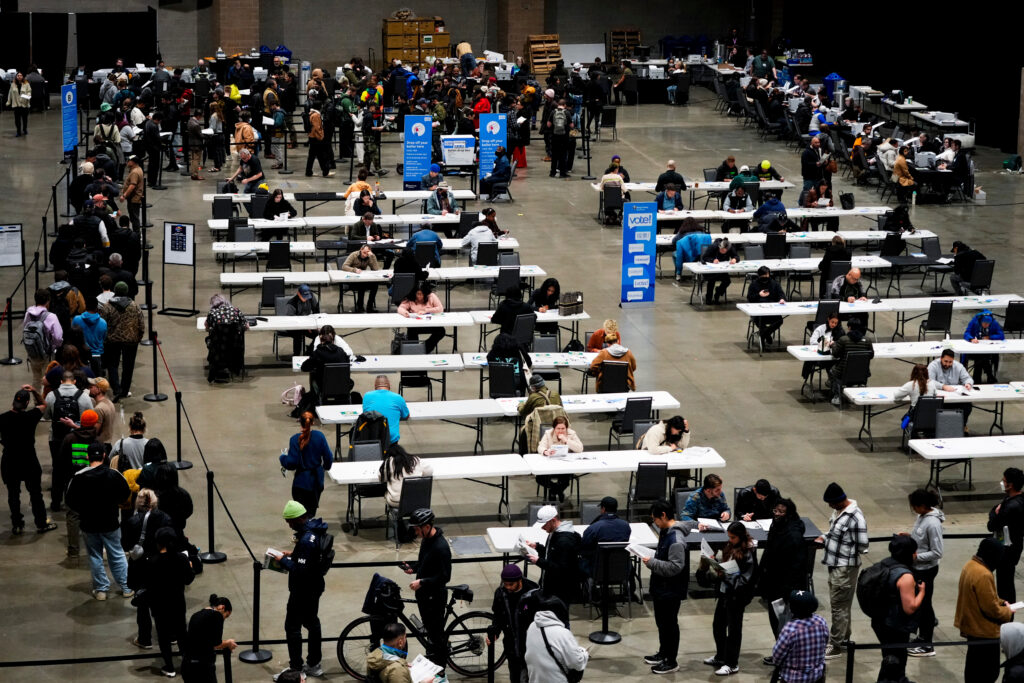
A federal judge Thursday barred the Trump administration from pressuring Washington election officials to set aside ballots cast by voters the Department of Justice (DOJ) has accused of being noncitizens, delivering another blow to the administration’s efforts to intervene in the 2026 midterms.
U.S. District Judge Jamal Whitehead issued a 14-day temporary restraining order prohibiting DOJ and Department of Homeland Security (DHS) from demanding that Washington officials remove registered voters from the rolls, refuse to issue them ballots or segregate and withhold their votes from the count. The order also bars federal officials from threatening election workers with prosecution for refusing to comply.
The ruling comes two days after Election Day, as Washington election officials continue processing and counting ballots.
Get updates straight to your inbox — for free
Join 350,000 readers who rely on our daily and weekly newsletters for the latest in voting, elections and democracy.
On Oct. 26, just eight days before the election, two federal prosecutors — Pete Serrano and Neil Floyd — sent Washington Secretary of State Steve Hobbs a list of roughly 400 registered voters whom the DOJ suspected of being noncitizens. They demanded that state officials refrain from verifying signatures or counting those voters’ ballots until their citizenship could be determined.
But Washington officials found significant problems with the federal list. At least 62 people on it had not been sent ballots because their registrations were canceled, inactive or could not be located. Others had already provided proof of U.S. citizenship.
Despite those findings, federal prosecutors continued pressing their demands. At a press conference, they warned that election officials could face criminal prosecution for helping ineligible voters cast ballots. After Hobbs refused to comply, Serrano publicly threatened to take the demands directly to county election officials.
Whitehead rejected the administration’s argument that it had merely requested cooperation from the state.
“On this record, Defendants did not ask,” Whitehead wrote. “They directed Washington to set aside specific voters’ ballots, set a deadline, told election officials they would be prosecuted if they counted those ballots as state law requires.”
The judge found that the administration had likely exceeded its legal authority by attempting to force state officials to interfere with the ballot-counting process.
“A threat of prosecution made for that purpose is not legal advice,” Whitehead wrote. “It is the pressure that makes the demand work, and the order restrains the two together.”
The ruling follows a similar defeat for the DOJ in California, where federal courts rejected the administration’s attempt to force election officials to segregate ballots belonging to suspected noncitizens. The Supreme Court declined to intervene in that case on Nov. 2.
Whitehead emphasized that the federal government cannot use a criminal statute prohibiting noncitizen voting to take control of state election procedures.
The judge also warned that the administration’s actions threatened to disenfranchise eligible voters, particularly naturalized citizens who could be incorrectly flagged by federal databases.
“Voters who followed the rules should not lose their votes to a list that even its authors admit may include citizens,” Whitehead wrote.
The lawsuit was brought by OneAmerica Votes, the Latino Community Fund of Washington State and the United Food and Commercial Workers International Union*.
The order does not prevent federal officials from investigating unlawful voting, sharing information or requesting voluntary cooperation from election administrators. It specifically prohibits coercive demands and threats that could disrupt Washington’s existing election procedures.
Whitehead also denied the administration’s request to delay the ruling while it pursues an appeal. The order took effect immediately Thursday and will remain in place for 14 days unless extended.
A hearing on whether to issue a longer-lasting preliminary injunction is scheduled for Nov. 18.
The Elias Law Group (ELG) represents the pro-voting plaintiffs in this case. ELG Firm Chair Marc Elias is the founder of Democracy Docket.