Win for Arkansas voters as judge blocks ballot initiative restrictions
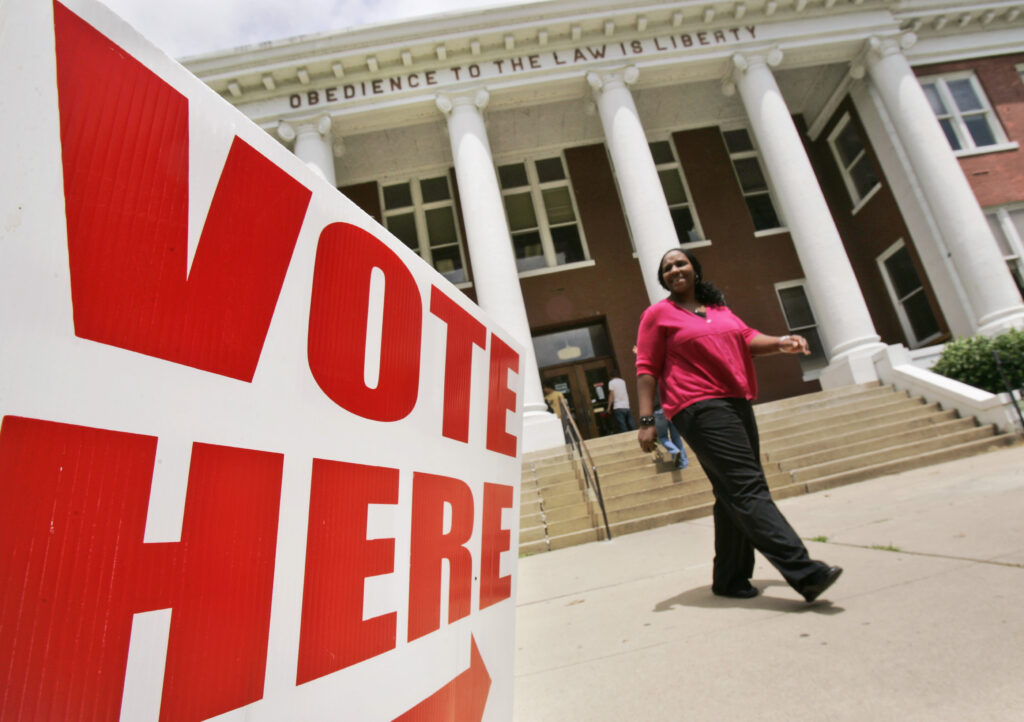
A federal judge struck down several Arkansas laws that made it harder for people in the state to pass ballot initiatives.
Chief U.S. District Judge Timothy L. Brooks invalidated laws that require petition signers to have photo ID, require a warning for all prospective signers on petition fraud, make petition signers read the proposed ballot title out loud and make paid canvassers disclose their addresses before collecting signatures.
While this June 30 ruling marks a win for direct democracy, these laws were already blocked by a November preliminary injunction, which Secretary of State Cole Jester (R) appealed to the 8th Circuit.
Get updates straight to your inbox — for free
Join 350,000 readers who rely on our daily and weekly newsletters for the latest in voting, elections and democracy.
A trial scheduled for July 28 will determine the outcome of two other laws the plaintiffs challenged. These include requiring canvassers to note their permanent residency after signature collection and a ban on paying canvassers per signature.
Twenty-six states currently have citizen-driven ballot initiative measures, and Arkansas has a robust history of using ballot initiatives to pass progressive reforms.
In 2014, the state raised its minimum wage through a ballot measure and in 2016 voters passed a pro-medical marijuana amendment.
In response to reforms over the past decade, the General Assembly has sought to limit this progress. Most recently in 2025, the Assembly enacted the slew of new restrictions that became the basis for this lawsuit.
Brooks, an Obama appointee, described these regulations, such as the secretary of state reviewing signature counts after they have been collected with a convoluted multi-step process of verifying “sufficiency,” as limiting participation in direct democracy.
“Even before the passage of many of the challenged laws, the regulations described above limited ballot access,” Brooks said. “On average, less than one citizen-initiated amendment per election cycle has made the ballot for the past several decades.”
In addition to largely ruling against the state, Brooks pointed out that evidence Arkansas presented for its paid canvasser claim did not add up.
“Defendant also submitted paid canvasser lists from 2019 and 2020 where many of the canvassers listed current addresses in Arkansas but permanent domicile addresses outside Arkansas,” Brooks said. “The relevance of this evidence is unclear — as described above, Arkansas did not have a residency requirement until 2021.”
Brooks made a point to single out the photo identification requirement in his ruling: “The evidence before the Court demonstrates that the ID requirement goes beyond mere inconvenience.”
This ruling comes on the heels of several failed ballot initiatives in the past year. In one, a group of student advocates proposed a ballot measure to protect the state’s environment. The Amendment to Keep Arkansas Natural was rejected by Attorney General Tim Griffin (R) in April.
In his rejection, Griffin referenced the state’s restrictive read-aloud requirement as a means to toss out the proposal. Rejection solely on those grounds would now be unconstitutional.
*Plaintiff-intervenors in this case are represented by the Elias Law Group (ELG). ELG Chair Marc Elias is the founder of Democracy Docket.