Judge lets DOJ keep Fulton County ballots despite ‘misleading’ FBI affidavit claims
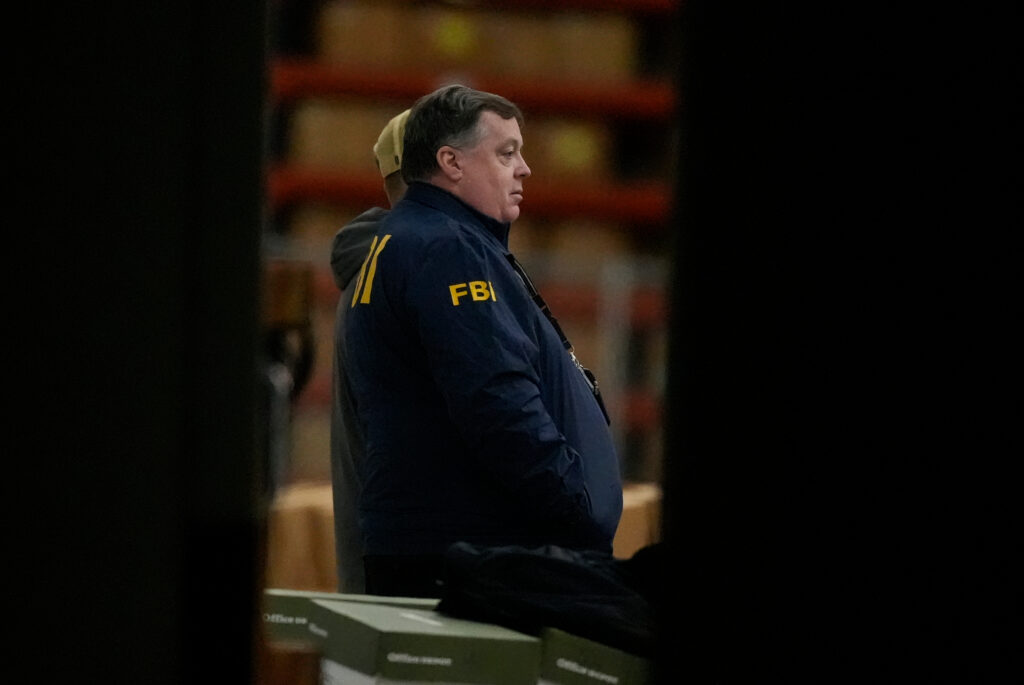
A federal judge Wednesday declined to order the return of 2020 election ballots seized by the FBI from Fulton County — but not before heavily criticizing parts of the Justice Department’s case as “misleading” and “troubling.”
In the ruling, U.S. District Judge Jean-Paul Boulee denied Fulton County’s request to force DOJ to return more than 600 boxes of election materials seized earlier this year as part of a federal investigation into alleged election irregularities.
But the opinion also delivered a blunt assessment of the affidavit federal agents used to justify the seizure.
Get updates straight to your inbox — for free
Join 350,000 readers who rely on our daily and weekly newsletters for the latest in voting, elections and democracy.
Boulee found that portions of the affidavit contained “misleading” statements and omitted “innocent explanations” for some of the alleged irregularities cited by investigators. The judge also described parts of the government’s presentation regarding ballot images and tabulator tapes as “troubling” and “problematic.”
At one point, Boulee noted that the affidavit framed Fulton County’s delay in reporting recount results as suspicious without fully explaining that the issue stemmed from a scanner programming error that prevented ballots from being scanned on time.
The judge further observed that some of the alleged discrepancies identified by investigators amounted to issues that “occur in virtually every election.” Prior state investigations, Boulee noted, had already found no evidence of fraud or intentional misconduct connected to the ballots.
Still, Boulee concluded that Fulton County failed to satisfy the extraordinarily high legal standard required to force the government to return seized materials before an investigation concludes.
“While the Affidavit was certainly far from perfect,” Boulee wrote, the court could not conclude its shortcomings rose to the “high threshold” of “callous disregard” required.
The ruling repeatedly emphasized that distinction.
The court acknowledged flaws in the investigation and affidavit while finding those flaws insufficient to justify the extraordinary remedy Fulton County sought.
Boulee also pointed to the fact that the county still possesses copies of the seized election materials, undermining claims of irreparable harm.
The case stems from the FBI’s January seizure of ballots and election materials tied to the 2020 election in Fulton County — a move that drew national attention because it involved records from a presidential election that had already been audited, litigated and settled for years.
Fulton County argued the search warrant was “pretextual,” claiming DOJ used criminal process to obtain records it had already been trying to access through civil litigation.
Boulee acknowledged that theory had initially raised concerns for the court. But he ultimately concluded the record showed there was at least some preexisting basis for the criminal investigation independent of the civil litigation timeline.
In the conclusion of the opinion, Boulee cited the 11th Circuit’s Mar-a-Lago ruling reversing the appointment of a special master in the FBI search of Donald Trump’s residence, writing that courts must apply the same legal standards “without regard to numbers, wealth, or rank.”
For DOJ, the ruling preserves access to the ballots and allows the investigation to continue. But the opinion also leaves behind a striking judicial record questioning the quality — and candor — of the government’s underlying case.