In win for voters, court blocks Arkansas’ restrictive registration rule
 Prefer us on Google
to see more of our voting rights news coverage when you search.
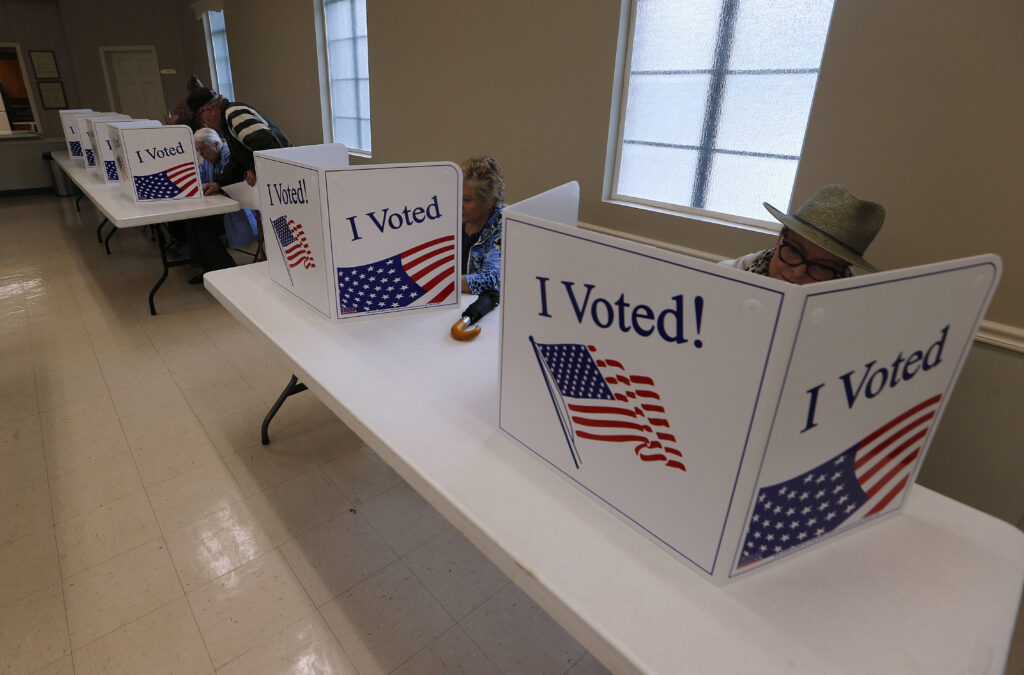
A federal appeals court ruled Tuesday that Arkansas cannot enforce a restrictive rule requiring a handwritten signature to register to vote.
The decision will allow Arkansans to use an online tool that makes registration much easier.
Get updates straight to your inbox — for free
Join 350,000 readers who rely on our daily and weekly newsletters for the latest in voting, elections and democracy.
In a 2-1 decision, the Eighth Circuit Court of Appeals — with judges appointed by Presidents Donald Trump and George W. Bush in the majority — affirmed a lower court’s order blocking the rule, which required voters to sign registration forms with pen on paper instead of electronically.
The decision does not definitively end the case, however, which will continue in a lower court.
Often called a “wet signature” requirement, the rule meant voters could not sign a registration form on a phone or computer — even if they printed and submitted that form afterward.
The ruling means Arkansas officials cannot reject voter registration applications simply because they include a digital signature, at least for now.
The case stems from a rapid shift by state officials in early 2024.
After initially confirming that electronic signatures were allowed, Arkansas’ then-secretary of state, John Thurston (R), reversed course and adopted the handwritten-signature rule — effectively shutting down a widely used online voter registration tool.
That tool had helped register hundreds of voters, many of them young people, before the state moved to block digital signatures.
The appeals court made clear that Arkansas failed to justify the restriction under federal law, which prohibits denying the right to vote over errors or omissions that don’t actually matter to whether someone is eligible.
“The Board cites no evidence to support its claim that a requirement of wet signatures on registration applications is material to preventing voter fraud in Arkansas,” Chief Judge Steven Colloton wrote for the court. “State law and practice thus do not employ a wet signature requirement as a means to detect fraud, and the absence of a handwritten signature is not material on this record in determining whether a person is qualified to vote.”
That finding cuts directly against one of the most common justifications for voting restrictions — that they are needed to prevent fraud.
The court emphasized that Arkansas had long accepted a wide range of signatures, including simple marks like an “X,” and that election officials are not trained to verify handwriting or compare signatures
In other words, whether a signature is written with a pen or drawn on a screen has nothing to do with whether a voter is eligible.
The judges also rejected the state’s broader argument that courts should defer to election rules adopted in the name of preventing fraud.
“The State’s arguments on equities and public interest are unpersuasive where the State previously accepted digital signatures without evidence of fraud or other deleterious consequences,” Colloton added.
The decision underscores a key principle of federal voting rights law that states cannot impose procedural hurdles that don’t actually help determine whether someone is qualified to vote.
For voting rights advocates, the ruling is especially significant because it protects modern registration tools that make it easier — and faster — for people to sign up to vote.