Trump DOJ’s California crackdown rests on 25 potentially illegal votes out of 45 million ballots cast
 Prefer us on Google
to see more of our voting rights news coverage when you search.
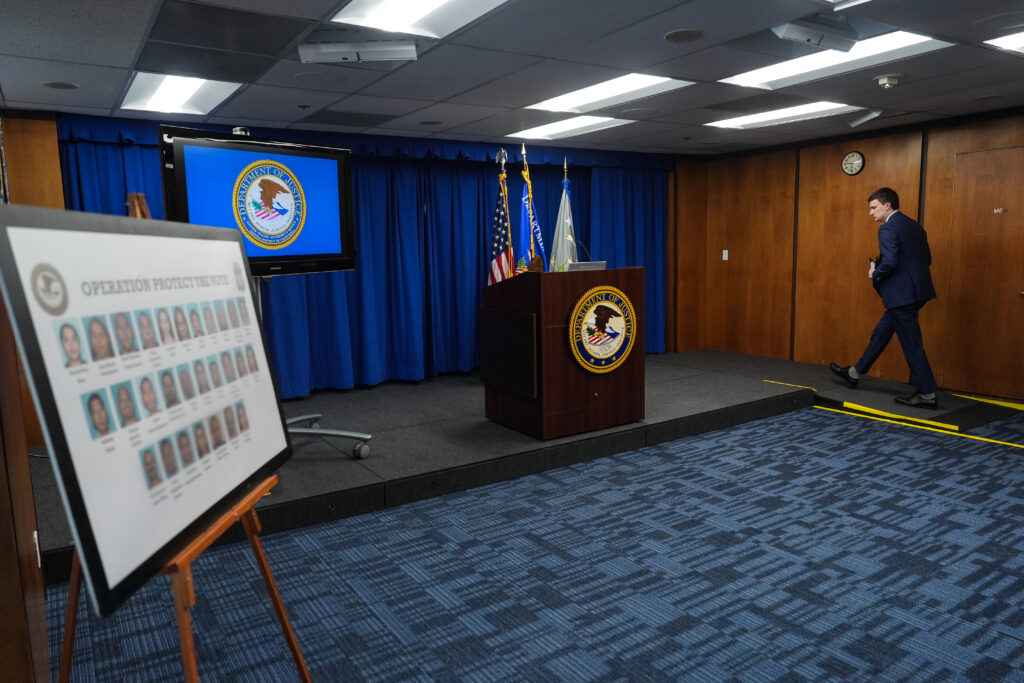
The Trump administration launched a sweeping operation in California Monday, arresting 11 people and charging 28 lawful permanent residents with election and immigration-related crimes as it seeks to bolster a lawsuit targeting more than 20,000 voters.
But the potential illegal voting identified by the Department of Justice (DOJ) is painstakingly microscopic: just 0.00006% of all ballots cast in the elections at issue, or one alleged illegal vote for every 1.7 million votes.
In its press release on the probe, DOJ cited roughly 25 to 27 supposedly illegal ballots cast across California’s 2020, 2022 and 2024 general elections. Over those same three elections, 45,071,805 ballots total were cast in California.
The figures put into perspective the scale of an operation the administration is now using to justify an extraordinary federal intervention in California’s ongoing election.
Get updates straight to your inbox — for free
Join 350,000 readers who rely on our daily and weekly newsletters for the latest in voting, elections and democracy.
DOJ said Monday that its arrests were part of “Operation Protect the Vote,” a coordinated effort involving all four U.S. attorneys’ offices in California. The department charged 28 lawful permanent residents and said “most” had cast illegal ballots.
The defendants are presumed innocent unless proven guilty.
DOJ’s own case descriptions, however, show that not every defendant is accused of voting in a November general election. Some are charged only with fraudulent registration or making false statements during the naturalization process. Others purportedly voted in multiple elections over several years.
A Democracy Docket review of the department’s descriptions found that 22 of the 28 defendants are explicitly accused of casting a ballot in at least one election. Counting only the November general elections in 2020, 2022 and 2024 — and giving DOJ the maximum plausible benefit of the doubt where the release does not identify an election — those cases appear to account for approximately 25 to 27 allegedly illegal votes.
The range is necessary because DOJ says one defendant voted in three elections but identifies only the most recent, the June 2026 primary, leaving unclear whether his two earlier alleged votes were cast in general elections.
The department is nevertheless presenting Monday’s cases as validation for a far broader effort.
Acting Deputy Attorney General Trent McCotter said every one of the 28 defendants appeared on a federal list of more than 20,000 Californians whom the government has identified as “likely noncitizens.”
“Today’s charges show exactly what that refusal puts at risk,” McCotter said, referring to California officials’ refusal to act on the Trump administration’s list. “California must verify the citizenship of those more than 20,000 registrants before mail-in ballots are counted.”
The Trump administration is already using the arrests to support its lawsuit seeking to force California to segregate ballots from those 20,000 people. On Monday, DOJ filed an emergency motion asking a federal judge to prevent the state from tabulating their ballots unless their citizenship is first verified.
The administration has described the 20,000 names as the product of a multilayered federal matching process, but it has not established in court that all — or even most — are actually noncitizens. Its latest filing says the 20,000 are merely the “floor” of its investigation and that USCIS has already flagged another 17,000-plus records for further review.
Monday’s prosecutions therefore represent only a tiny fraction of the total voting population DOJ is asking a court to sideline.
Even among the people charged, the department’s release makes an important distinction that can get lost in the rhetoric: being unlawfully registered, making false statements on immigration paperwork and actually casting an illegal ballot are different allegations.
Some defendants are not accused of successfully casting a ballot at all.
And the scale looks even smaller when compared with a much more common way eligible Californians lose their votes.
In California’s June 2026 primary alone, county officials rejected 148,241 mail ballots out of more than 8.5 million returned. More than 93,000 were rejected as late, while another 43,977 were rejected over signature mismatches and 8,313 because the envelope lacked a signature.
Voting rights advocates have said the overwhelming majority of those rejected ballots were cast by eligible voters. Previous research has also found that mail-ballot rejection disproportionately affects younger voters and some racial groups.
Those rejected primary ballots outnumber the 25 to 27 allegedly illegal general-election votes identified in DOJ’s cases by more than 5,000 to one.
The episodes are not identical: one involves allegations that people legally barred from voting cast ballots; the other involves ballots rejected under existing election rules, most of them belonging to eligible voters.
But the contrast underscores the vastly different scale of the problems.
The Trump administration has deployed immigration investigators, FBI agents and federal prosecutors, arrested people across California and invoked Monday’s cases in emergency litigation seeking to interfere with the handling of potentially tens of thousands of ballots.
Its own allegations, spread across three general elections in which more than 45 million Californians voted, amount to a few dozen ballots.