Trump DOJ steps in to defend Ohio’s proof of citizenship law
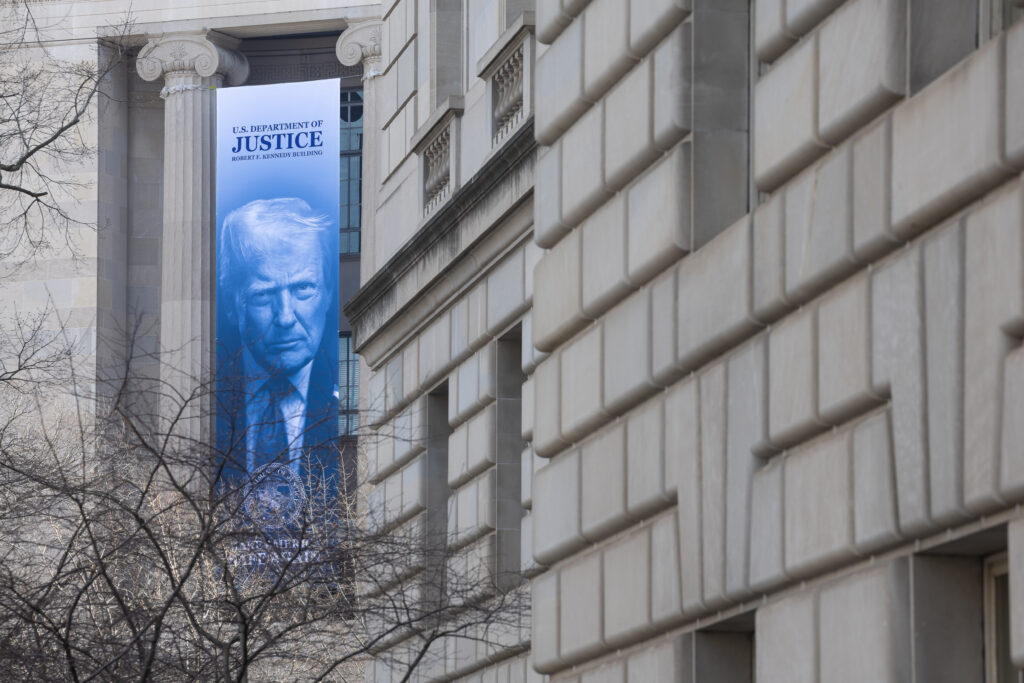
The Department of Justice asked a federal court to let it defend Ohio’s law requiring voters to provide documentary proof of citizenship (DPOC) when they register, which voting advocates say will keep thousands of eligible citizens from casting ballots.
The intervention represents the DOJ’s latest attempt to support Republican voter suppression efforts, a complete reversal of its decades-long defense of voting rights since President Donald Trump returned to the White House.
Last summer, Republican state lawmakers added the DPOC provision to a transportation spending bill, requiring Bureau of Motor Vehicle (BMV) clerks to check for citizenship before letting someone register to vote when they get or renew their driver’s license or state ID card.
A pair of nonpartisan civic engagement groups, Red Wine & Blue and the Ohio Alliance for Retired Americans, sued to block the law, arguing that it violated the federal “Motor Voter Act” — a.k.a. the National Voter Registration Act (NVRA) — and risked disenfranchising thousands of Ohioans who don’t have forms of DPOC, like a U.S. passport, readily available. Nearly 30% of Ohio voters register to vote through the BMV.
The NVRA limits states to asking for the “minimum amount of information necessary” to assess voter eligibility. Ohio’s applications already required registrants to attest under penalty of perjury that they are citizens, the plaintiffs argue, so the DPOC requirement exceeds the NVRA’s cap.
In a filing Friday, DOJ lawyers argued that the Ohio law doesn’t conflict with the NVRA. They claimed that it actually requires officials to check DPOC for issuing a driver’s license, not for registering voters — even though, in practice, that would amount to blocking registrations.
Alternatively, the DOJ contends that “Ohio has a compelling, legitimate interest in protecting against fraud and ensuring public confidence in the electoral process,” and thus the DPOC rules are acceptable under the NVRA.
Get updates straight to your inbox — for free
Join 350,000 readers who rely on our daily and weekly newsletters for the latest in voting, elections and democracy.
The filing cites Trump’s March 2025 executive order that attempted to impose a DPOC requirement on the national mail voter registration form and force states to check applicants’ citizenship. Those provisions of the order were quickly enjoined by federal courts for exceeding the president’s authority because the Constitution empowers states to run elections with Congressional supervision.
The Republican National Committee also sought to intervene to defend the law shortly after the complaint was filed, but the court refused. Neither Ohio nor the plaintiffs are opposing the DOJ’s motion to file an amicus brief. Oral arguments on the plaintiffs’ preliminary injunction request are scheduled for June 25.
To prove citizenship, voters will need to provide a current U.S. passport or a combination of documents — a valid ID, birth certificate, and, if necessary, marriage and naturalization records. A 2025 University of Maryland survey estimated that 9% of eligible voters, or roughly 21 million Americans, don’t have ready access to those documents. Less than half of eligible voters currently have an active passport.
The DPOC burden falls especially hard on women whose legal names have changed through marriage or divorce and on young people — particularly students — who often store important documents with family for safekeeping.
When Kansas passed its DPOC law in 2011, 31,000 otherwise eligible U.S. citizens were unable to register, blocking 12% of Kansans trying to register for the first time.