Trump admin reveals it’s challenged voters in 5 states, and threatened election officials in all 50
 Prefer us on Google
to see more of our voting rights news coverage when you search.
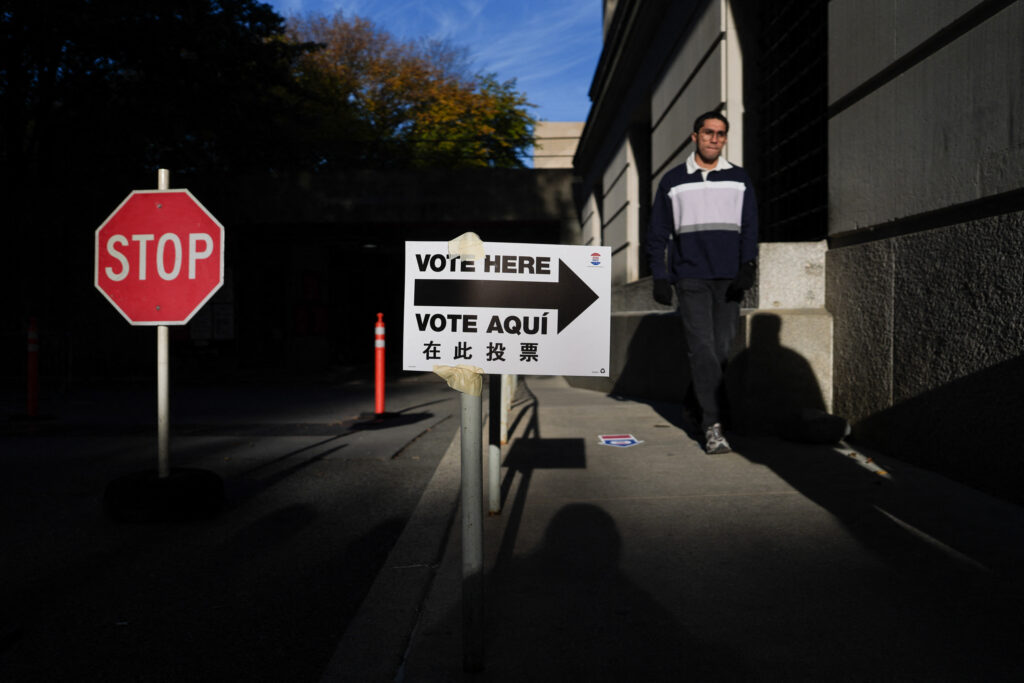
The Trump administration disclosed Friday that it contacted five states over the past four months, demanding they disenfranchise people it claims are ineligible to vote in the midterms.
According to the Department of Justice’s (DOJ) response obtained by Democracy Docket, the Department of Homeland Security (DHS) sent letters to California, Nevada, Pennsylvania and New Jersey, and the DOJ sent letters to California and Washington. All of those letters have been previously publicized.
Get updates straight to your inbox — for free
Join 350,000 readers who rely on our daily and weekly newsletters for the latest in voting, elections and democracy.
The disclosure reiterates the extent of the Trump administration’s campaign to shape the American electorate by disenfranchising voters before Election Day. But it does not include the total number of voters the administration has challenged. And it appears to withhold information on its contacts with states, instead filing numerous objections to the scope of the inquiry.
This month, the DOJ challenged over 20,000 voters in California and over 400 in Washington.
In its filing Friday, DOJ also said it separately sent all states letters Thursday “reminding them of their obligation” to preserve voting records for 22 months after the election.
Those letters, sent by the Office of the Deputy Attorney General just days before Election Day, tell officials they must preserve federal election records for 22 months under a decades-old federal law.
The letters specifically point to penalties of up to one year in prison and a $1,000 fine for willfully failing to comply.
U.S. District Judge James Boasberg ordered the DOJ to disclose the list of states in a lawsuit* by Democratic groups seeking to block the Trump administration from pressuring states to set aside, reject or cancel ballots from voters it claims are noncitizens — or to remove those voters from the registration rolls.
In the lawsuit, Democrats allege that the Trump administration’s pressure campaign against states violates the Voting Rights Act. They have moved for a court order blocking the administration from taking further actions against states.
However, Boasberg has so far appeared skeptical about whether the groups have standing to sue. After an hourlong hearing Thursday, the judge partially granted their discovery request and ordered the DOJ to disclose which states have received election-related demands since July 1.
The DOJ’s response, however, largely did not address Democrats’ central question. Instead, it broadly objected to the language of the inquiry. It’s unclear whether Democratic groups will use the DOJ’s disclosure to boost their standing arguments, as it does not reveal any new state communications directly challenging voters.
The department said it withheld “informal oral communications, conversations or meetings not memorialized in any record” between the federal government and states. It also said it excluded communications that were not “consistent with” the letters it sent California election officials on Oct. 13.
The DOJ asserted that the federal government did not seek to bar people from voting through the letters to the five states.
“Rather, these letters ask state election officials to work with DHS to verify whether individuals identified in a preliminary analysis are non-citizens who are registered to vote,” the DOJ claimed.
Boasberg plans to issue a ruling on the groups’ request for a temporary restraining order by Monday.
The plaintiffs in the suit are the Democratic Senatorial Campaign Committee, the Democratic Congressional Campaign Committee, the Democratic Governors Association, the Nevada State Democratic Party, Senate Democratic leader Chuck Schumer (N.Y.), House Democratic leader Hakeem Jeffries (N.Y.) and a California voter who is a naturalized citizen.
This story has been updated with additional details throughout.
*The Elias Law Group (ELG) represents the Democrats in this case. ELG Firm Chair Marc Elias is the founder of Democracy Docket.