The local prosecutors who fought ICE are ready to combat federal election interference
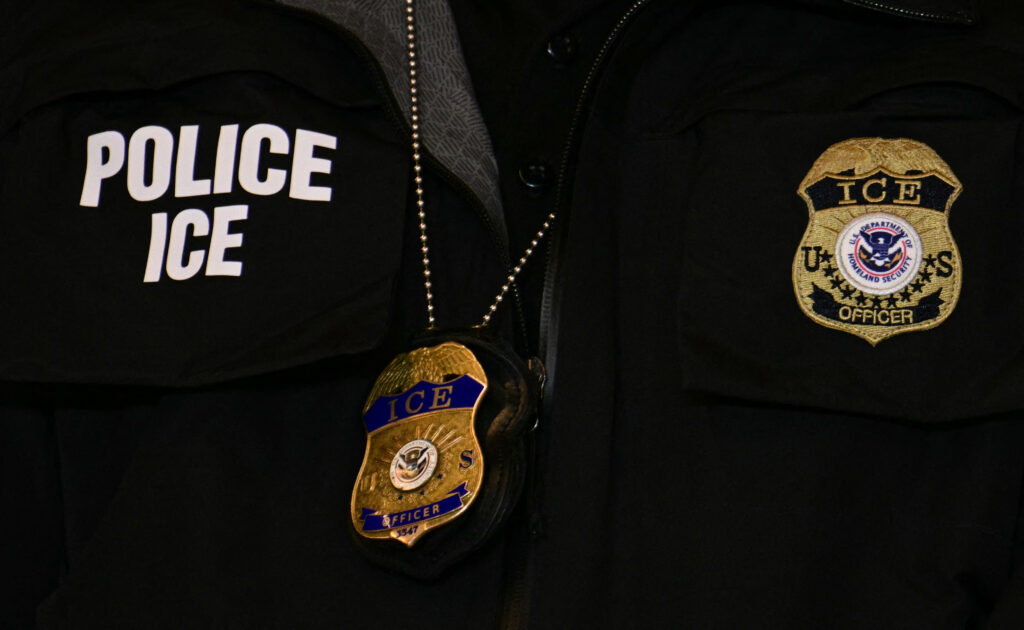
A day or two after an Immigration and Customs Enforcement (ICE) agent shot and killed Alex Pretti, in the thick of President Donald Trump’s “Operation Metro Surge,” Steve Descano got a call from prominent Philadelphia District Attorney Larry Krasner.
Descano is also a local prosecutor — over 1,000 miles away from the shooting — in Fairfax, Virginia. But his outrage, shared with Krasner, percolated across the nation. It left the attorneys grasping for ways to hold the agents in Minneapolis accountable.
Krasner led Descano and eight other attorneys to form a coalition called the Fight Against Federal Oversight, or FAFO, the acronym an intentional nod to the slang phrase “F— Around and Find Out.” The attorneys banded together to warn that ICE was acting illegally and to help bring charges against violations of state law.
Get updates straight to your inbox — for free
Join 350,000 readers who rely on our daily and weekly newsletters for the latest in voting, elections and democracy.
Before Hennepin County Attorney Mary Moriarty charged a U.S. Border Patrol agent, Descano said he only knew of one other sitting district attorney in the nation who had secured charges against federal agents. That’s because he did it nearly a decade ago, after the U.S. Park Police fatally shot a man in Northern Virginia. The officers never faced their charges.
Now, Descano and his fellow FAFO attorneys are working overtime to prepare for the possibility of federal agents at or around poll sites. The lawyers have difficult hurdles to surmount, like federal immunity doctrines tightened by the Supreme Court in recent years. But Descano said that’s not stopping him, and preparation is well underway.
“We do have some power here,” Descano told Democracy Docket
The threats
Department of Homeland Security (DHS) Secretary Markwayne Mullin has since May made comments suggesting he has no problem sending ICE to poll sites under certain circumstances. He’s joined by FBI Director Kash Patel, multiple GOP Senate candidates and Trump himself.
Federal law is clear that “troops or armed men” may not be present where elections take place, except to deter state enemies. Some states also have their own legislation against troops and civil service at polls.
Still, voting rights advocates fear the worst. Civil rights groups filed new litigation last week and Democrats followed suit late Wednesday to block troops at polls. Those concerned are considering that even if federal law enforcement officers do not come to poll sites directly, they could be deployed across cities, creating inconvenience and scaring eligible voters.
Some, like leading elections expert David Becker, are skeptical the Trump administration will follow through.
“We’re going to see that there was an attempt to create an environment of a perception of chaos and confusion and fear, but that was mostly noise and there wasn’t any meat behind it,” Becker told reporters in a media briefing Thursday. “The federal government is not going to send ICE or troops to the polls.”
Becker also cast strong doubt on the likelihood the government would seize ballots and voting machines or order a recount. But the district attorneys aren’t taking any chances.
Pima County Attorney Laura Conover said her community started planning for threats to the election in April. Conover’s county sits directly on the Arizona Southern Border, meaning some community members may feel increased fear, despite having the right to vote.
Conover explained that even for legal citizens, there could be a chilling effect on voting if minority voters are scared an ICE agent could show up at a voting site, or “horribly, coincidentally located quite near a poll.”
In Arizona, the law strictly prohibits voter “coercion or intimidation.”
“If ICE sends people to roam around, or the National Guard, or the FBI — you cannot violate state law,” Conover added. “You cannot intimidate an Arizona voter and we are going to run the court to stop that.”
Conover is in the midst of working with the local police department, elections officials, the county recorder, libraries and community groups. And the attorney’s preparation goes beyond her own state. She recently held virtual training sessions for mayors and prosecutors in Ohio’s four major cities as part of FAFO’s efforts to help prepare communities across the nation for potential threats.
Conover said she’s ready to jump into action with litigation.
“I think what I can say is that we’re going to be ready for anything,” Conover said. “And whatever that scenario is, it’s going to be kind of plug-and-play to have the place we’re going to go with the papers in hand as fast as humanly possible.”
The prosecution hurdles
While attorneys are ready to prosecute federal agents for illegal actions, they acknowledged it’s no small feat. For one, the Supremacy Clause gives precedence to federal law over state law. But this is an issue both Conover and Descano said they’re less worried about.
“I know everybody makes a big deal of the Supremacy Clause and how prosecutors can’t hold federal agents accountable,” Descano said. “That’s incorrect. I think that’s overstated.”
There’s also the potential challenge of removal to federal court, which means an agent charged could request to have their case transferred from a state court to a federal one. Additionally, it’s difficult to subpoena federal officials, the attorneys explained.
Those looking to subpoena a federal official have to use a special process called a Touhy request, which is exactly what Moriarty of Minneapolis demanded this winter. Moriarty’s momentum in an environment hostile to her work is a driving force behind FAFO’s undertaking this fall.
Ramin Faheti is the district attorney for another Virginia county, farther south in Norfolk. Faheti said it’s “unthinkable” that he’s seeking to hold the federal government accountable for civil rights violations, when it’s historically been the opposite.
He gave a pointed analogy to sum up how backwards he said the reality is.
“It’d be like Bull Connor arresting FBI agents or Orval Faubus arresting the National Guardsmen protecting Little Rock Central High School,” Faheti said.
For Descano, it’s personal too. Before moving across the river, Descano spent six years working at the Department of Justice under President Barack Obama. He said the DOJ that exists today is unrecognizable.
Now, in addition to legal burdens, people are also simply scared of the federal government that was deployed to protect Black students in Arkansas at the height of the Civil Rights Movement.
The hurdles to prosecution are compounded by a Justice Department “in a near state of collapse,” as Conover put it.
And it’s not just local prosecutors noticing a difference in the way the government has approached this election season. Secretary of State Dana Nessel (Mich-D) said this year is the first time the DOJ declined to participate in table-topping exercises, during a panel with top election officials in Washington, D.C.
Nessel also expressed concern over the DOJ’s mass deployment of election monitors.
“Now, in my mind,” Nessel paused. “It’s like, is this pre-litigation?”
Assistant Attorney General Harmeet Dhillon is close to her goal of enlisting 1,000 monitors she continuously called “federal observers” in a recent interview.
While Nessel told Democracy Docket she wasn’t aware of Dhillon’s election “observer” comments a few days prior, she said it’s a significant mix-up for the Chief of the DOJ’s Civil Rights Division, pointing to severe incompetence at best and a dangerous abuse of power at worst.