Ban ICE from polls now because Trump admin is already violating law and intimidating voters, civil rights groups argue
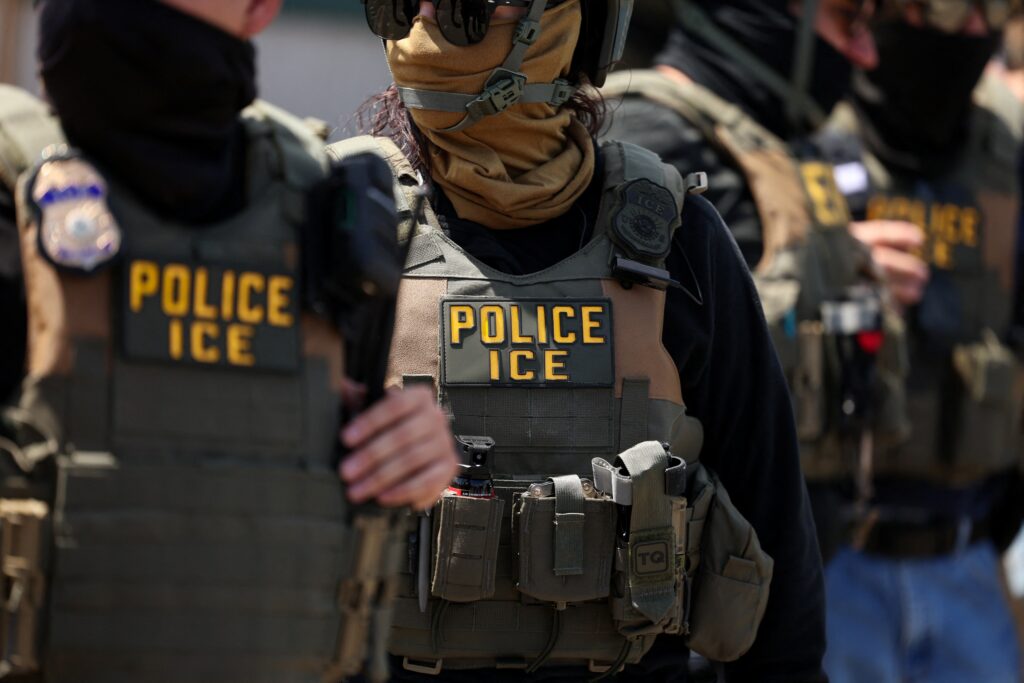
The Trump administration’s demand for Minnesota’s voting records as a condition of winding down last winter’s deadly immigration crackdown is one part of a wider pattern of federal law enforcement interfering with elections, civil rights groups argue in a lawsuit trying to bar ICE from polling places.
Led by the NAACP, the coalition of Black, Asian and Latino groups is asking a federal judge to prohibit the Trump administration from sending immigration enforcement officers to voting sites during the midterms. President Donald Trump has not yet ordered ICE to patrol near election locations, but key figures in his administration have not ruled it out either.
Typically, anyone bringing a lawsuit must show that action has already been taken and that they’re being actively harmed in order to succeed. In this instance, the civil rights groups are trying to convince a federal judge to issue a preemptive block on Trump by making the case that immigration officers have previously violated laws against law enforcement at polling places and are likely to do so again.
To make that case, the civil rights groups point to ICE’s conduct during the deadly crackdown in Minnesota as well as operations in California, New York and Florida as examples of law enforcement operating in or near polling locations.
After immigration officers killed two American citizens during Operation Metro Surge in Minneapolis, immigration officials offered to stand down in exchange for Minnesota handing over its voter rolls.
“These two killings were highly publicized and rightfully caused fear throughout the country,” including among their members, the groups argue in the lawsuit filed Friday. “The Administration sought to capitalize on that terror, conditioning the withdrawal of its unprecedented federal deployment in Minnesota on the State’s surrendering private voter roll data.”
Get updates straight to your inbox — for free
Join 350,000 readers who rely on our daily and weekly newsletters for the latest in voting, elections and democracy.
At the time, then-Attorney General Pam Bondi sent a letter to state leaders telling them to allow the Justice Department access to the state’s voter rolls to, in her words, “bring an end to the chaos.” Secretary of State Steve Simon, Minnesota’s top election official, rebuffed her letter as an “outrageous attempt” to coerce the state into handing over the private data of millions of citizens.
The administration ultimately sued to try to obtain the voter data, one of 24 times the Justice Department has lost in court on the issue.
It’s just one example of the administration’s actions and statements that the civil rights groups say constitute a violation of Section 11(b) of the Voting Rights Act, which broadly protects against voter intimidation.
The groups are suing the Department of Homeland Security, the Department of Justice, the FBI and each of their leaders, as well as ICE and Trump’s “border czar” Tom Homan.
The groups argue the lawsuit should move forward now because the administration has already taken concrete steps to chill democratic participation among communities of color.
In June, they note, the New York Times reported that federal agents from Homeland Security Investigations and the FBI raided the offices of a group in Ohio that registers voters and organizes political activities for Democratic and progressive causes.
They also highlight several instances where immigration enforcement operations unfolded at or near polling sites during the primaries earlier this year.
“In New York, video footage captured federal agents entering a polling site during the June 2026 primary election and confronting a poll worker regarding a social media post critical of DHS,” they write, linking to an Associated Press report on the encounter.
In Lee County, Florida, the groups say their members reported officers setting up a roadside checkpoint for immigration enforcement on the main access road to a precinct that serves large numbers of Black and Latino voters.
“Placing police directly in the path of Black voters makes it difficult for organizers to register voters and decreases turnout,” they write.
The Service Employees International Union, which is part of the coalition suing the administration, says one of its members will cast their ballot by different means this year than in elections past because of ICE’s activity in her home state.
“For example, one Los Angeles SEIU member, who lived through ICE’s enforcement operations in California last year, will be changing the way she votes because she fears that her elderly parents, who are naturalized U.S. citizens, could be targeted despite their lawful status because they resemble and speak like individuals who had been targeted by ICE,” they write.
“Together, Defendants’ threatening messaging and violent enforcement actions have created a climate in which voters, especially voters of color, are intimidated and fearful of engaging in the democratic process,” they write. “Because of the Administration’s intimidating actions and rhetoric, across the country, Plaintiffs’ members and other voters credibly fear that their participation in this November’s midterm elections will subject them to physical force and increased surveillance by the federal government.”