South Carolina clears first hurdle on path to gerrymander, eliminate Black district
 Prefer us on Google
to see more of our voting rights news coverage when you search.
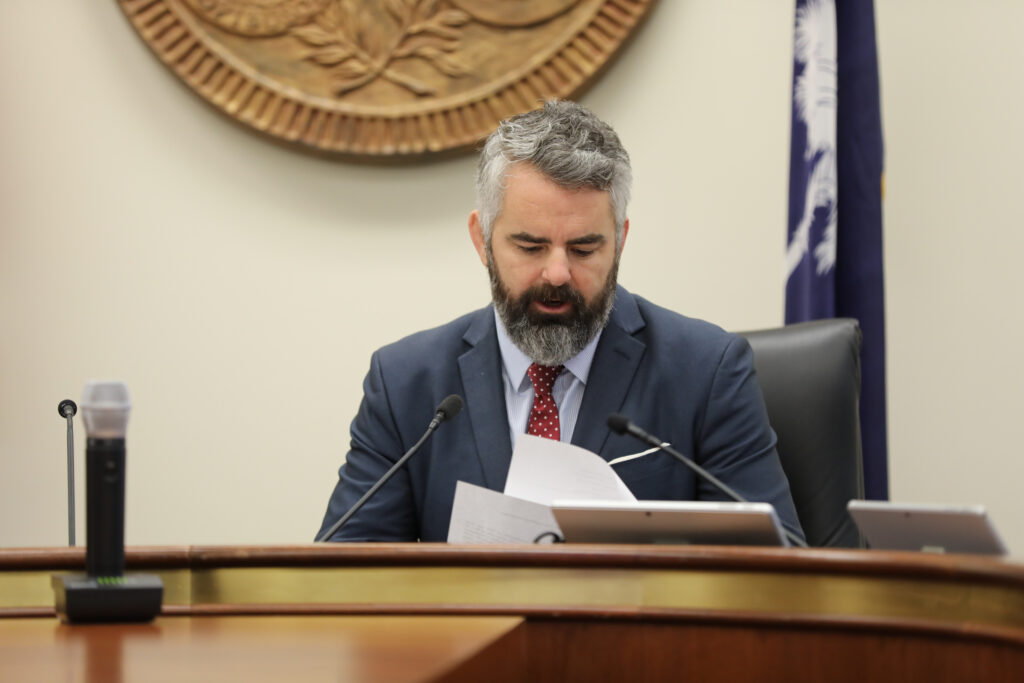
South Carolina Republicans took a crucial step Wednesday toward redrawing the state’s congressional map in an effort that could dismantle the state’s lone Democratic district, long represented by Rep. Jim Clyburn.
In an 87-25 vote, the South Carolina House approved a sine die amendment allowing lawmakers to return after adjournment to take up congressional redistricting — clearing the first major procedural hurdle in a growing national push to redraw maps after the Supreme Court gutted key Voting Rights Act protections that had long shielded Black voting power from racial gerrymandering.
The move comes as GOP-led states across the South race to capitalize on the Supreme Court’s devastating ruling.
Get updates straight to your inbox — for free
Join 350,000 readers who rely on our daily and weekly newsletters for the latest in voting, elections and democracy.
The measure now heads to the state Senate, where Republicans still need a two-thirds vote to move forward with redistricting. Though the GOP holds a supermajority in both chambers, only a handful of Republican defections could derail the effort.
South Carolina has emerged as one of the next major battlegrounds in the post-Callais redistricting wars. In the aftermath of the ruling, Republicans in Tennessee, Louisiana and Alabama have accelerated efforts to redraw congressional maps with the goal of breaking apart majority-Black districts and diluting Black voting power.
The clear target in South Carolina is the 6th Congressional District, represented by Clyburn, once the highest-ranking Black member of Congress. The district is the only Democratic-held congressional seat in the state and has long been a focus of Republican redistricting efforts.
Republicans themselves openly acknowledged the political stakes after Wednesday’s vote.
State Rep. Adam Morgan (R) celebrated the resolution’s passage on social media, writing that it would allow Republicans to draw a “new 7-0 Republican map eliminating Jim Clyburn’s unconstitutional race-based district.”
The vote came after intense pressure from President Donald Trump and national Republicans to move aggressively after the Supreme Court’s ruling. Trump reportedly contacted Senate Majority Leader Shane Massey (R) twice in recent days urging lawmakers to pursue redistricting in the state.
South Carolina Gov. Henry McMaster (R), however, declined to call a special session to redraw the map himself, forcing Republican lawmakers to pursue an alternative procedural route before the legislature adjourns sine die May 14.
Earlier Wednesday, members of the House Rules Committee voted 12-2 to advance the sine die resolution for a full House vote.
The procedural fight has exposed divisions within South Carolina Republicans over how aggressively to pursue redistricting. Massey has publicly warned that Republicans could overreach by attempting to eliminate Democratic districts entirely, potentially creating a “dummymander” that backfires politically.
Still, Wednesday’s vote marked a major procedural win for Republicans seeking to capitalize quickly on Callais, which dramatically weakened the ability of voters and civil rights groups to challenge maps that dilute Black voting power.
The push in South Carolina comes as civil rights advocates warn the country is entering a new era of mid-decade gerrymandering — one in which states redraw congressional maps outside the normal once-per-decade redistricting cycle to maximize partisan advantage after the court’s ruling.
For now, the fight shifts to the Senate, where the fate of South Carolina’s redistricting push — and potentially the future of Clyburn’s district — remains uncertain.
Yunior Rivas contributed to this reporting