Senate rejects bid to revive SAVE America Act, but the war isn’t over
 Prefer us on Google
to see more of our voting rights news coverage when you search.
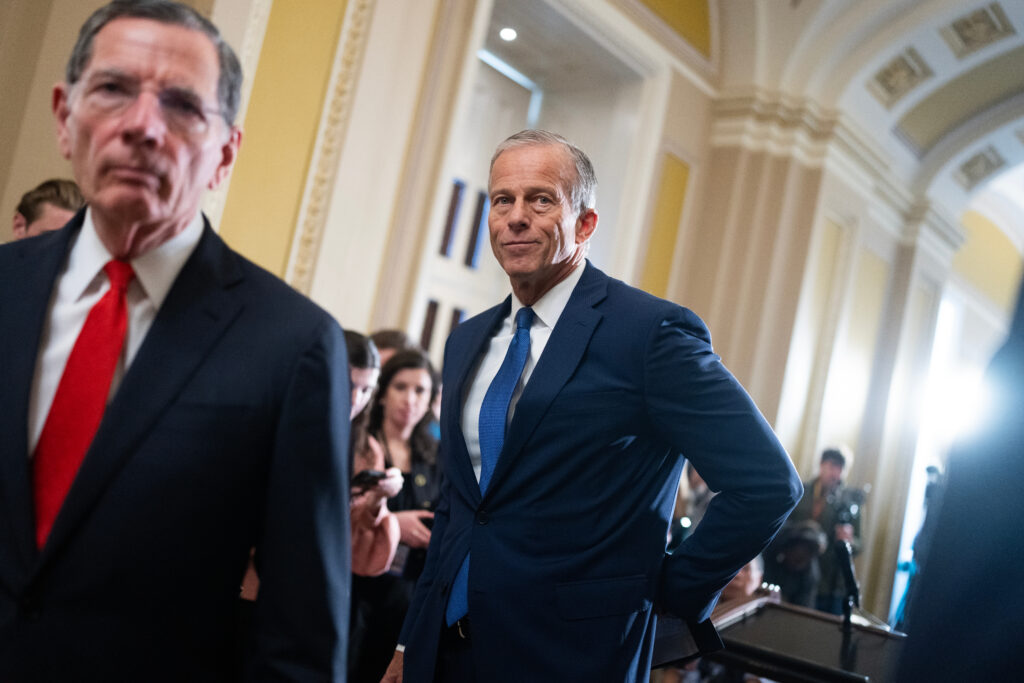
The month-long battle to pass the SAVE America Act ended with a whimper early Thursday morning, as the Senate — including three Republicans — voted against adding the extreme voter suppression legislation to the filibuster-proof reconciliation bill.
Still, opponents of the measure cautioned that it hasn’t yet suffered a final defeat.
An amendment offered by Sen. John Kennedy (R-La.) to attach the SAVE America Act to the reconciliation bill was defeated 48-50, with Senators Lisa Murkowski (R-Alaska), Mitch McConnell (R-Ky.), Susan Collins (R-Maine) and Thom Tillis (R-N.C.) joining every Democrat in voting no.
The Senate spent half of March and a part of April debating the bill, which President Donald Trump repeatedly called his top legislative priority. It would require voters to show documentary proof of citizenship — like a U.S. passport or birth certificate — when they register to vote, and show voter ID when they cast ballots. Trump also sought to add provisions to the bill that would have banned no-excuse mail-in ballots, and targeted trans Americans.
Get updates straight to your inbox — for free
Join 350,000 readers who rely on our daily and weekly newsletters for the latest in voting, elections and democracy.
Heading into the protracted floor debate, the proposal was obviously doomed. Every Democrat opposed the measure, as did Murkowski, meaning it could never overcome the 60-vote threshold to end a filibuster.
But the bill’s sponsor, Sen. Mike Lee (R-Utah) advocated incessantly for forcing a “talking filibuster” — requiring Democrats to hold the floor in order to prevent a vote. Still, when push came to shove, Lee didn’t even insist on seeing that strategy through.
When the Senate returned from its Easter Break, it once again resumed debate over the bill. But when it reconvened earlier this week, the chamber had moved on to focus on the reconciliation bill to fund the Department of Homeland Security (DHS), which has been partially shut down for over two months, and a renewal of Foreign Intelligence Surveillance Act (FISA).
On Wednesday, the Senate took up the reconciliation bill. Reconciliation is a budgetary process that allows the Senate to pass legislation by a simple majority without needing to clear a filibuster. Reconciliation bills must be budgetary in nature, which most observers — like Lee — believe would prevent the SAVE America Act’s provisions from being included.
But that did not stop Kennedy from trying. As part of the reconciliation process, senators can offer an unlimited number of amendments to the bill in a process that’s known as vote-a-rama, which often goes on late into the night. At a little past 4 a.m., Kennedy’s amendment was voted down.
On Monday, Senate Majority Leader John Thune (R-S.D.) suggested to reporters that he is less-than-eager to return to the SAVE America Act once the FISA and DHS spending matters are handled. Thune long opposed bringing the SAVE America Act to a floor debate at all, portraying it as a time-sucking exercise in futility, but eventually gave in to pressure from Trump.
“If we don’t have other pressing stuff in front of us that has to get done and has a short timeline associated with it, then we’ll see about getting back on it,” Thune said.
Some opponents declared a victory this week.
“Quick action and mobilization from our communities stopped legislation aimed at suppressing millions of voices, especially Latinos,” Héctor Sánchez Barba, President and CEO of Mi Familia Vota, said in a statement. “With the Senate majority forced to admit defeat, this victory reminds us of our collective power in holding leaders accountable and protecting democracy.”
“This doesn’t mean Trump and his allies in Congress will stop,” Barba added. “They may try again through reconciliation, through Trump’s Executive Order directing the U.S. Postal Service not to deliver mail ballots, or by attempting to create a White House-approved voter list at DHS, which must still be stopped in court.”
Sen. Alex Padilla (D-Cali.), who helped lead the opposition as ranking member of the Senate Rules Committee, similarly cautioned that the fight wasn’t over.
“I think we’ve won the battle, but they’re not giving up on the war,” Padilla said in an interview with Politico.