Pro-voting groups file lawsuits to block Florida’s SAVE Act
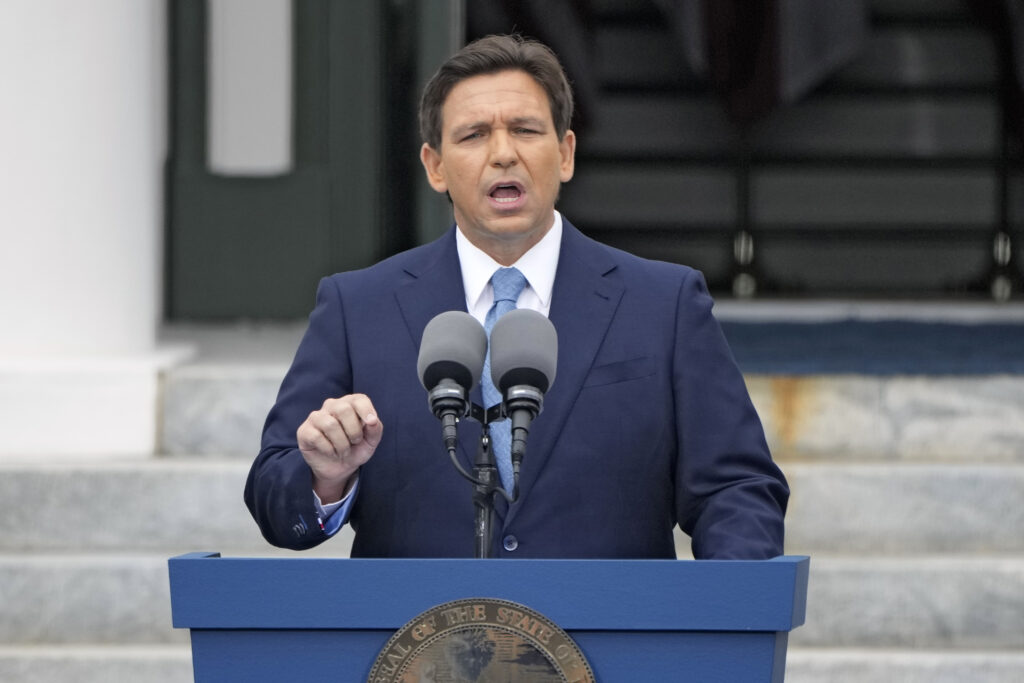
Shortly after Gov. Ron DeSantis (R) signed Florida’s version of the SAVE America Act into law, pro-voting groups* moved swiftly to challenge the severe new voting restrictions, asking a federal court to block the state from requiring voters to prove their citizenship status.
With the GOP locked in a bitter struggle over the national SAVE America Act, Florida Republicans last month took matters into their own hands and easily approved a state version of the bill — much to the delight of DeSantis, who lauded its passage in a social media post: “Florida SAVE Act on the way!”
Two weeks later, he signed the bill into law. But his elation may have been premature.
Get updates straight to your inbox — for free
Join 350,000 readers who rely on our daily and weekly newsletters for the latest in voting, elections and democracy.
Immediately after the legislation was signed, the Florida chapter of the NAACP and the Florida Alliance for Retired Americans brought a lawsuit challenging the legislation. They argue that the law harms voters and will face an uphill battle in court.
And the impact of the legislation isn’t hard to predict, the plaintiffs say, because Florida is not the first state to pass the restrictions.
“A handful of other states have tried this approach — almost all of which have resulted in the disenfranchisement of thousands of qualified voters,” the complaint states.
It goes on to argue that a similar law in Kansas excluded thousands of eligible voters from the rolls before it was struck down, and a New Hampshire law turned away as many as 30% of new registrants.
A separate lawsuit aimed at blocking the law was quickly filed by the League of Women Voters of Florida, Florida Immigrant Coalition, Florida Rising, Common Cause, Hispanic Federation and Unidos US, represented by the American Civil Liberties Union, ACLU of Florida, LatinoJustice PRLDEF and Advancement Project.
Last month, Democratic lawmakers voiced fierce opposition to the Florida SAVE America Act before voting against the measure, saying the state didn’t need more restrictions to stop noncitizens from casting ballots.
The state already has procedures in place to prevent noncitizens from voting. Last year, Florida found 198 “likely noncitizens who illegally registered and/or voted in Florida” out of the more than 13 million people on its voter rolls, according to a report from the state’s Office of Election Crimes and Security. The office referred 170 of them to law enforcement.
And in fact, just before signing the new voting restrictions into law, DeSantis unironically boasted that he had already successfully rooted out voter fraud in Florida.
“What I’ve found is if people know there’s going to be accountability, then doing any shenanigans — it’s just not worth it. So we’ve put the kibosh on that,” DeSantis told reporters Wednesday.
Now, the dispute heads to the courts. Both lawsuits are asking a federal judge to declare the law unconstitutional and block its enforcement.
The Florida NAACP argues that, contrary to its stated goal of preventing noncitizen voting, the new law will actually prevent citizens from voting, in violation of their First and 14th Amendment rights.
Additionally, they believe the Florida law will be even more burdensome than similar measures in other states because it also applies to voters already on the rolls.
Under the latest Florida restrictions, new and existing voters could be barred from voting if the Florida Department of Highway Safety and Motor Vehicles cannot verify their citizenship using the department’s records. The law also requires the Florida Department of State to identify registered voters who they deem “ineligible” due to their citizenship status. If a voter’s citizenship status cannot be confirmed, the department must notify local election officials, who will then notify the registered voter.
The proof of citizenship provisions are set to go into effect in 2027.
*The Elias Law Group (ELG) is representing the plaintiffs in the case. ELG Firm Chair Marc Elias is the founder of Democracy Docket.