North Carolina advances more voter suppression measures
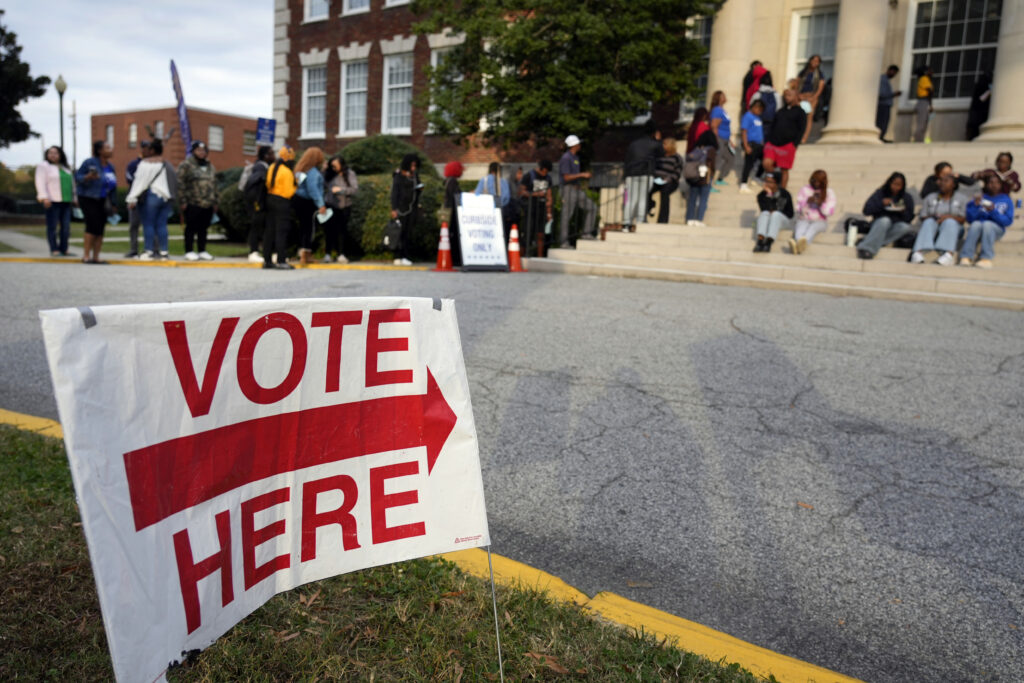
A North Carolina Senate committee greenlit new voter suppression measures Tuesday, moving forward a bill that would make it easier to purge voters from the rolls and impose stricter requirements for registering to vote.
The GOP bill also reduces the early voting period for primaries, runoffs and special elections from 17 to 10 days.
Get updates straight to your inbox — for free
Join 350,000 readers who rely on our daily and weekly newsletters for the latest in voting, elections and democracy.
Democrats fought to remove a provision that would have banned state and county election officials from encouraging voter turnout — and it appears their efforts were successful. The controversial ban was not included in the latest version of the bill.
The bill was initially filed over a year ago. The North Carolina House passed a heavily revised version last month.
The latest version adds in provisions shortening the early voting period, a change that comes after Senate leader Phil Berger (R) lost his primary reelection bid this year and then took issue with the state’s “excessive” amount of early voting. The reduction in early voting days would not apply to general elections.
State Sen. Warren Daniel (R) defended that reduction during Tuesday’s meeting, insisting it was necessary to “reduce the administrative burden” on election workers and candidates. Democrats blasted the move, saying many consequential races are decided in primary elections.
Gov. Josh Stein (D) criticized the bill in a social media post last month, indicating that he is likely to veto the measure. It’s unclear whether Republicans would have enough support to override the governor’s veto.
The bill includes additional voter roll maintenance activities, including requiring the state board to create a process for removing non-eligible residents from the rolls if the voter appears on information from a federal database. It also requires county boards to process a voter registration application only if it affirmatively indicates that the applicant is a U.S. citizen.
During the meeting, State Sen. Julie Mayfield (D) objected to a new requirement for the state’s Division of Motor Vehicles to routinely provide the State Board of Elections with residents’ full social security numbers.
“If the concern is adequate list maintenance, the last four digits should work,” Mayfield said. “If the concern is something other than that, such as using this as a way to verify citizenship, then that’s a different purpose.”
Daniel responded that the state board needs residents’ full Social Security numbers to conduct more accurate voter roll maintenance, saying the state has inaccurately flagged voters when using only the last four digits.
“It’s also a consideration whether the DMV should continue to be a registration portal for the state,” Daniel added.
Mayfield also said she was concerned that the bill extends the time period for challenging in-person ballots cast during early voting, which could increase mass challenges to eligible voters.
The bill also mandates removal of deceased voters on a weekly basis.
And it requires State Auditor Dave Boliek (R) to conduct post-election audits after each general election and produce annual reports.