New Jersey judge allows GOP-led probe targeting Democratic voters to proceed
 Prefer us on Google
to see more of our voting rights news coverage when you search.
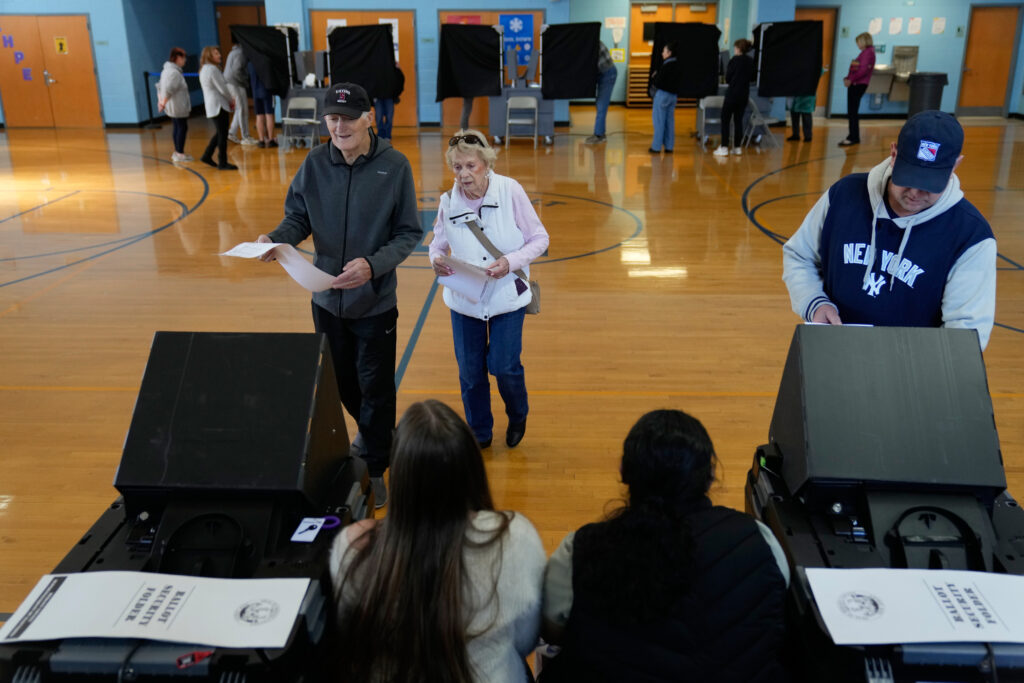
A New Jersey judge refused to halt Ocean County’s investigation into dozens of Democratic and unaffiliated voters ahead of the midterms, allowing election officials to continue the GOP-led process and potentially flag voters for additional scrutiny at the polls.
But the court also made clear that the Ocean County Board of Elections cannot use the process to purge any voters from the rolls or make a final determination that they are ineligible to vote.
Get updates straight to your inbox — for free
Join 350,000 readers who rely on our daily and weekly newsletters for the latest in voting, elections and democracy.
Superior Court Judge Robert Lougy Tuesday denied an emergency request from the League of Women Voters of New Jersey and three Bay Head voters to stop the county’s investigation before the Nov. 3 election.
The dispute began after Bay Head GOP President Dennis Shaning sent county election officials a list of voters whose property tax bills were mailed outside the borough. The list contained only Democratic and unaffiliated voters, no Republicans.
The Ocean County Board of Elections subsequently sent residency questionnaires to 37 voters and warned that their right to vote could be challenged.
The plaintiffs sued, arguing that the process amounted to voter intimidation and unconstitutional partisan discrimination. They asked the court to stop the county from investigating the voters, determining their eligibility or forcing them to cast provisional ballots.
Lougy denied that request, concluding that the board may continue investigating the voters and place names on a challenge list.
“Here, the Court finds an insufficient basis to stop the Board’s investigation or prohibit placing voters on a challenge list,” Lougy wrote. “It may be as true for all thirty-seven voters that they remain eligible to vote in Bay Head; it may not be true.”
That means the challenged voters could still face additional hurdles when they attempt to vote in November.
According to the ruling, voters placed on the challenge list may be required to sign an affidavit at the polls affirming that they live in the district and are eligible. If a district board refuses to issue a ballot, the voter may seek relief from the Superior Court.
At the same time, Lougy rejected a central premise underlying the voters’ request for emergency relief: that the county board could itself purge voters following its investigation.
“Notwithstanding any inaccurate or incorrect descriptions of the Board’s functions, the Board has no adjudicatory responsibility and, by its own admission, lacks any authority to adjudicate the voters’ eligibility or remove voters from the rolls unless the voters request to be removed,” Lougy wrote. “Relatedly, defendants lack any statutory authority to compel, in this posture, plaintiffs to vote on a provisional ballot.”
Lougy also criticized public statements suggesting the board could make a final determination about whether the voters are eligible.
“The Board has no ability to adjudicate the voters’ eligibility,” he wrote. “Any public statements to the contrary are not accurate and, where public trust in the electoral process is vitally important, not helpful to voters or the Board’s important mission of ensuring election integrity.”
The ruling therefore leaves the voters registered but does not end the challenge effort they sought to stop. County officials may continue investigating their residency and place them on a challenge list ahead of the election.
The decision is not a final ruling on the lawsuit.
Lougy was deciding only whether the plaintiffs had met the demanding standard for emergency relief before the election, not issuing a final ruling on whether the county ultimately violated New Jersey voting rights law.