DOJ election monitors target Democratic strongholds, Black voters
 Prefer us on Google
to see more of our voting rights news coverage when you search.
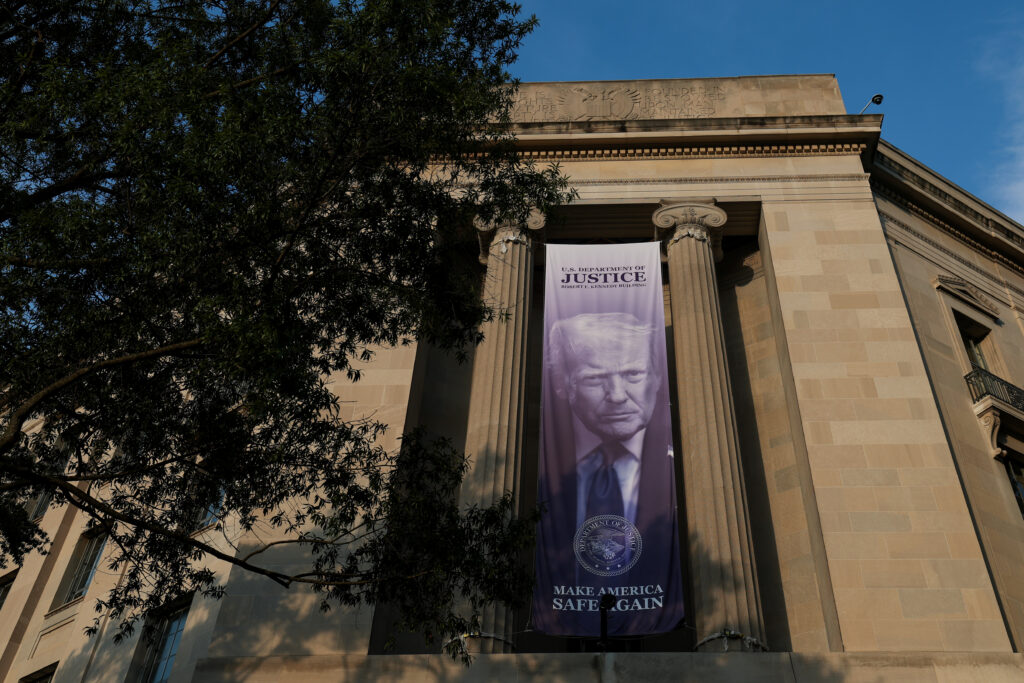
The Department of Justice’s plan to send 1,000 election monitors to observe voting in all 50 states shows the observers will be concentrated in Democratic strongholds and minority communities.
President Donald Trump and other administration officials have repeatedly cast doubt on the integrity and security of U.S. elections leading up to this year’s midterms, including making unfounded claims of widespread voting by noncitizens.
On Tuesday, the DOJ for the first time detailed where it will send its election monitors.
Get updates straight to your inbox — for free
Join 350,000 readers who rely on our daily and weekly newsletters for the latest in voting, elections and democracy.
The DOJ has sent election monitors to polling places with a pattern of voter suppression since the passage of the 1965 Voting Rights Act, but this is the first time the department has deployed monitors in all 50 states.
Despite the nationwide presence, the DOJ does not have the resources to send monitors to observe voting at the more than 95,000 polling places nationwide.
Notably, monitors have been sent to more Democratic counties in historically red states like Broward County in Florida, Wake County in North Carolina, Dallas and Harris Counties in Texas and Fulton County in Georgia.
Monitors have also been sent to many majority-minority counties such as Montgomery County in Alabama, Cook County in Illinois and Mecklenburg County in North Carolina.
Monitors have been deployed to 126 counties across the country. It is unclear how many monitors will be present at polling locations in the identified counties or if monitors will be present at every polling site in the listed counties.
In North Carolina, state officials confirmed that federal election monitors are present in three counties – Alamance, Wake and Mecklenburg – with two federal monitors per county, according to Sam Hayes, executive director of the North Carolina State Board of Elections.
“Let me be clear, election observation is a normal and established part of the election process. The presence of these monitors should not be interpreted as an indication that there are problems with North Carolina’s elections, or that they are being improperly influenced,” Hayes said at a press conference Tuesday.
In Michigan, the state secretary of state’s office reported 71 DOJ monitors have been deployed to the eight counties — Lansing, East Lansing, Grand Rapids, Flint, Detroit, Hamtramck, Warren and Dearborn — listed in the DOJ release. Michigan has the most counties being monitored by DOJ officials. The state is home to a highly competitive Senate race that could determine control of Congress’ upper chamber.
Election monitors will include personnel from the Civil Rights Division, U.S. Attorney’s Offices, other DOJ divisions and federal observers from the Office of Personnel Management, the DOJ said.
“Election monitors will be checking for compliance with the federal voting rights statutes that fall within the jurisdiction of the Division,” the DOJ said in its press release, referring to the Civil Rights Division.
While Democratic states have been preparing for months to address possible election interference by the Trump administration and the DOJ, blue cities and counties told Democracy Docket in late October they are bracing for interference with the understanding that they will receive little help from the governor or attorney general.
In late October, the DOJ started notifying some state and local election officials about where monitors would be deployed and also sought permission to enter polling places in some jurisdictions, instead of monitoring from the standard 100-foot distance required by law.
In previous years, the DOJ has sent federal election monitors to specific areas where voters have experienced issues casting their ballots in potential violation of federal laws. This year, the focus is election security.
“Election integrity has been one of the top priorities for this Administration and this Division,” Assistant Attorney General Harmeet K. Dhillon said in the Tuesday release. “I am very proud we are deploying the largest monitoring effort in DOJ history, and pursuing transparency for elections in an assertive and nondiscriminatory manner.”