Montana’s claim that temporary residency law doesn’t apply to student voters hits skeptical judge
 Prefer us on Google
to see more of our voting rights news coverage when you search.
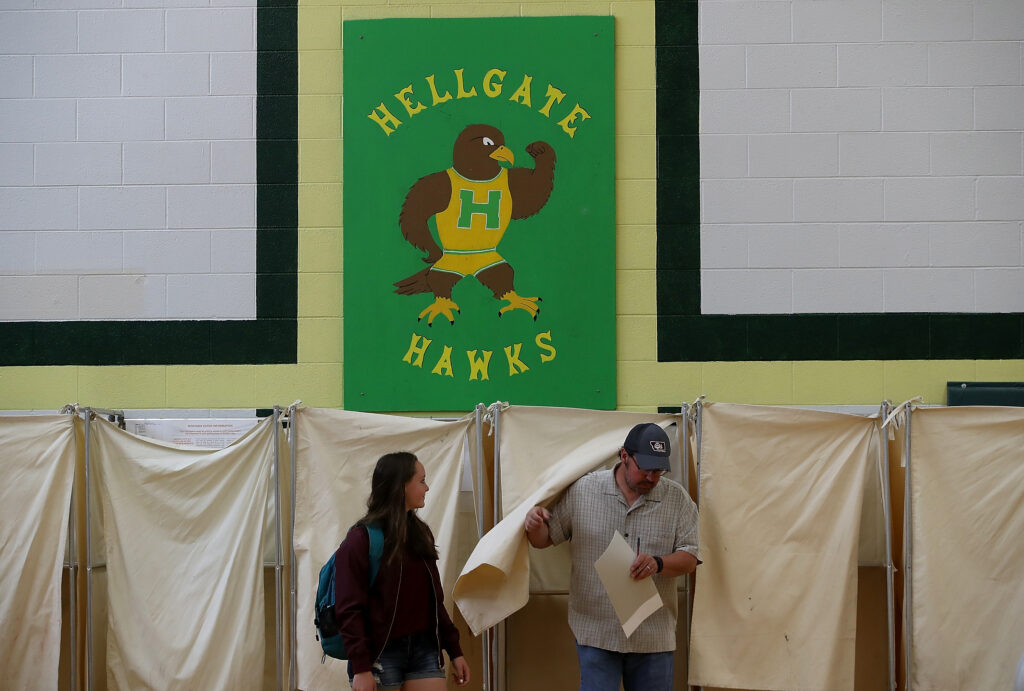
A Montana judge appeared skeptical of a law requiring college students to pledge to live in the state after they graduate in order to register to vote.
State district Judge Jason Marks has already blocked the law from taking effect for the midterms, but at a Thursday hearing he sharply questioned the state’s argument that the new requirements don’t actually apply to students.
Pro-voting groups* sued to overturn the law, arguing it presents an illegal roadblock to registering to vote.
Get updates straight to your inbox — for free
Join 350,000 readers who rely on our daily and weekly newsletters for the latest in voting, elections and democracy.
Attorney Austin Knudsen, representing Montana Secretary of State Christi Jacobsen (R) tried to argue the provision does not apply to students living in the state for “multiple years.” The law, enacted in 2025, bars those living in Montana for a “temporary purpose” from claiming residency for the purpose of voting. That includes people living in Montana as part of an “educational program.”
Marks sat back in his chair, crossing his arms and pausing for a few beats, before responding.
“The issue here is, I think, your office concedes that if this applies to university students, it’s a problem, right?” Marks asked Knudsen. “Which is why you have to read this not to apply to university students.”
Though the law says that people temporarily residing in Montana for an “education program” cannot register to vote, the state argued that it was never meant to apply to college students living in state for several years.
Meanwhile, pro-voters said the state was “gaslighting” anyone who reads the law.
“This case has already benefited tens of thousands of Montana college and university students who would have been prohibited or chilled from voting in the 2026 primary or the upcoming election,” Raphael Graybill, representing the Montana Public Interest Research Group, told the court.
Knudsen then claimed it would not matter if students were affected because they have not been disenfranchised, calling the suit “a bunch of speculation.”
However, Marks had warned the law “has had a chilling effect on constitutionally protected activities and it impermissibly interferes with students’ right to vote,” in a February order temporarily blocking it from taking effect
Marks said he would accept additional material from the parties for two weeks before issuing a ruling.
*The Elias Law Group (ELG) represents the plaintiff, The Montana Public Interest Research Group, in this case. ELG Firm Chair Marc Elias is the founder of Democracy Docket.