Missouri election workers warned switching maps this late is ‘practically impossible’ but the 8th Circuit ordered it anyway
 Prefer us on Google
to see more of our voting rights news coverage when you search.
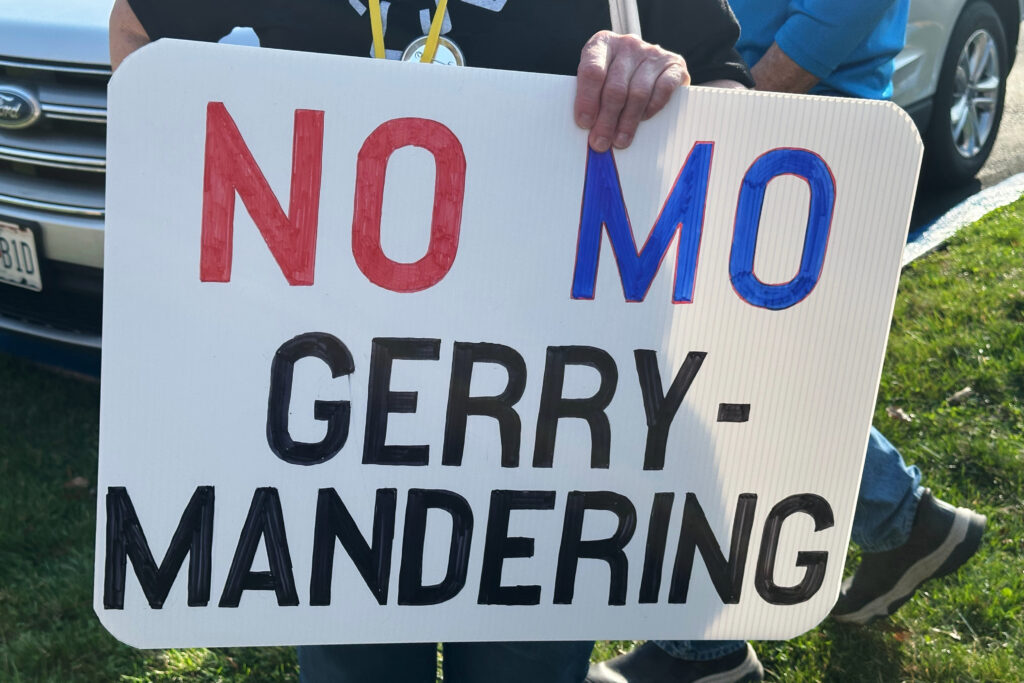
A federal appeals court decision reinstating Missouri’s gerrymandered map for the midterms breezes past the practical considerations of election workers scrambling to prepare as voting begins.
Missouri began sending ballots to overseas voters last week, and Tuesday marks the start of absentee voting in the state. But none of those practical concerns slowed three Republican-appointed judges on 8th Circuit Court of Appeals who on Monday required Missouri to use a gerrymandered map that the state Supreme Court said never took legal effect.
“That deadline has not yet arrived, and thus general absentee voting has not yet begun,” the judges wrote. “Accordingly, the September 22, 2026, absentee ballot commencement date does not moot this case.”
The 8th Circuit predicted election administrators would only need a “few days” to make the ballot changes even though local election workers called it “practically impossible” to switch ballots this close to an election in a friend-of-the-court brief.
“The Court recognizes that election preparations must be made sooner rather than later,” the judges write in a 40-page decision that glosses over election workers’ concerns.
Get updates straight to your inbox — for free
Join 350,000 readers who rely on our daily and weekly newsletters for the latest in voting, elections and democracy.
The year-long battle over which map Missouri will use for the midterms is not over yet, with an appeal to the U.S. Supreme Court expected next. In 2025, Missouri Republicans drew a new gerrymander that eliminated a Democratic district in Kansas City at the urging of President Donald Trump, who pushed red states to redraw maps early to boost the GOP’s odds of keeping the U.S. House of Representatives.
Though Missouri conducted its primaries using the gerrymander, the state Supreme Court said the map cannot take effect until voters have a chance to approve or reject the new map in a November referendum. The judges ordered Missouri to use its original 2022 maps for the upcoming vote. The 8th Circuit’s ruling directly conflicts with the state Supreme Court, setting up a split that the U.S. Supreme Court will likely resolve.
As of Tuesday, local election administrators were proceeding with plans to use the 2022 map for their ballots because they have not received any other direction from Missouri Secretary of State Denny Hoskins.
Boone County Clerk Brianna Lennon told Democracy Docket on Tuesday that “there isn’t anything that provides any kind of guidance on how to deal with the situation.” She said she hasn’t heard from Hoskins’ office on how to proceed.
“Nearly half of our voters would end up changing districts, and so we would have to recreate ballot styles for the entire election,” Lennon said.
In Johnson County, Clerk Diane Norcross Thompson encouraged people to avoid absentee voting until the redistricting fight is totally resolved.
“With the current uncertainty surrounding which Congressional District Johnson County will be in, I am recommending that voters hold off on absentee voting if possible,” Thompson wrote in a Facebook post. “Under Missouri law, once a ballot has been cast, another one may not be issued.”
Election clerks had warned the 8th Circuit about those practical concerns last week.
The Missouri Association of County Clerks and Election Authorities, which represents members from all 116 local election jurisdictions, urged the 8th Circuit to keep the 2022 map in place.
“At this point, it is practically impossible to revert to the HB 1 map due to the extensive time and cost required to reprint and distribute new ballots within statutory timelines,” part of the brief reads. “Any further change inflicts additional vertigo on local election authorities—and the millions of Missourians who rely on them—after ostensibly-final resolution consistent with Missouri law.”
Despite that, the appellate judges said the Republican candidates who brought the lawsuit, themselves, had limited time to act after the Missouri Supreme Court blocked the 2025 gerrymander.
“Here, the alleged harm did not arise until September 3, 2026, only two months before the November 2026 general election; Plaintiffs did not cause the harm from which they seek relief and are instead seeking to restore the status quo under which the candidate Plaintiffs campaigned for approximately one year and under which the voter Plaintiffs voted in the August 2026 primary election,” the judges wrote.
Jen Rice contributed to this reporting.