Missouri election officials rush to ready ballots after a year of turmoil over gerrymandered map
 Prefer us on Google
to see more of our voting rights news coverage when you search.
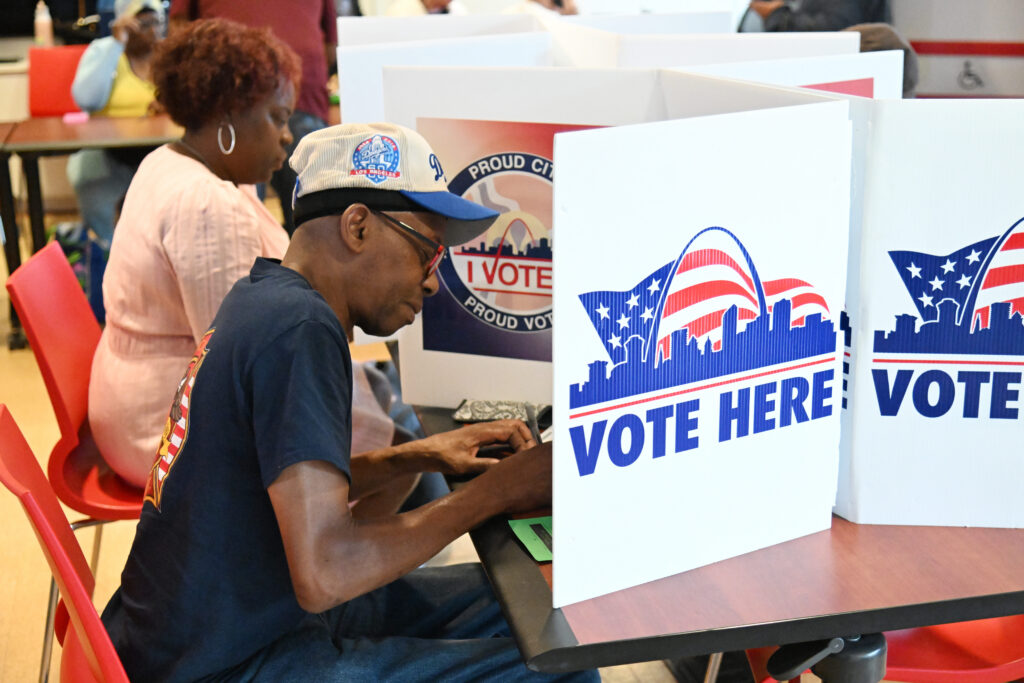
After Missouri’s year-long fight over a gerrymandered congressional map, local election officials are scrambling to finalize ballots after the legal battle blew past deadlines for them to be done.
In the final stretch of the redistricting chaos, local officials faced unprecedented confusion: conflicting orders from state and federal courts about which map was in effect. With pro-voting groups* successfully killing the gerrymander before the midterms, local officials now face a Sept. 19 deadline to send ballots to overseas and military voters.
Get updates straight to your inbox — for free
Join 350,000 readers who rely on our daily and weekly newsletters for the latest in voting, elections and democracy.
Shawn Kieffer, the GOP director of Kansas City’s election board, said the chaos is “something that we have never seen before” in his nearly four decades as an election official. Kieffer added, “and hope to never see again.”
Roughly 40% of registered voters in Kansas City were moved into a different congressional district on the new GOP map, Kieffer said. The election board handled the last-minute uncertainty by preparing two sets of ballots — one for each congressional map.
Under Missouri law, local election officials were required to have the ballots finalized by Sept. 8, but the ongoing legal battle over which map to use left them in limbo.
More than 100 miles away, Boone County was just as impacted — around 40% of voters were moved into a new district, Boone County Clerk Brianna Lennon said.
Lennon estimated the redistricting fight has put her team roughly two weeks behind schedule.
“In terms of preparation, what that meant was everything other than printing the ballots and the things that flowed from that was prioritized to make sure that we got it done,” Lennon said. “The thing that has to be in a holding pattern has been the creation of ballots.”
Fortunately, election officials have had months to prepare for this turmoil, Lennon said. But there’s still plenty of work ahead.
“We will be playing catch up for a few weeks in order to get us back where we need to be on our timeline when it comes to proofing ballots and then testing our equipment and things like that,” Lennon said.
More than 300,000 Missouri voters signed a petition last year to put the new map to a statewide referendum vote. Historically, state officials have paused the challenged legislation at that point. However, Missouri Secretary of State Denny Hoskins (R) broke with precedent and insisted the GOP’s new map was in effect and that voters didn’t have the power to veto a congressional map.
After a year of legal limbo, the Missouri Supreme Court concluded Hoskins was wrong: the new 2025 gerrymander never went into effect and cannot be used for an election unless it is approved by voters in a November referendum. The decision means the state will use the 2022 map in the upcoming midterm elections — even though Hoskins had already forced the state to use the disputed gerrymander for the primary.
Separately, a federal district court barred Missouri from using any map other than the 2025 gerrymander for the upcoming election in a lawsuit brought by Republican candidates for office. Hoskins seized on that decision to try to force the state to use the gerrymandered map this year, but he backed down after the Missouri Supreme Court found him in contempt for violating its order to use the 2022 map.
The U.S. Supreme Court ultimately stepped in and paused the federal court’s order to use the gerrymander, effectively requiring the state to use the 2022 map for the upcoming election.
The months of chaos came with an unexpected silver lining, though, Lennon said. The protracted legal battle meant election officials had plenty of time to game out likely outcomes well in advance and prepare.
“If this had completely come out of left field and we had everything ready to go and then we’re told that we couldn’t do it, we would be in a much worse situation,” she said. “But the fact that we’ve been able to prepare for a few months for this inevitable outcome has been helpful.”
*The Elias Law Group (ELG) represents pro-voting parties in this case. ELG Firm Chair Marc Elias is the founder of Democracy Docket.