Mississippi’s mail ballot receipt deadline affirmed by federal appeals court after pivotal Supreme Court ruling
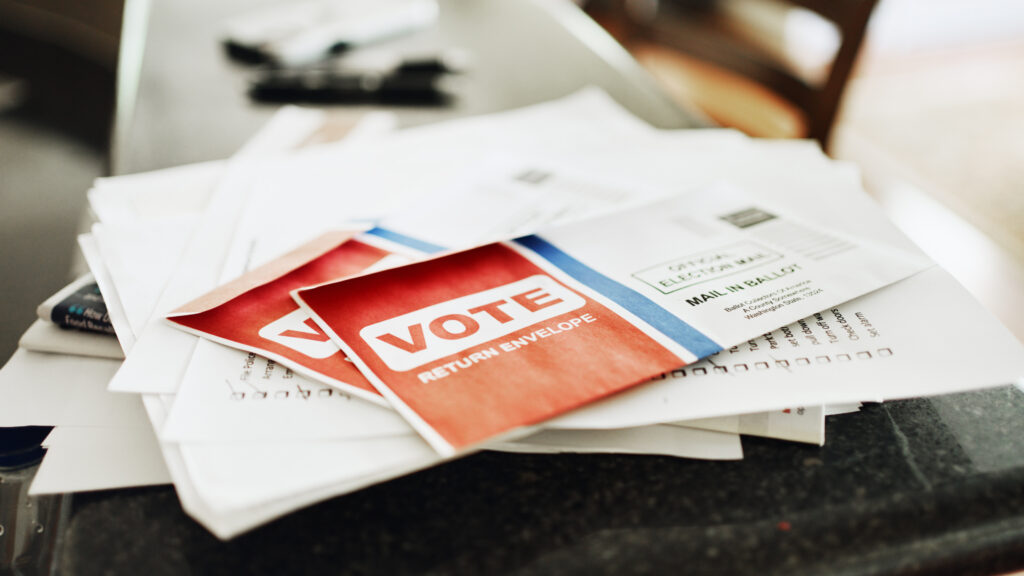
A federal appeals court formally put into effect a ruling allowing Mississippi to count mail ballots that arrive after Election Day. The order follows the U.S. Supreme Court’s June ruling that upheld the state’s five-day grace period for ballots postmarked by Election Day.
The ruling — issued last week by the 5th U.S. Circuit Court of Appeals — is the final word in the GOP’s lengthy legal battle to ban mail ballots that arrive after, but postmarked by, Election Day.
In 2024, the Republican National Committee (RNC) and the Mississippi Republican Party sued Mississippi Secretary of State Michael Watson (R) to undo a state law that allows mail ballots postmarked on or before Election Day to be counted if they are received within five business days of the election. The GOP plaintiffs in Watson v. RNC argued that the law “effectively extends Mississippi’s federal election past the Election Day established by Congress” and results in “valid ballots” being “diluted by untimely, invalid ballots.”
A district court ruled in favor of the state law, but the RNC appealed the ruling to the 5th Circuit, which reversed it, declaring that Mississippi’s mail ballot receipt deadline violates federal law. Watson appealed the 5th Circuit’s decision to the Supreme Court, which upheld the state’s law in a 5-4 decision.
“[E]lection-day statutes do not set a deadline for ballot receipt, so they do not prevent Mississippi from counting ballots postmarked after election day yet received afterward,” Justice Amy Coney Barrett wrote for the majority’s decision. “The Framers recognized the difficulty of crafting election laws ‘applicable to every probable change in the situation of the country.’ So instead of constitutionalizing election law, they decided that ‘a discretionary power over elections’ needed to be lodged ‘somewhere.’ Suffice it to say, that power was not lodged in this Court. The election-day statutes say nothing about ballot receipt, and we cannot add to the words Congress chose.”
Get updates straight to your inbox — for free
Join 350,000 readers who rely on our daily and weekly newsletters for the latest in voting, elections and democracy.
Republicans have long wanted to ban mail ballot grace periods, and they were counting on the Supreme Court to fulfill their wish. But MAGA and the GOP did not take it well when Barrett and Chief Justice John Roberts joined the three liberal justices to uphold Mississippi’s law — and, in turn, all state laws that allow for late-arriving mail ballots.
“In light of the tremendous loss in the Supreme Court today concerning Voter’s Rights, and the fact that ‘people’s’ votes are allowed to be counted LONG AFTER an Election is over, it is more important than ever to pass THE SAVE AMERICA ACT,” President Donald Trump wrote immediately after the ruling came down.
The Senate has yet to pass the SAVE America Act.
“The Supreme Court just handed the Left a weapon they will use in every close race between now and November,” Cleta Mitchell, a conservative lawyer and activist who founded the anti-voting organization Election Integrity Network, wrote in an email to supporters.
Anti-voting activist Scott Presler had a more fatalistic reaction to the Court’s ruling.
“So, basically, we just learned that if a state passes a law to accept mail-in ballots weeks after Election Day, SCOTUS will uphold the law,” Presler wrote. “This is how our country dies.”