Mississippi makes it harder to cast a ballot than almost anywhere else. Voters defied the system
 Prefer us on Google
to see more of our voting rights news coverage when you search.
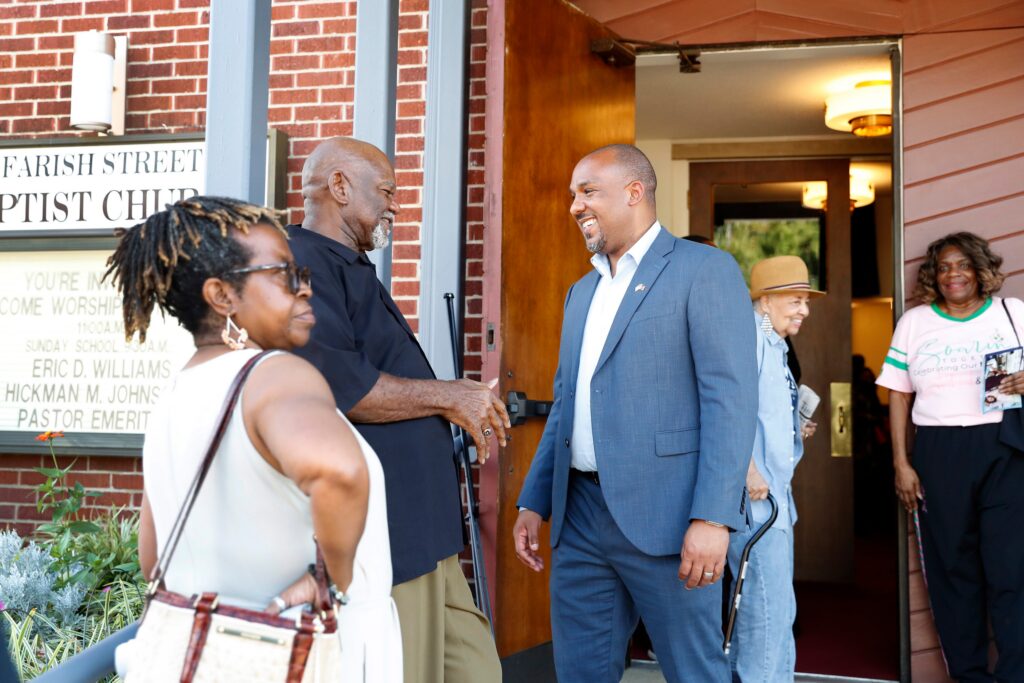
Mississippi voter turnout skyrocketed this year — bringing Democratic Senate candidate Scott Colom close to an unlikely win — despite perhaps the nation’s most restrictive voting system.
Over 950,000 votes had been counted in the race as of Thursday morning, with 10,000 or more still to come. That’s compared to just 710,000 total votes in the last midterms — when Misssissippi ranked dead last in the nation for turnout.
Get updates straight to your inbox — for free
Join 350,000 readers who rely on our daily and weekly newsletters for the latest in voting, elections and democracy.
It’s an increase of an eye-popping 35%.
The massive jump appears to have been especially pronounced among Black Mississippians, energized by an aggressive field operation and angered by the Supreme Court’s gutting of the Voting Rights Act earlier this year.
The result is that Colom narrowly leads Sen. Cindy Hyde-Smith (R). In 2024, the Democratic Senate candidate lost by 26 points.
In flocking to the polls, Magnolia State voters overcame a system that makes it perhaps more difficult to vote than anywhere in the country — a relic of the state’s history in which Black Mississipians were actively shut out of power.
Mississippi is one of just three states — Alabama and New Hampshire are the others — that don’t allow early in-person voting. And it’s one of just 13 that require an excuse to vote by mail. (Republicans tried to make the state’s mail voting rules even more restrictive by suing to have mail ballots that arrive after Election Day, but are postmarked on or before it, thrown out. The Supreme Court rejected the lawsuit earlier this year.)
Then there’s Mississippi’s Jim Crow-era law that imposes a lifetime voting ban on anyone convicted of certain felonies, which is currently responsible for disenfranchising nearly 70,000 disproportionately-Black Mississipians — around 3% of the eligible voting population. It’s one of the harshest felony voting bans in the country.
It may be no surprise, then, that a 2021 study of states’ access to voting by the Movement Advancement Project ranked Mississippi last. The following year, a study of early voting and vote by mail laws by the Campaign Legal Center put it second-to-last — only Alabama was worse. And a Northern Illinois University study from the same year on access to voting also ranked it second-last (this time, New Hampshire took the lowest spot).
In an interview with Democracy Docket Thursday in the group’s Jackson, Mississippi office, NAACP president Derrick Johnson called for change.
“There is no reason why, in this state, there is no no-excuse early voting provision. That’s voter suppression,” Johnson said. “And it’s outrageous to require someone to vote between 7 and 7 on a Tuesday or a workday, who may not have the latitude to get to work late or get off early enough to vote. That’s voter suppression.”
“So hopefully we can have a massive reform of our voting policy in the state to make it more accessible to every legal voter,” Johnson added.