Mississippi Senate race could come down to mail ballots the GOP tried to throw out
 Prefer us on Google
to see more of our voting rights news coverage when you search.
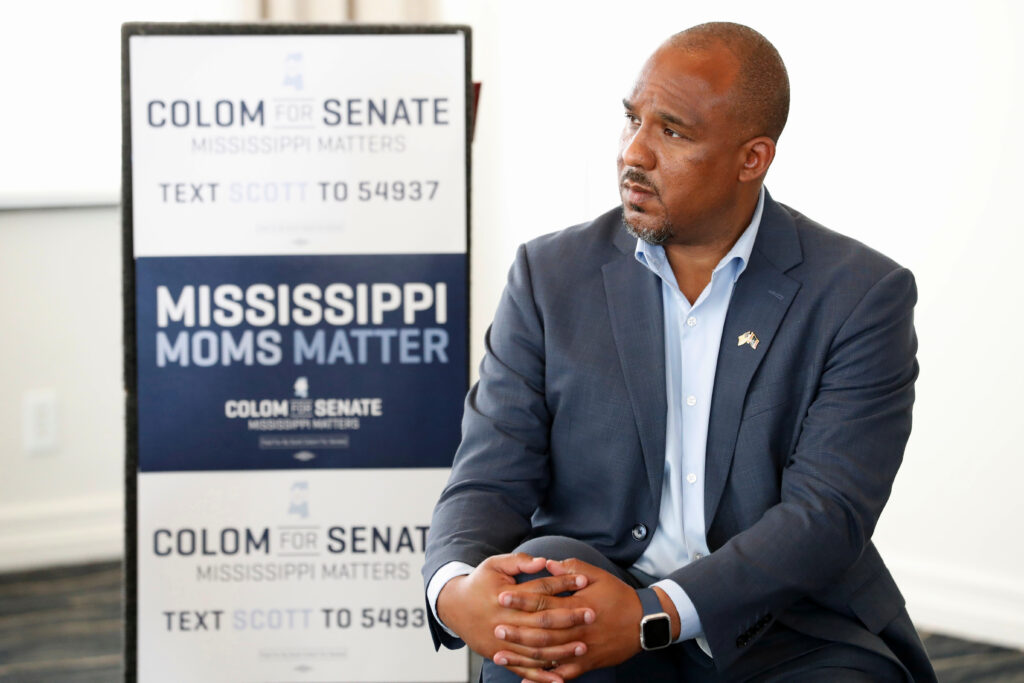
Mississippi’s U.S. Senate race will likely come down to just a few votes — including those arriving during the state’s five-business-day mail ballot grace period.
In June, the U.S. Supreme Court narrowly upheld the grace period against a Republican bid to eliminate it.*
By preventing at least several hundred Mississippians from being disenfranchised, the pro-voting decision may play a crucial role in determining the outcome of the race and the size of the Democratic majority in the U.S. Senate.
As of 3:48 a.m. Wednesday morning, Democrat Scott Colom led incumbent Sen. Cindy Hyde-Smith (R) by just 43 ballots — 462,821 to 462,778 — with 96% of the vote counted, according to the Associated Press.
The incredibly narrow margin means the Supreme Court’s decision to uphold Mississippi’s grace period for mail ballots postmarked by Election Day that arrive within five days, in Watson v. Republican National Committee (RNC), could decide the outcome.
In a 5-4 decision, the Supreme Court rejected the RNC’s arguments that federal laws setting Election Day preempted states from accepting ballots after that date.
“The election-day statutes say nothing about ballot receipt, and we cannot add to the words Congress chose,” Justice Amy Coney Barrett wrote for the majority.
Get updates straight to your inbox — for free
Join 350,000 readers who rely on our daily and weekly newsletters for the latest in voting, elections and democracy.
The RNC admitted in its briefs that it sought to ban grace periods because it believed Democrats use mail voting more than Republicans.
“Democratic voters tend to mail their ballots later on average than Republican voters, which results in late-arriving ballots favoring Democratic candidates,” the RNC’s lawyer wrote.
Separately, they added:
“[A]ccording to the MIT Election Lab, 46% of Democratic voters in the 2022 General Election mailed in their ballots, compared to only 27% of Republicans. That means the late-arriving mail-in ballots that are counted for five additional days disproportionately break for Democrats.”
According to VoteBeat, Mississippi counted 1,140 ballots that arrived after Election Day in 2024.
This year, according to the University of Florida’s Election Lab tally of early votes, Mississippians requested 123,040 mail ballots — more than twice as many as in 2022 — and returned 116,453 before Election Day, leaving roughly 6,500 additional ballots that could be returned during the state’s grace period. That figure does not include military and expatriate voters submitting ballots pursuant to the Uniformed and Overseas Citizens Absentee Voting Act (UOCAVA). The deadline for both is Nov. 10.
The partisan breakdown of the grace period ballots isn’t clear But in recent elections, Democrats have generally used mail voting at higher rates than Republicans.
Watson preserved grace period laws in 13 other states and Washington D.C., as well as similar UOCAVA-specific ballot receipt deadlines in 17 states.
Colom’s potential victory in Mississippi was also shaped by another Supreme Court decision this year: Louisiana v. Callais. When the Court’s conservatives kneecapped the Voting Rights Act, they inspired a fierce backlash among Black voters across the South. Massive Black turnout helped Democrats coast to victory in Georgia and made the Senate races in Mississippi and Louisiana the tightest seen in decades.
It may take some time for election officials in Mississippi to tally final results. Secretary of State Michael Watson’s (R) aggressive purging of inactive voters from the registration rolls forced thousands of Mississippians to cast affidavit ballots, which require the voters to verify their identity within five days of Election Day.
*Intervenors in the lawsuit were represented by the Elias Law Group (ELG). ELG Chair Marc Elias is the founder of Democracy Docket.