Maryland Democrats prepare special session to counter GOP gerrymanders, send redistricting to voters
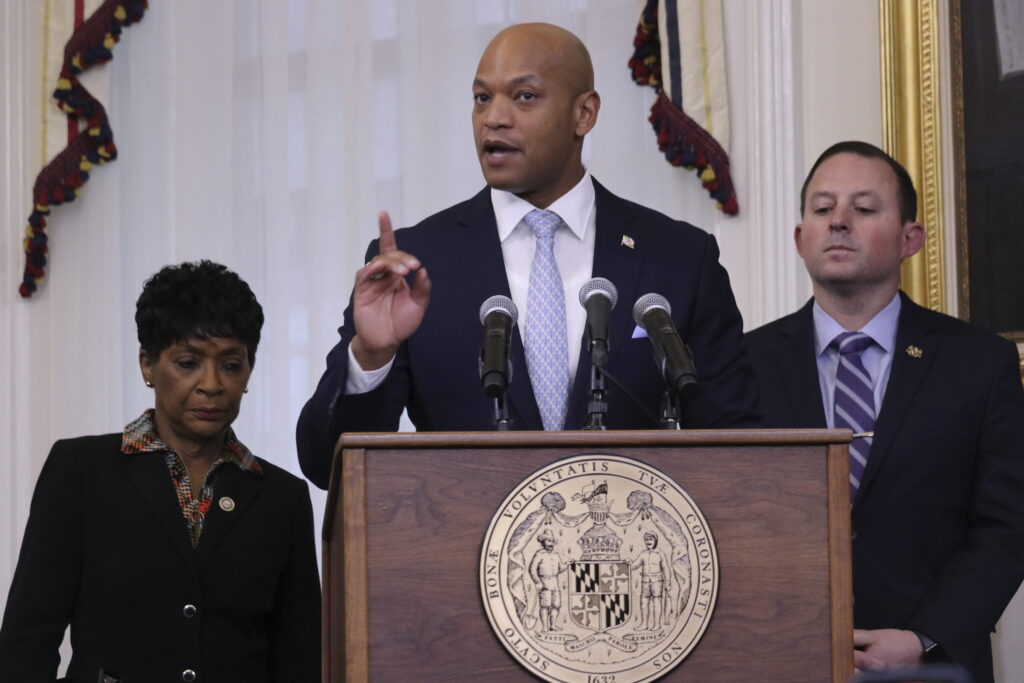
Maryland’s top Democrats are reportedly preparing to call a special session next month to put a redistricting amendment before voters in November, a move that could give the state a new path to answer the nationwide GOP gerrymandering plot pushed by President Donald Trump.
If voters approve the amendment, Maryland Democrats could use it to pursue a new congressional map for the 2028 elections that could give Democrats a shot at winning all eight of the state’s U.S. House seats.
Get updates straight to your inbox — for free
Join 350,000 readers who rely on our daily and weekly newsletters for the latest in voting, elections and democracy.
According to a source familiar with the matter, legislative leaders plan to call lawmakers back immediately after Maryland’s June 23 primary.
A formal announcement would likely come jointly from Ferguson (D), Maryland Gov. Wes Moore (D) and House Speaker Joseline Peña-Melnyk (D), whose offices have been coordinating on the effort.
No revised map has been proposed, but the change could remove an obstacle that has limited Democratic efforts to redraw Maryland’s 1st Congressional District, now held by U.S. Rep. Andy Harris, the state’s lone Republican member of Congress.
Ferguson, who previously resisted reopening Maryland’s congressional map, shifted after a recent U.S. Supreme Court decision that gutted the Voting Rights Act and gave Republican-led states new legal room to redraw maps.
“Now, the rules have changed. The Supreme Court gutted the Voting Rights Act, and Southern legislatures are already using that ruling to wipe out minority districts,” Ferguson said. “Maryland must respond as the ground shifts under us. I’m in active conversations with my caucus about a special session and constitutional amendment to address the 2022 Maryland court redistricting decision and new U.S. Supreme Court VRA decision, with the aim of putting this before Maryland voters in November.”
The possible special session would revive a fight Maryland Democrats have been waging for months.
Moore first pushed the state to examine new maps as Republican-led states moved to redraw their own congressional lines outside the normal once-a-decade process. That push began after Trump urged Texas Republicans to redraw the state’s congressional map to create five additional GOP seats, sparking a nationwide redistricting arms race.
Other GOP-led states since followed Trump’s call to gerrymander their state.
Maryland’s House already passed a redistricting plan earlier this year, but the measure stalled in the Senate after Ferguson warned the effort could invite litigation and risk the state’s current 7-1 Democratic advantage. The proposed map grew out of Moore’s Governor’s Redistricting Advisory Commission, which recommended a plan that would have made Harris’ Eastern Shore-based seat far more difficult for Republicans to hold.
“At a moment when other states are moving aggressively to redraw maps, and when fundamental voting rights protections face renewed threats, Maryland has a responsibility to lead with urgency,” U.S. Sen. Angela Alsobrooks (D-Md.), who chaired the commission, said earlier this year. “Our goal is to ensure our congressional delegation reflects the will of the people, protects representation for historically underrepresented communities, and gives Marylanders a Congress that can serve as a real check on this President.”
In 2022, Democratic lawmakers approved a map that would have put Harris in a much tougher district, but a state judge blocked it, finding lawmakers relied too heavily on partisanship. Democrats and then-Gov. Larry Hogan (R) ultimately agreed to a compromise map that kept Maryland’s delegation at seven Democrats and one Republican.
This time, Democratic leaders appear to be considering a voter-approved path before drawing a new map. Constitutional amendments in Maryland require support from three-fifths of lawmakers in each chamber before going to voters.
Maryland lawmakers must act by July 31 to put the measure on the November ballot.